Many people book travel by sorting from lowest price to highest and stopping there.
It feels logical. It feels responsible. And sometimes, it works.
But often, the cheapest option on the screen is only cheap on the surface — and ends up costing more in time, stress, lost perks, or missed value once the trip actually happens.
This is why price alone is a poor decision-maker for travel — and what actually matters when choosing the best option.
Get Help Evaluating the Right Option
If you’re trying to figure out whether the cheapest option is actually the best one — or just the easiest one to click — we can help you think through the trade-offs before you book.
Start planning here: Trip Planning
Or get help comparing and booking options: Travel Booking & Advisory Support
If you have a question, feel free to text us at 480-331-1263.
In this Article:
The Problem With “Cheapest Wins”
Travel pricing is intentionally designed to highlight the lowest number first.
Airlines, hotels, cruise lines, and booking sites know many travelers anchor on price and assume everything else is roughly equal.
It isn’t.
Two options that look similar can deliver very different experiences once you factor in:
- What’s included
- What’s excluded
- What flexibility you have
- What protections exist if something goes wrong
The cheapest option often strips value quietly — and charges you for it later.
Flights: The Cheapest Fare Is Rarely the Cheapest Trip
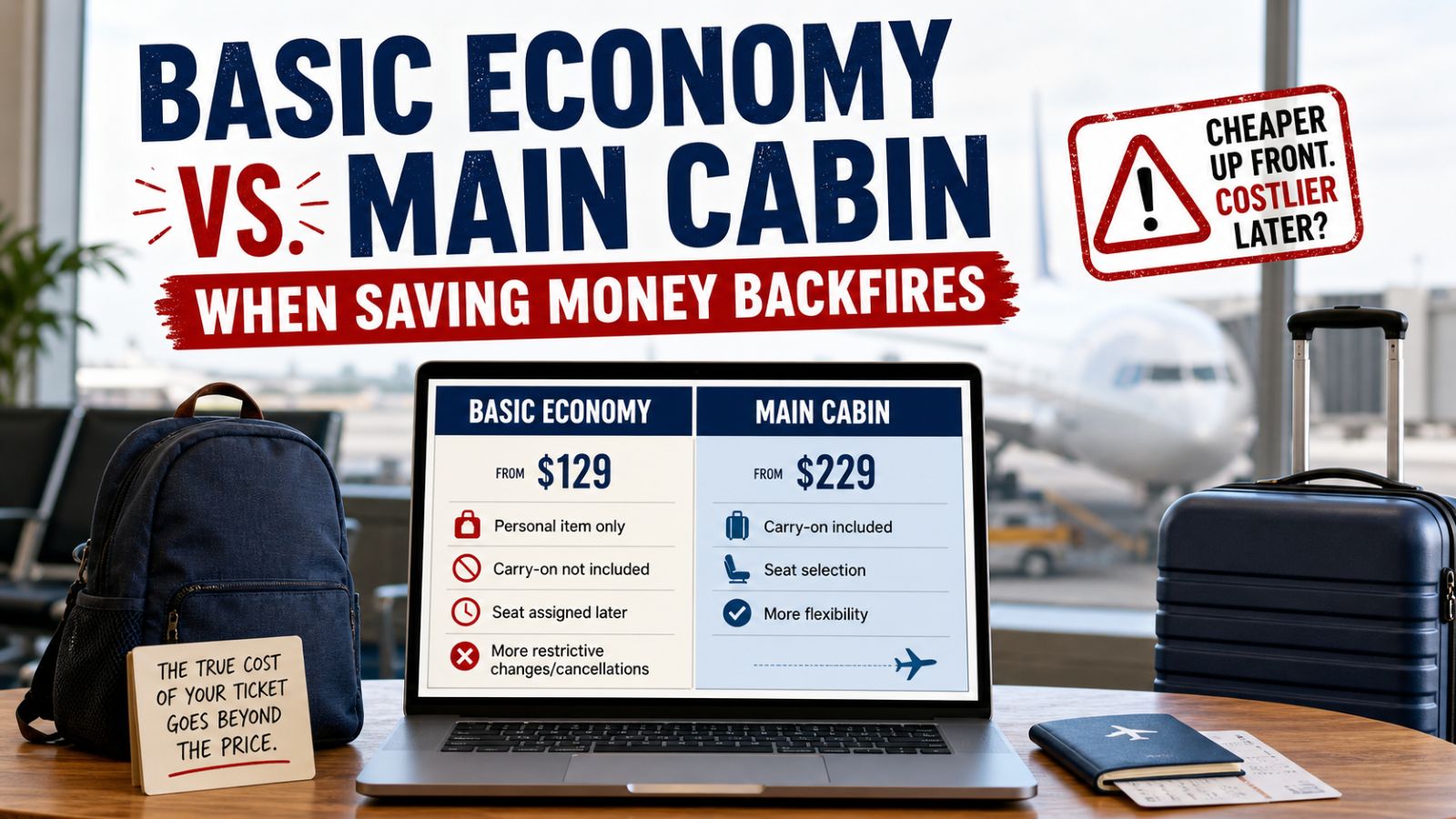
Basic economy fares are one of the clearest examples.
They look cheaper upfront, but usually come with trade-offs like:
- No seat selection
- No changes or cancellations
- Boarding last
- Strict baggage rules
- Little to no protection if plans change
By the time you pay for a seat, a bag, or flexibility — or deal with a missed connection and no recourse — the “cheapest” fare may cost more than a standard economy ticket would have.
The better question isn’t “What’s the cheapest flight?”
It’s “What am I giving up for this price?”
Understanding those trade-offs is a core part of Trip Planning, especially when timing, flexibility, or family logistics matter.
Hotels: Headline Rate vs. Total Experience
A hotel room that’s $40 cheaper per night can look like a win — until you realize:
- Resort fees weren’t included
- Parking is extra
- Breakfast isn’t included
- Wi-Fi costs extra
- You’re paying cash while points or credits could offset the stay
On the flip side, a slightly higher nightly rate might include:
- Free breakfast
- On-property credits
- Room upgrades
- Late checkout
- Loyalty perks
- Better travel protections
Once everything is accounted for, the total cost — and total experience — often favors the option that looked more expensive at first.
This is exactly where Travel Booking & Advisory Support helps — by comparing booking paths, perks, and real-world value, not just the rate on the screen.
Points, Credits, and Perks Change the Math
One of the biggest mistakes travelers make is ignoring value they already have.
If you hold credit cards, loyalty status, or unused travel credits, the cheapest cash price may not be the best deal for you.
Examples include:
- A higher hotel rate offset by an annual credit
- A flight booked with points that preserves cash
- A resort stay that includes dining credits you’ll actually use
- Booking through a program that adds perks at no extra cost
This is where Points & Rewards Strategy and trip planning overlap — because the best deal is personal, not universal.
Flexibility Has Real Value
Cheap usually means rigid.
And rigidity gets expensive when life happens.
Flights change. Weather intervenes. Kids get sick. Work runs late.
Paying a little more for flexibility can save hundreds — and a lot of stress — later.
If a booking saves you money but removes your ability to adjust, it’s only a deal if everything goes perfectly.
Travel rarely does.
The Better Questions to Ask
Instead of asking:
“What’s the cheapest option?”
Try asking:
- What does this price include — and exclude?
- What flexibility do I need for this trip?
- What perks or credits apply here?
- What happens if plans change?
- What will this actually cost me in total?
These are the exact questions we walk through during Trip Planning — before anything is booked.
How We Define the “Best Deal”
For us, the best deal isn’t about chasing the lowest number.
It means:
- Lowest total cost — not lowest headline price
- Perks that actually get used
- Flexibility that matches the trip
- Fewer surprises after booking
- A smoother experience overall
Sometimes the cheapest option really is the best deal.
Often, it isn’t.
Where Trip Planning and Advisory Support Actually Help
This is where thoughtful planning makes a real difference.
Not by chasing perfect redemptions or risky tactics — but by comparing options clearly, understanding trade-offs, and choosing what fits the trip and the traveler.
Through Trip Planning, we help research and structure options before you book.
Through Travel Booking & Advisory Support, we can either handle booking for you or give you the information and context so you can book confidently yourself — always recommending what’s best for you, whether we earn a commission or not.
Sometimes the smartest savings come from paying slightly more — and getting a lot more in return.
Latest Posts from Planning & Consulting | All Posts
- Basic Economy vs. Main Cabin: When Saving Money Backfires

- How to Plan a Cruise Without Overpaying (Step-by-Step Strategy)

- Why Most “Free” Travel Advice Breaks Down in Real Life

- How We Compare Travel Options Before We Book

- How to Choose a Cruise Based on Your Travel Style

- The Most Common Booking Mistakes We See (And How to Avoid Them)