Cruise Budgeting in Real Life: What You’ll Actually Spend Beyond the Fare
A cruise can be one of the easiest trips to budget for, but only if you understand what the cruise fare does — and does not — include.
These days, taxes and port fees are usually included in the upfront price you see during the early booking search, at least most of the time. That is helpful because the advertised number is often closer to reality than it used to be.
But that still does not mean the first price you see is the full cost of the trip.
To understand the true cost of a cruise, you usually need to work through the entire booking process far enough to see the full pricing, package options, gratuities, cancellation rules, cabin choices, and add-ons. Or, even easier, you can enlist our help and let us walk through the details with you before you book.
Cruising can still be a fantastic value. The key is knowing what costs are likely to show up, so you can decide whether the trip actually makes sense for your budget, travel style, and expectations.
Need Help Figuring Out the Real Cost of a Cruise?
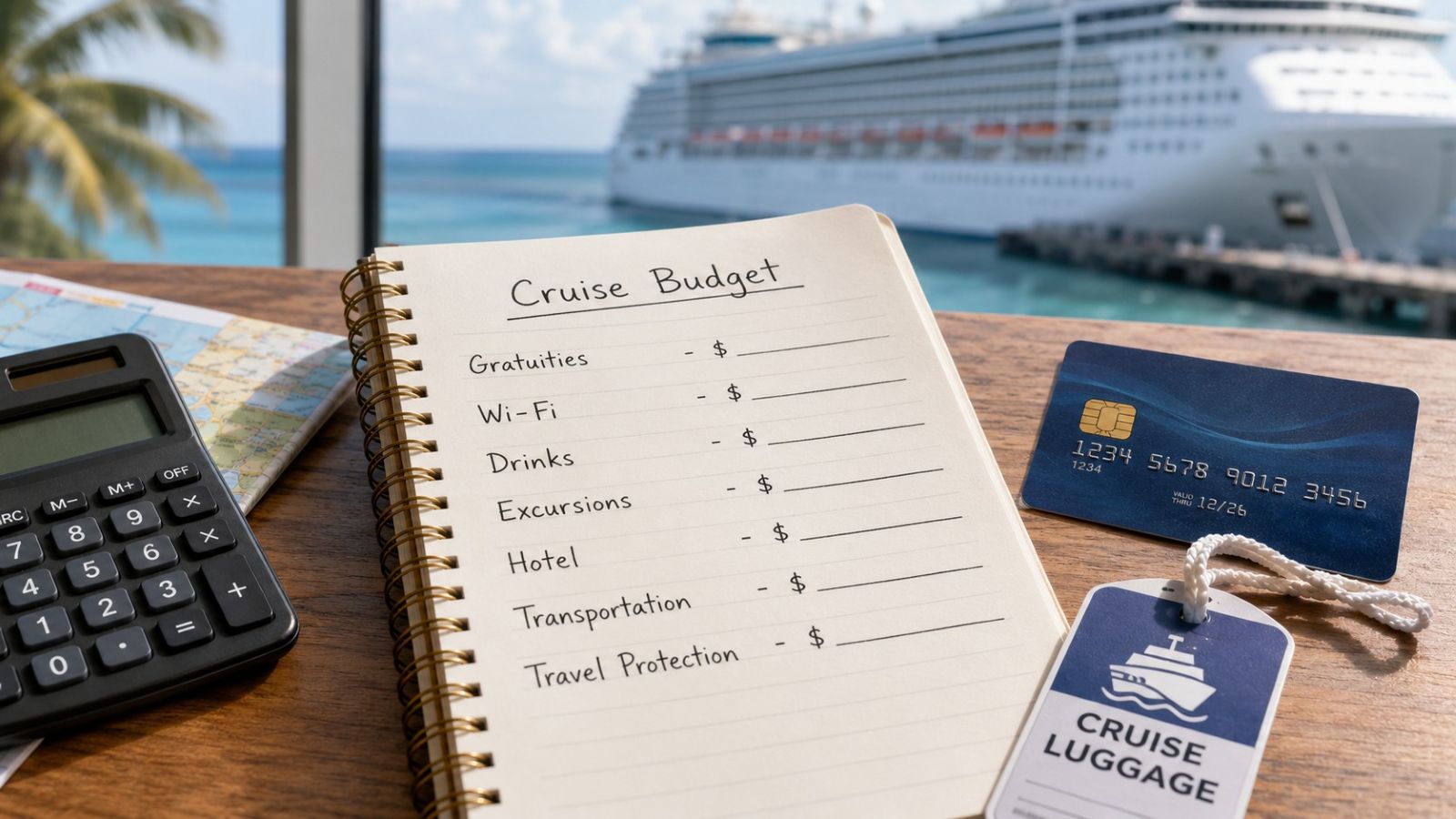
Cruise pricing can look simple at first, but the real value depends on the full picture — fare, taxes, port fees, gratuities, drinks, Wi-Fi, excursions, transportation, hotels, travel protection, and the little extras that add up fast.
That is exactly where Cruise Planning can help. We can help you compare cruise options, work through the booking process, understand what is included, estimate the real cost, and avoid booking something that looks like a deal but does not actually fit how you travel.
If you have a question, feel free to text us at 480-331-1263.
Related Reading
- How We Decide If a Cruise Is Actually a Good Value
- How to Plan a Cruise Without Overpaying (Step-by-Step Strategy)
- How to Choose a Cruise Based on Your Travel Style
- The Most Common Booking Mistakes We See (And How to Avoid Them)
The Cruise Fare Is Only the Starting Point
The cruise fare is the number most people focus on first, and that makes sense. It is usually the big advertised price, and it is the easiest number to compare.
The good news is that taxes and port fees are often included in the upfront cruise price you see now, especially once you are searching on the cruise line website or a booking platform. But cruise budgeting still gets tricky because two cruises with similar upfront prices can have very different total costs once you add everything else.
More detail: What the fare usually includes
Most standard cruise fares include:
- Your cabin
- Meals in included dining venues
- Basic beverages such as water, regular coffee, tea, and some juices
- Most onboard entertainment
- Access to pools, lounges, public areas, and included activities
- Transportation between ports on the itinerary
- Taxes and port fees, in many upfront booking displays
That is a lot of value, especially compared with booking hotels, meals, entertainment, and transportation separately.
But the fare may not include:
- Daily gratuities
- Alcoholic drinks
- Specialty coffees
- Soda or bottled water
- Wi-Fi
- Specialty dining
- Shore excursions
- Transportation to and from the ship
- Travel insurance or travel protection
- Pre-cruise or post-cruise hotels
- Onboard purchases
- Casino spending
- Spa treatments
- Photos
- Laundry
- Some premium activities
That is why we do not look at the first cruise price by itself. We look at the real trip cost.
The best way to see that number is to work through the full booking process far enough to see the total, review the package options, look at gratuities, and understand what is actually included. Or, if you do not want to dig through every detail yourself, this is exactly where we can help.
Taxes and Port Fees Are Usually Built Into the Price, But Gratuities Still Matter
Taxes and port fees used to feel like a bigger surprise because they were often added later in the booking process. Now, in many cases, they are included in the upfront price you see when comparing cruises.
That is a good thing. It makes pricing more transparent. But that does not mean the price you see is the final number you should budget for.
More detail: Why gratuities still matter
Taxes and port fees vary by itinerary. A short cruise with fewer ports may have lower fees, while an itinerary with multiple ports or certain destinations may have more.
Even when those fees are already included in the upfront cruise price, you still need to pay attention to daily gratuities.
Gratuities are typically either prepaid before the cruise or charged onboard during the sailing. They usually cover the crew members who serve you throughout the trip, including cabin stewards, dining staff, and behind-the-scenes team members.
For budgeting purposes, we treat gratuities as part of the cruise cost, not as an optional add-on. Whether they are prepaid before the cruise or charged to your onboard account, they are still part of what the trip actually costs.
A cruise that looks like a great deal at first may still feel very different once gratuities, packages, transportation, hotel nights, and onboard spending are added. That does not mean it is a bad deal. It just means you need the full number before comparing it to another trip.
Getting to the Ship Can Be a Big Part of the Budget
Cruise pricing often makes the sailing look like the whole vacation, but unless you live near the port, you still have to get there.
Flights, hotels, rideshares, parking, rental cars, meals, and luggage fees can all change the real cost of the trip.
More detail: The pre-cruise costs people forget
Common transportation-related cruise costs include:
- Flights to the departure city
- Checked bag fees
- Airport parking
- Rideshare or taxi from the airport to the hotel
- Pre-cruise hotel
- Meals before embarkation
- Transportation from hotel to cruise terminal
- Post-cruise transportation
- Post-cruise hotel, if needed
- Flights home
We usually recommend arriving at least one day early when flying to a cruise. That adds cost, but it also reduces stress. Missing a cruise because of a delayed flight is a much bigger problem than paying for one pre-cruise hotel night.
This is where cheapest and best value can split pretty quickly. A lower cruise fare may not actually save money if the flights are expensive, the port is harder to reach, or the timing requires extra hotel nights.
Drinks, Wi-Fi, and Dining Can Change the Value Fast
Some cruisers are perfectly happy with included food and basic drinks. Others want cocktails, specialty coffee, bottled water, upgraded dining, and Wi-Fi.
Neither approach is wrong. The issue is that these choices can make two people on the same ship spend very different amounts.
More detail: How onboard packages affect the budget
Before booking, we like to think through what we would realistically use.
For example:
- Will you drink alcohol every day?
- Do you want specialty coffee?
- Do you care about soda or bottled water?
- Will you need Wi-Fi for work, family, or posting during the trip?
- Do you want specialty dining?
- Are package gratuities included or added separately?
- Are there limits, exclusions, or service charges?
Packages can be a good value when they match how you actually travel. They can also be a waste if you buy them because they sound convenient but do not use them enough.
This is why we like doing the math before the trip. Not perfect math. Real-life math.
If a drink package costs more than you would naturally spend, it may not be worth it. If Wi-Fi lets you stay connected, work when needed, or avoid stress, it may be worth paying for even if it is not “cheap.”
Excursions Can Be One of the Biggest Wild Cards
Shore excursions can easily become one of the most expensive parts of a cruise, especially for families or groups.
A $150 excursion may not sound terrible until you multiply it by two, four, or more people.
More detail: Ship excursions vs. DIY port days
Cruise line excursions can be the right choice in some situations. They may be easier, more structured, and less stressful. They can also be useful when a port is complicated, far from the attraction, or when timing is tight.
But they are not the only option.
Depending on the port, you may be able to:
- Walk around on your own
- Take a taxi or rideshare
- Use public transportation
- Book a local tour
- Visit beaches, breweries, markets, museums, or gardens independently
- Skip paid excursions completely and enjoy a slower port day
We are not anti-excursion. We are anti-automatically-booking-expensive-excursions-without-thinking.
Some of our favorite cruise days have come from skipping the ship tour and exploring on our own. The key is doing enough research ahead of time to understand distance, timing, safety, transportation, and what happens if plans run late.
Onboard Extras Are Easy to Ignore Until They Hit Your Account
Cruise ships are very good at giving you opportunities to spend money.
Some extras are worth it. Some are fun. Some are easy to say yes to in the moment and regret later.
More detail: The little things that add up
Common onboard extras include:
- Specialty dining
- Extra drinks
- Spa treatments
- Photos
- Casino play
- Bingo
- Deal-or-no-deal style games
- Arcade games
- Race tracks or premium activities
- Fitness classes
- Shopping
- Souvenirs
- Laundry
- Room service fees
- Upgraded desserts or snacks
- Behind-the-scenes tours
None of these are automatically bad. Part of vacation is enjoying yourself.
But if you are trying to understand what the cruise will really cost, you need to be realistic about your own habits. If you love the casino, build that into the budget. If you always buy photos, include that. If the kids are going to want arcade money, plan for it.
A budget does not have to remove the fun. It just keeps the fun from turning into a surprise.
Cruise Line Promotions Can Help, But They Can Also Confuse the Math
Cruise promotions can be valuable, but they are not always as simple as they sound.
Free drinks, free specialty dining, free Wi-Fi, onboard credit, included gratuities, and discounted excursions can all change the total cost. But the details matter.
More detail: Why “included” does not always mean free
When reviewing a cruise promotion, we look for questions like:
- Are gratuities included or added separately?
- Is the drink package truly included, or are package service charges added?
- How many specialty dining meals are included?
- Is Wi-Fi unlimited, or is it a set number of minutes?
- Is onboard credit refundable or nonrefundable?
- Can the credit be used for gratuities, excursions, dining, or anything onboard?
- Are there restrictions based on cabin type?
- Does the package cost more upfront?
- Would you have paid for those items anyway?
Promotions can absolutely improve the value of a cruise. But they should not stop you from doing the math.
Sometimes the more expensive fare with better inclusions is the better deal. Other times, the basic fare plus paying only for what you use makes more sense.
This is another reason we like working through the booking process before making a decision. The first screen may show the fare, but the later steps usually show the real trade-offs.
Travel Insurance Is Complicated, and We Have Mixed Feelings
Travel insurance belongs in the cruise budgeting conversation, but we have mixed feelings about it — especially when it comes to policies sold directly by the cruise line.
That does not mean travel protection is bad. It just means we do not think it should be an automatic add-on without understanding what it covers, what it does not cover, and whether it fits your situation.
More detail: How we think about travel insurance
Most of the time, we have personally gone without separate travel insurance.
That is not necessarily a recommendation for everyone. It is just the reality of how we have usually handled our own trips. We look at the cost, the risk, the cancellation rules, credit card protections, medical concerns, and how much money is truly at stake.
Cruise line travel protection can be convenient, but convenience does not always mean it is the best fit. Before buying it, we would want to understand:
- What reasons are covered for cancellation?
- Is it insurance, a waiver, or future cruise credit protection?
- Does it cover medical costs?
- Does it cover emergency evacuation?
- Does it cover flights and hotels booked separately?
- Does it cover independently booked tours?
- Are pre-existing conditions handled in a way that matters for your situation?
- Would a third-party policy offer better coverage?
- Do your credit card travel protections already cover part of the trip?
Because we have a lot of travel planned, we are now considering an annual travel insurance plan for the first time — not just for one cruise, but for all of our travels throughout the year.
That may end up making more sense for frequent travelers than buying separate protection trip by trip. But like everything else, the details matter.
The bigger point is this: travel protection should be a decision, not a checkbox you click because you feel pressured at the end of the booking process.
Onboard Credit Can Be Helpful, But It Is Not Always Cash
Onboard credit feels like free money, and sometimes it really does help reduce your trip cost.
But it is important to understand what the onboard credit can actually be used for.
More detail: How we think about onboard credit
Onboard credit may come from:
- A cruise line promotion
- A travel advisor booking
- A shareholder benefit
- A casino offer
- A credit card or travel portal offer
- A price adjustment or customer service issue
Before counting onboard credit as savings, we like to understand whether it can be used for things we were already going to buy.
For example, onboard credit is more valuable if it can cover gratuities, excursions, Wi-Fi, drinks, or specialty dining that you would have paid for anyway.
It is less valuable if it pushes you to buy things you would not have purchased otherwise.
That does not make it useless. It just means $100 of onboard credit is not always the same as $100 back in your pocket.
A Simple Real-Life Cruise Budget Framework
When we budget for a cruise, we do not try to guess every dollar perfectly. We build a realistic range.
The goal is to avoid being surprised by the big categories that were easy to see coming.
More detail: The categories we would estimate before booking
Here is the basic framework we would use:
- Cruise fare
- Taxes and port fees, if not already included in the displayed price
- Daily gratuities
- Drink package or estimated drink spending
- Wi-Fi
- Specialty dining
- Shore excursions or DIY port day costs
- Flights or transportation to the port
- Pre-cruise hotel
- Post-cruise hotel, if needed
- Rideshares, taxis, parking, or transfers
- Travel insurance or travel protection, if buying it
- Onboard extras
- Souvenirs and shopping
- Casino or entertainment spending
- Extra food and drinks before or after the cruise
- Emergency buffer
That last one matters.
We like having a buffer because travel rarely goes exactly as planned. Maybe the Uber costs more than expected. Maybe you need an extra meal at the airport. Maybe you decide to book one excursion after all. Maybe the “quick drink” turns into two.
A realistic budget should leave room for real life.
And again, the only way to get close to the true cost is to work through the entire booking process far enough to see the real numbers — or ask someone who knows what to look for to help you compare the options.
The Cheapest Cruise Is Not Always the Best Cruise
A cheap cruise can be a great deal, but only if the full trip works.
Sometimes a more expensive cruise is actually the better value because it has a better itinerary, easier flights, better timing, more included perks, or lower extra costs.
More detail: What we compare before booking
When comparing cruises, we look beyond the fare and ask:
- Is the departure port easy or expensive to reach?
- Does the itinerary match what we actually want to do?
- Are the port times good?
- Are gratuities, Wi-Fi, drinks, or dining included?
- Will we need expensive excursions to enjoy the ports?
- Is the ship a good fit for our travel style?
- Are flights reasonable?
- Do we need extra hotel nights?
- Is the cabin location acceptable?
- What does the final booking total show after working through the process?
- Does the total trip cost feel worth it?
This is where cruising becomes less about finding the lowest price and more about finding the right fit.
The goal is not to spend the least amount possible. The goal is to spend intentionally on a trip you will actually enjoy.
Final Thought: Budget for the Trip You’ll Actually Take
Cruising can still be one of the best values in travel.
You get lodging, meals, entertainment, transportation between destinations, and a vacation structure that can be as relaxing or active as you want it to be.
But the best cruise budget is not based on the first price you see. It is based on the trip you are actually going to take.
If you want drinks, Wi-Fi, specialty dining, excursions, pre-cruise hotels, travel protection, and a few onboard extras, build that into the plan from the beginning. If you prefer a simpler cruise with included dining, DIY port days, and fewer add-ons, that can be a great strategy too.
The point is not to cruise the “right” way.
The point is to know what your cruise is really going to cost before you book it.
That usually means working through the full booking process, looking closely at what is included, and understanding which extras actually apply to the way you travel.
That is how you avoid surprises, make better decisions, and plan a cruise that feels worth it when you get home.
Latest Posts from Cruise Research & Planning | All Posts in Category
- Cruise Budgeting in Real Life: What You’ll Actually Spend Beyond the Fare

- Victoria After Butchart Gardens: The Part Most Cruise Excursions Miss

- We Skipped the Excursion in Victoria… and It Ended Up Being the Best Part of Our Cruise

- How to Plan a Cruise Without Overpaying (Step-by-Step Strategy)

- Why Most “Free” Travel Advice Breaks Down in Real Life

- Cruises Without Paid Excursions: How We Plan Our Own Port Days (And Why We Often Skip the Ship Tours)