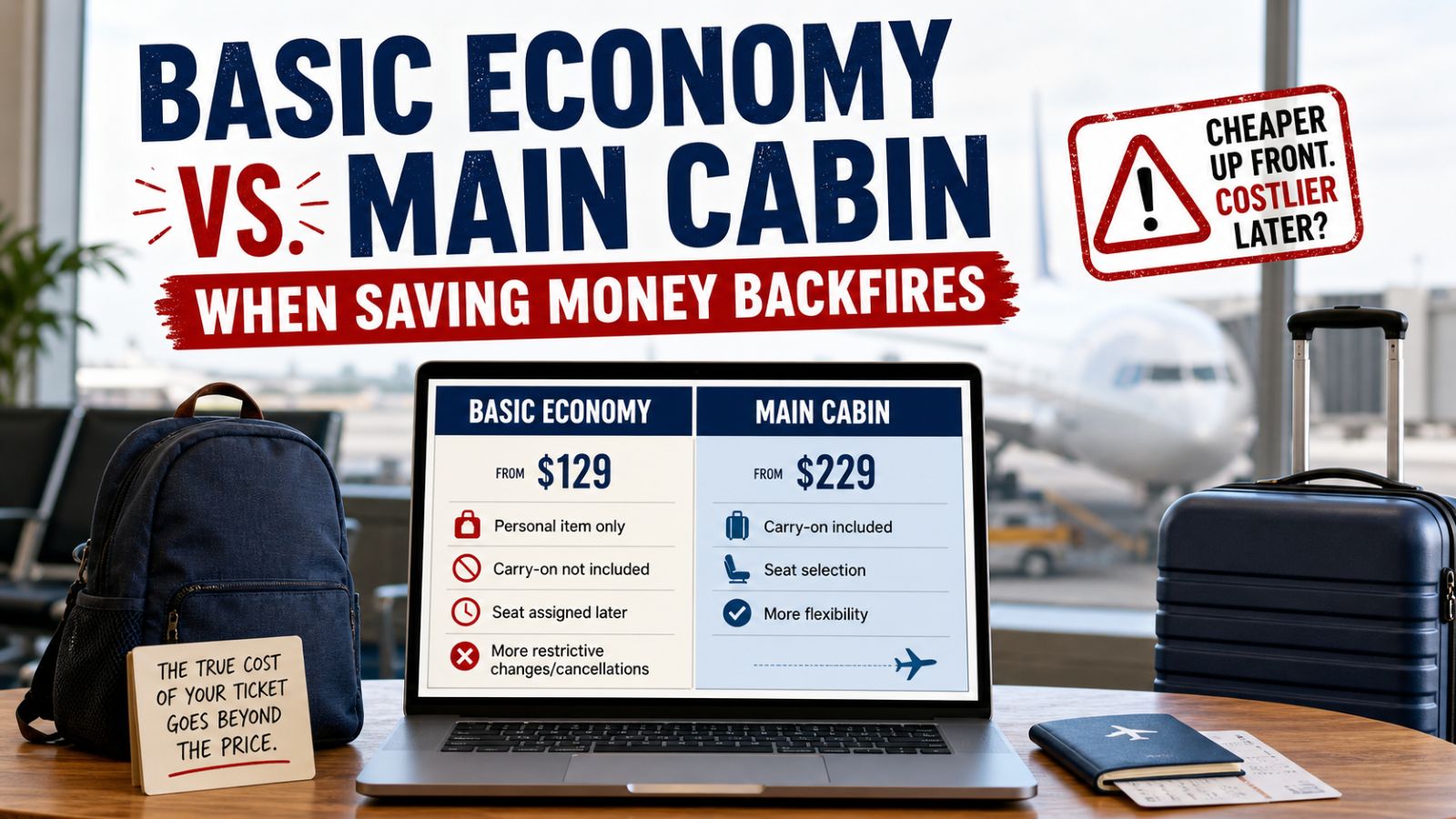
When people talk about travel savings, the conversation usually starts and ends with price.
Cheapest flight. Cheapest hotel. Cheapest option that technically works.
But over time, we’ve learned something important:
The cheapest option isn’t always the best value.
Sometimes, spending a little more—or using points more strategically—creates a trip that simply feels better.
Want Help Deciding What’s Actually Worth It?
This is exactly how we approach travel planning—looking at the full picture, not just the price tag.
If you want help deciding when it makes sense to spend more, when to use points, or how to factor in perks you already have, this is exactly what we help with in our Trip Planning services.
If you have a question, feel free to text us at 480-331-1263.
Related Reading
- Why Cheap Flights Aren’t Always the Best Value
- How to Choose the Right Type of Trip (Based on Your Budget, Time, and Energy)
- Travel Doesn’t Have to Be Fancy to Be Worth It
In this Article:
A Last-Minute Las Vegas Decision
Our second of two trips to Las Vegas came together quickly.
On December 7, we found out Nebraska would be playing in the Las Vegas Bowl on New Year’s Eve, and our son suggested we go. Jon is a lifelong Nebraska fan, so once the idea was out there, the decision was basically made.
If we were going to be in Las Vegas for New Year’s Eve, we wanted to actually experience it—not just pass through.
As you can imagine, prices were not pretty.
Cheap Was an Option — But Not the Right One
A quick search showed that we could stay at a Hampton Inn near Allegiant Stadium for less money or fewer points. There were also plenty of cheaper options farther from the action.
That would have been the cheapest option.
Instead, we found New Year’s Eve availability on points at Virgin Las Vegas through Hilton. We booked two rooms—one for us and one for our son, daughter-in-law, and niece.
We also needed a room for the night before. Rather than switching hotels, we chose to pay cash for that night since the points value didn’t make sense.
The cash rate was higher than we normally like—but it made sense for this trip.
Why This Was the Better Value (For Us)
In full transparency, this stay worked especially well because of perks we already had.
We both have Hilton Diamond status through a credit card, which came with:
- $30 per day food & beverage credit, per room
- An additional $25 promotional credit per room from Virgin
- Credits that mostly covered:
- Breakfast buffet for five on day one
- Coffee shop stops on day two
Even more surprisingly, both rooms were upgraded from standard rooms to suites. The hotel was sold out, and our Diamond status likely helped push us into better rooms once standard inventory was gone.
We also had small statement credits that offset part of the cash rate.
None of this shows up if you only compare nightly prices.
What Most People Miss When Comparing “Cheap” vs “Value”
This is where trips can quietly go wrong.
When you only compare price, you miss things like:
- Location – Are you close to what you actually want to do?
- Time & Convenience – Will you spend more time getting around?
- Perks & Credits – Food, drinks, upgrades, and benefits
- Flexibility – Easier changes, better cancellation options
- Overall Experience – How the trip actually feels
Sometimes the cheaper option ends up costing more—in time, stress, or missed experiences.
Location, Comfort, and Experience Matter
Virgin isn’t on the Strip, but that worked in our favor.
- Close to local favorites like Naked City Pizza / Office Bar
- About a mile walk to the Strip if we wanted it
- A hotel we already knew we liked
- No hotel hopping during one of the busiest weekends of the year
When we headed toward the Strip on New Year’s Eve, it was raining, so we skipped the walk. We walked back later and were glad we had the option.
This was one of those trips where the overall experience mattered more than squeezing out the lowest possible price.
A Simple Way to Decide: Cheap vs Worth It
When you’re planning a trip, ask yourself:
- Would I still choose this option if it were only slightly cheaper?
- Am I giving up something I’ll care about later?
- Are there perks or benefits I’m not factoring in?
- Will this make the trip easier or more stressful?
If the “cheaper” option creates friction or takes away from the experience, it may not actually be the better value.
The Real Takeaway
We could have stayed cheaper.
We could have used points differently.
We could have optimized for cost alone.
Instead, we optimized for value—location, comfort, perks, and how the trip actually felt.
That choice cost a little more money and points, but it delivered a better experience across the board.
And that’s the difference between cheap and worth it.
Latest Posts from Trip Reports & Real Examples | All Posts
- Jon Booked Hawaii 5 Days Before — Melanie Didn’t Know Where or Why

- Jon’s First Cruise: What Surprised Me

- Expectation vs. Reality: Whale Watching in Alaska (Reality Completely Exceeded Expectations)

- The Cheapest Option Isn’t Always the Best Value

- Stepping Into Oz at the Sphere: Was It Worth It? (Our Honest Take)

- Bellagio Conservatory: Stepping Into a Hallmark Movie — For Free