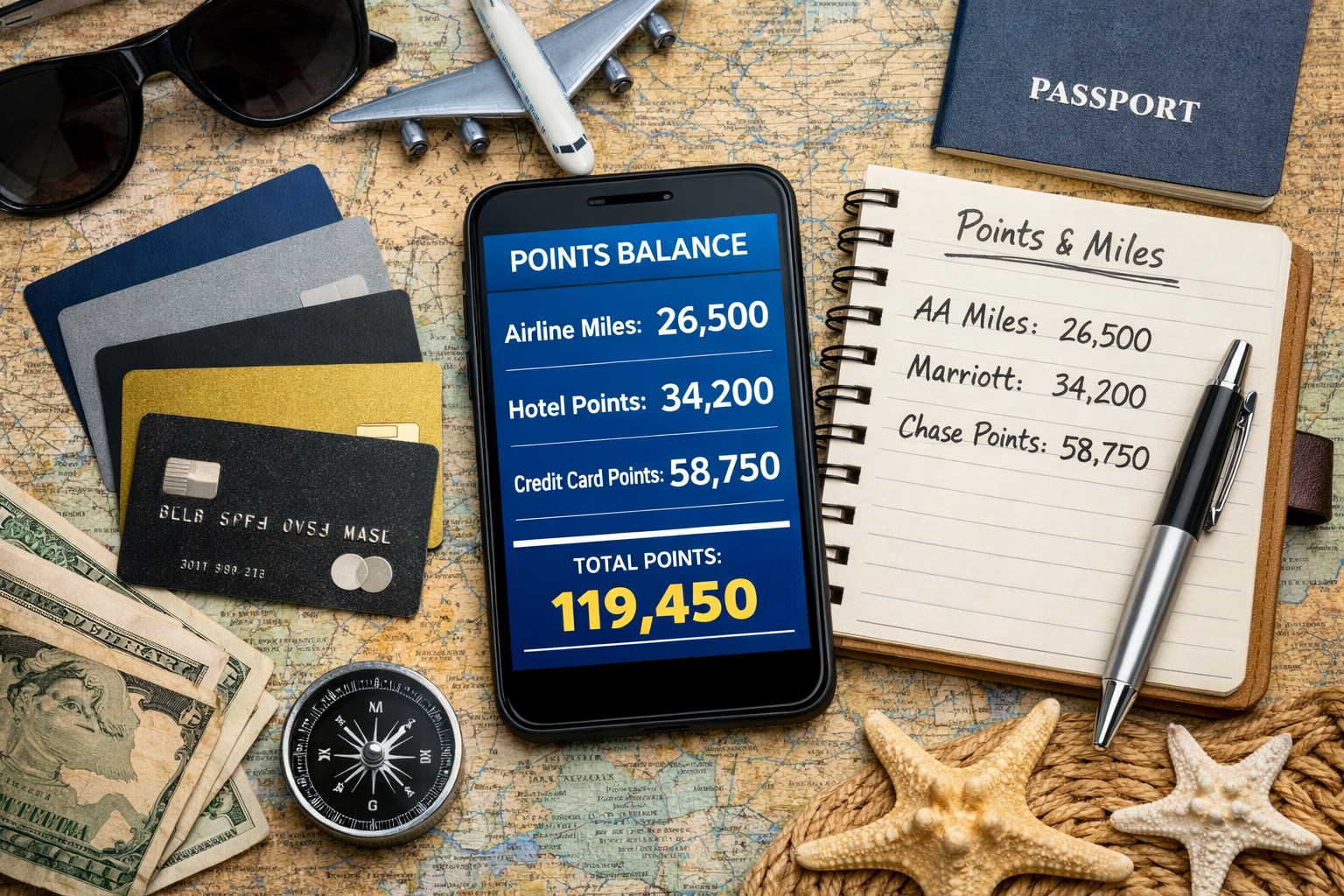
Points, miles, and travel perks can be incredibly powerful tools.
They can help lower travel costs, unlock experiences that might otherwise feel out of reach, and add comfort and flexibility to trips you were already planning.
But there’s an important truth that often gets overlooked in the excitement around points and rewards:
Points only work well when your finances are stable and manageable.
Without a solid financial foundation, rewards can quickly turn from helpful to harmful. Instead of supporting your goals, they can lead to overspending, unnecessary fees, or credit card balances that erase the value of the rewards you earned.
Good travel strategies don’t start with a credit card.
They start with a solid money foundation.
Need Help Building a Points & Rewards Strategy That Fits Real Life?
A good points and rewards strategy should support your finances, not complicate them.
If you want help figuring out how travel rewards fit into your real budget, whether a card strategy makes sense for you, or how to keep things simple and manageable, visit our Planning & Consulting page to learn more.
If you have a question, feel free to text us at 480-331-1263.
In this Article:
Rewards Are a Tool — Not a Financial Strategy
One of the biggest misconceptions about travel rewards is that points themselves are the strategy.
In reality, points are simply a tool that sits on top of your existing financial habits.
If your finances are organized and under control, rewards can amplify the value of spending you were already going to do. Groceries, gas, dining, and travel purchases can gradually turn into airline miles, hotel stays, and travel credits.
But if spending is already stretched or difficult to track, rewards programs can make things more complicated rather than more helpful.
Points should never drive spending.
They should only enhance spending that already fits comfortably within your budget.
Paying Balances in Full Protects the Value of Rewards
Credit card rewards only provide value when interest isn’t involved.
Most travel rewards cards carry high interest rates. Even a small balance carried for a few months can quickly outweigh the value of the points earned from those purchases.
For example, a $2,000 balance carried on a card with a typical interest rate can easily generate more interest charges than the rewards earned from the spending that created the balance.
That’s why the most effective points strategies almost always rely on a simple rule:
Pay balances in full whenever possible.
This keeps rewards as a benefit rather than a cost.
Knowing Your Real Spending Limits
Another key part of a healthy rewards strategy is understanding your real spending limits.
Welcome bonuses and category bonuses can sometimes encourage people to spend more than they normally would just to earn extra points. But spending extra money to earn rewards rarely makes financial sense.
A better approach is to align rewards with spending you were already planning to do.
When points are earned from everyday purchases like groceries, gas, travel, and normal bills, they add value without adding financial pressure.
The goal isn’t to spend more.
The goal is to earn rewards from the spending that already fits your life.
Avoiding the “Points Justification” Trap
Another common mistake is using points or rewards as a way to justify spending that wouldn’t otherwise happen.
It’s surprisingly easy to tell yourself things like:
- “I’m earning points on this.”
- “This helps me hit a bonus.”
- “The rewards will offset the cost.”
Sometimes that logic works when the purchase was already planned.
But if the purchase only exists because of the rewards, the math usually doesn’t work in your favor.
The best rewards strategies feel almost invisible in day-to-day life. You earn points as a byproduct of spending you were already comfortable making.
Keeping Your System Simple and Trackable
Another often overlooked part of a strong rewards strategy is simplicity.
Many online discussions about points encourage complicated setups involving large numbers of cards, rotating bonuses, and constantly shifting strategies.
For some people that complexity is enjoyable.
For many people, it quickly becomes overwhelming.
A good system should feel manageable and easy to track. That might mean:
- Using only one or two cards
- Having a clear purpose for each card you carry
- Tracking spending categories you already use
- Keeping statements and payments easy to monitor
A simple system that you actually maintain is almost always more effective than a complicated system that becomes difficult to manage.
Building the Foundation First
When your finances are stable and organized, rewards can become a powerful layer on top of your everyday spending.
Points can help you:
- Reduce travel costs
- Upgrade travel experiences
- Add flexibility and comfort to trips
- Stretch a travel budget further
But the foundation always comes first.
Healthy financial habits make rewards sustainable. Without that foundation, points can easily become a distraction rather than a benefit.
Good travel doesn’t start with a credit card.
It starts with a solid money foundation.
Latest Posts from Personal Finance