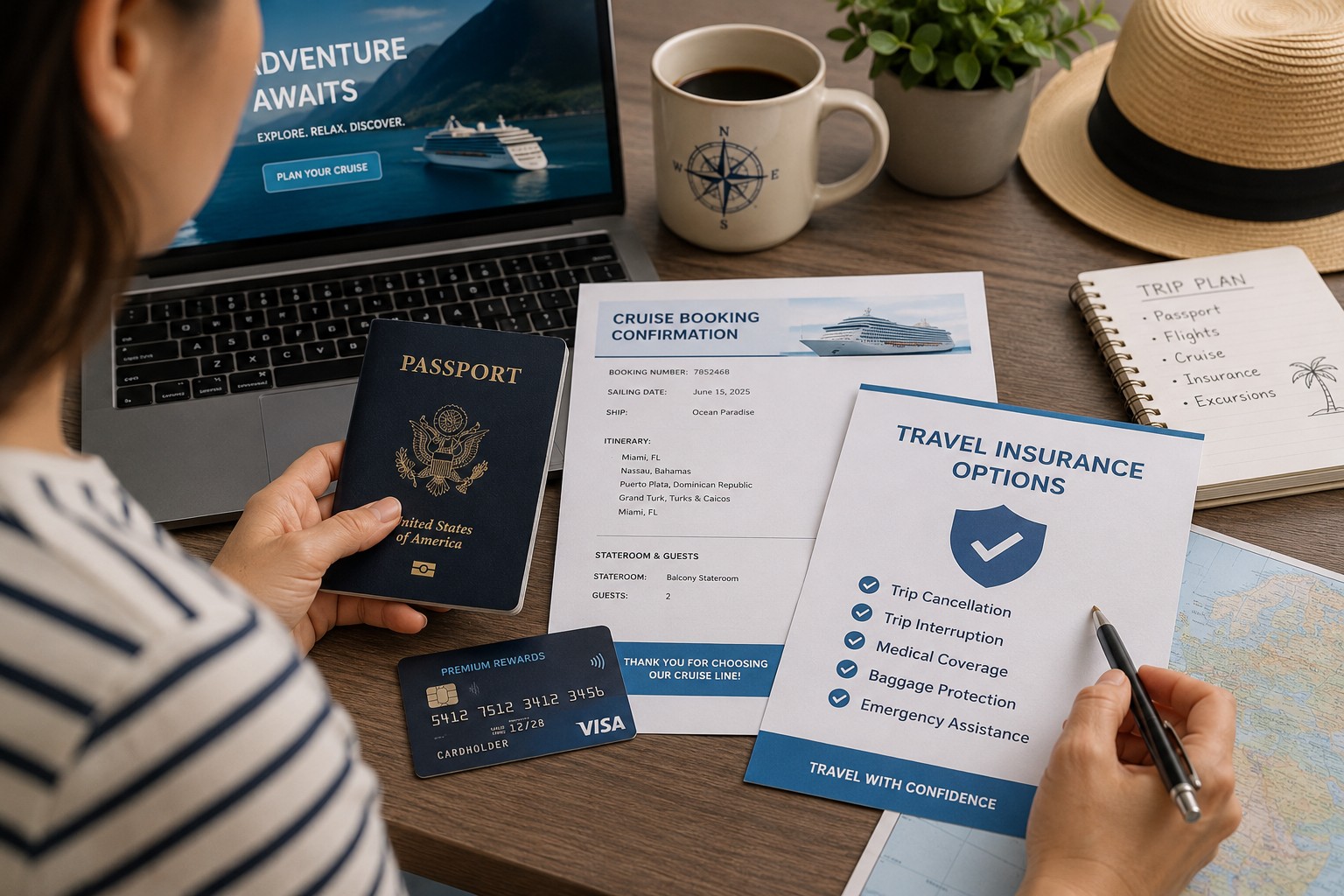
Travel insurance is one of those things that sounds simple until you actually start comparing the options.
Do you need it for every trip?
Is the cruise line insurance enough?
Does your credit card already cover you?
And at what point are you really just paying extra for something you could afford to handle yourself?
We don’t think travel insurance is an automatic yes or an automatic no. It depends on the trip, the cost, the people traveling, your health situation, your risk tolerance, and what protection you may already have through your credit cards or existing insurance.
For us, the real question is usually this:
If something went wrong, would we be upset… or would we be financially hurt?
That difference matters.
Need Help Thinking Through the Real Cost of a Trip?
Travel insurance is only one piece of trip planning. The bigger question is whether your flights, hotels, cruise, points, credits, backup options, and overall risk all make sense together.
If you’re trying to plan a trip and want help comparing your options, our Trip Planning service can help you think through the real tradeoffs before you book.
If you have a question, feel free to text us at 480-331-1263.
Travel Insurance Is Really About Risk, Not Fear
Travel insurance should not be about scaring yourself into buying coverage for every little thing. It should be about understanding what risk you are taking on.
More detail: What travel insurance is trying to protect
A $300 hotel stay you can cancel until the day before arrival is not the same as a $12,000 cruise-and-Europe trip with nonrefundable flights, prepaid excursions, and multiple moving pieces.
Most people think of travel insurance as “what if I have to cancel?” That is part of it, but it is not the whole picture.
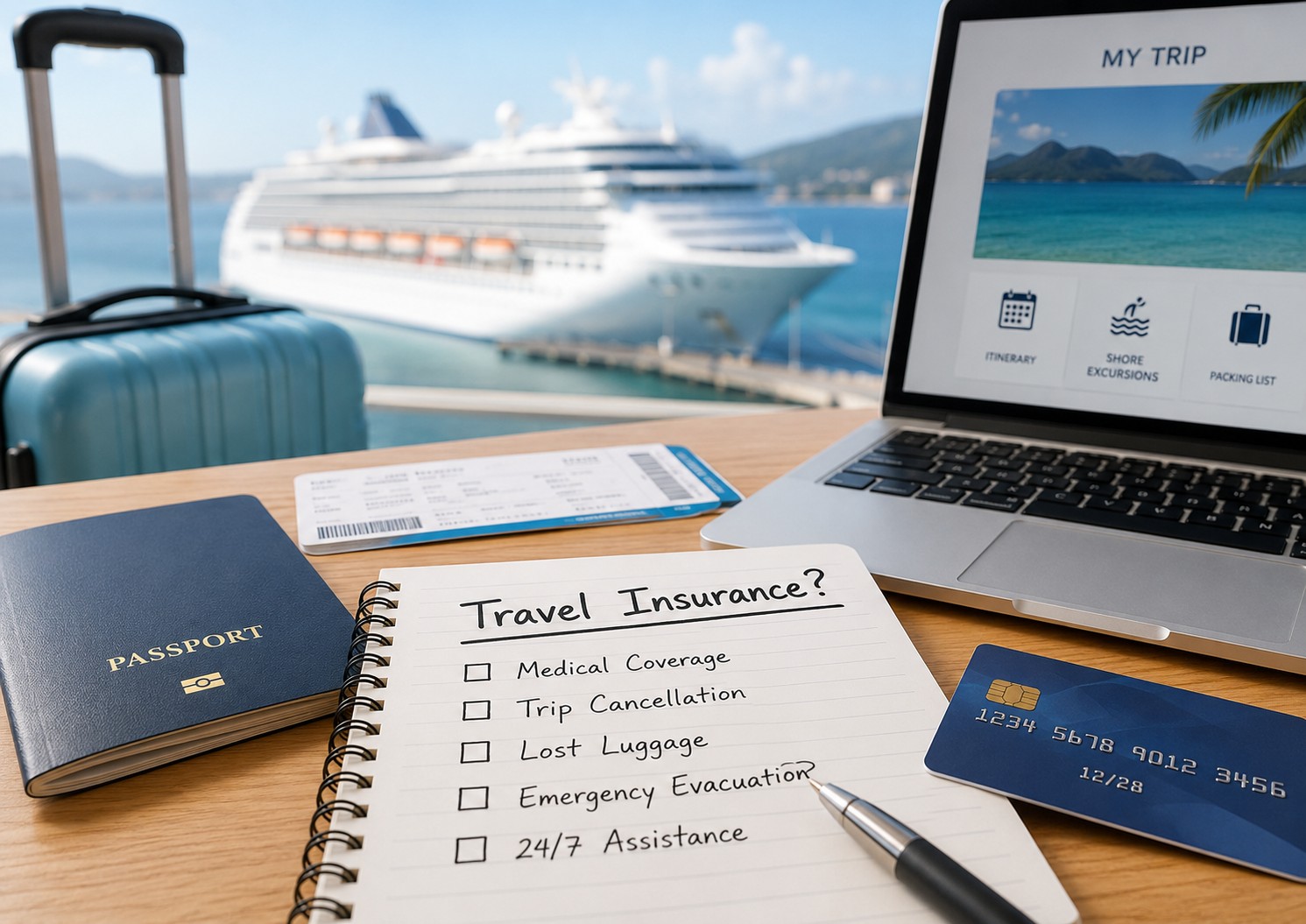
Travel insurance can potentially help with things like:
- Trip cancellation
- Trip interruption
- Travel delays
- Missed connections
- Lost, stolen, or delayed baggage
- Emergency medical expenses
- Medical evacuation
- Certain weather or airline disruptions
- Some covered family or health emergencies
The key word is potentially.
Travel insurance is not a magic refund button. Every policy has covered reasons, exclusions, limits, deadlines, documentation requirements, and fine print.
That does not mean it is bad. It just means you need to know what you are buying.
When Travel Insurance Is Probably Worth It
There are trips where insurance makes a lot of sense because the cost of something going wrong could be much higher than you would want to absorb yourself.
More detail: Situations where we would seriously consider coverage
Travel insurance may be worth considering when:
- You have a lot of prepaid, nonrefundable trip costs
- You are traveling internationally
- You are taking a cruise
- You have multiple flights, hotels, transfers, or moving pieces
- You are traveling during winter weather or hurricane season
- You are traveling with older family members
- You have health concerns or family situations that could affect the trip
- You would struggle to rebook flights or hotels out of pocket
- You are booking a once-in-a-lifetime or high-cost trip
- You need medical or evacuation coverage that your regular health insurance may not provide
For example, a two-week international trip with business class flights, hotels in multiple cities, train tickets, tours, and cruise deposits is very different from a quick weekend trip using refundable points.
The more nonrefundable money you have at risk, the more travel insurance starts to make sense.
Medical Coverage Is a Big Part of the Decision
Trip cancellation gets most of the attention, but medical coverage may be the bigger reason to look at travel insurance, especially outside the United States.
More detail: Why medical and evacuation coverage matters
A delayed bag is annoying. A canceled tour is frustrating. A medical emergency in another country can become expensive and complicated very quickly.
Before buying a policy, one of the first things to check is whether your regular health insurance covers you where you are going.
Some plans may offer limited emergency coverage outside the country. Others may not. Medicare and Medicaid generally do not pay for medical care outside the United States, which is especially important for older travelers to understand before leaving the country.
Medical evacuation is another major consideration.
If you get seriously sick or injured while traveling, especially on a cruise, in a remote area, or outside the U.S., getting you to the right medical facility can be expensive. In rare cases, getting home safely can be even more complicated.
That is why we would look at travel insurance differently for:
- A domestic road trip
- A quick Las Vegas weekend
- A Caribbean cruise
- A two-week Europe trip
- An Alaska cruise with remote ports
- A trip where someone has health concerns
The trip may cost the same on paper, but the risk is not always the same.
When You Might Be Self-Insured
Being “self-insured” does not mean nothing can go wrong. It means you are choosing to accept the risk yourself because the possible loss is small enough, flexible enough, or already covered enough that buying extra insurance may not be worth it.
More detail: What self-insured really means
You might be comfortable self-insuring when:
- Most of the trip is refundable
- You booked with points that can be redeposited
- The cash cost is low
- You are traveling domestically
- Your credit card already provides meaningful protections
- You can afford to lose the nonrefundable portion
- You are not worried about medical coverage for that specific trip
- The cost of insurance feels high compared with the amount actually at risk
For example, if you book a hotel on points with a flexible cancellation policy and use airline miles that can be canceled or changed, your real cash risk might be pretty small.
In that case, buying a full travel insurance policy may not be necessary.
But that does not mean self-insuring is always the right answer. It just means you should compare the insurance cost to the actual risk — not just the total retail price of the trip.
The Math Behind Self-Insuring
A single insurance offer might not feel expensive in the moment. But if you buy it over and over again, the cost adds up.
More detail: How repeated insurance purchases can become your own backup fund
Let’s use a hypothetical cruise example.
Norwegian’s cruise protection, sometimes referred to by cruisers as Norwegian Care, can easily cost around $150 to $200 or more per person, depending on the price of the cruise and the level of coverage selected.
That may not sound terrible on one cruise.
But what if you travel often?
If you skip a $175 travel protection plan on one cruise, that does not mean you should go spend that money somewhere else. If you are serious about self-insuring, the idea is that you are effectively keeping that money available for future travel problems.
Here is a simple example:
- Skip one $175 cruise protection plan: $175 kept
- Skip two similar plans: $350 kept
- Skip four similar plans: $700 kept
- Skip six similar plans: $1,050 kept
- Skip ten similar plans: $1,750 kept
That does not mean you are guaranteed to come out ahead. One major issue could wipe out those savings quickly.
But it does show why frequent travelers may think differently than occasional travelers.
If someone takes one major trip every few years, buying travel insurance may feel like a reasonable way to protect that one trip.
If someone travels many times per year and buys every airline, cruise line, hotel, and tour protection offer that appears at checkout, they may spend hundreds or even thousands of dollars over time.
At that point, the question becomes:
Would we rather pay for separate coverage every time, or would we rather keep that money available and accept some of the risk ourselves?
That is the core idea behind self-insuring.
Self-Insuring Only Works If You Are Realistic
Self-insuring sounds smart when nothing goes wrong. It feels very different when something does.
More detail: What you need if you choose to self-insure
We do not think of self-insuring as simply “skipping insurance.” We think of it as taking responsibility for the risk yourself.
If you are going to self-insure, you need to be realistic about what that means.
You should be comfortable with things like:
- Losing a nonrefundable deposit
- Paying for a replacement flight
- Covering an extra hotel night during a delay
- Buying essentials if your bag is delayed
- Absorbing smaller travel disruptions without reimbursement
- Having enough emergency savings or available credit to handle an unexpected issue
That last part matters.
Self-insuring is not really self-insuring if you would need to go into financial stress the moment something went wrong.
For us, the decision often comes down to the size of the potential loss.
We may be comfortable taking the risk on smaller, more manageable expenses. But we would think much harder about a trip where cancellation, interruption, medical care, or evacuation could create a major financial problem.
Our Personal Approach
We are not anti-travel insurance. But most of the time, we do not buy the add-on insurance offered by the airline, cruise line, hotel, or booking site.
More detail: How we usually think about our own trips
That is not because we think nothing can go wrong. Things can absolutely go wrong.
It is because we generally consider ourselves self-insured for many of the trips we take.
Because we travel fairly often, we do not usually want to pay for every individual protection offer that pops up during the booking process.
Instead, we try to be intentional about how we book.
We look at:
- What is refundable
- What was booked with points or miles
- What can be changed or canceled
- What the actual cash risk is
- Which credit card we should use
- What protections that credit card may provide
- Whether the trip has enough risk to justify a separate policy
We also try to use the right credit card when booking travel, because some cards provide useful trip protections when used correctly.
That does not mean credit card coverage solves everything. It usually does not. But it can be part of the decision.
With as much as we travel, we have also been considering and researching annual travel insurance plans. At a certain point, if you travel often enough, an annual plan may make more sense than buying separate coverage for every trip.
We have not treated travel insurance as a one-size-fits-all decision. For us, it is more about the specific trip, the real risk, and whether we are comfortable carrying that risk ourselves.
Credit Card Travel Insurance Can Help, But Read the Rules
Some travel credit cards include useful travel protections. This is one reason we like using the right card when booking flights, cruises, hotels, or tours.
More detail: Where credit card coverage can be useful
Credit card travel insurance is not always the same as a standalone travel insurance policy.
Depending on the card, credit card travel protections may include things like:
- Trip cancellation or interruption coverage
- Trip delay reimbursement
- Baggage delay coverage
- Lost luggage reimbursement
- Rental car coverage
- Emergency assistance services
That can be very valuable.
But there are usually rules.
You may need to pay for the trip with that card or with points connected to that card. Coverage limits may be lower than your total trip cost. Some cards may not include medical coverage. Some may cover only certain family members or certain types of interruptions.
This is where people get tripped up.
They know their card “has travel insurance,” but they have not checked what it actually covers.
Before deciding you are covered, look at:
- Which card was used to book the trip
- Whether points, miles, cash, or a travel portal were involved
- What expenses are eligible
- What reasons are covered
- Whether medical coverage is included
- Whether cruises are treated differently
- What documentation would be required for a claim
Credit card coverage can absolutely be enough for some trips. For others, it may only cover part of the risk.
For another look at using card benefits intentionally, read our article on credit card strategy once that article is connected here.
Cruises Deserve Extra Attention
Cruises are one area where travel insurance can make more sense than people realize. That does not mean you always need to buy the cruise line’s insurance.
More detail: Why cruises are different
Cruises can involve:
- Nonrefundable final payment deadlines
- Flights to the port
- Hotels before or after the cruise
- Transfers
- Shore excursions
- Medical care onboard
- Missed embarkation risk
- Missed port risk
- Weather or itinerary changes
- Medical evacuation concerns
If you miss a hotel night, you may lose that hotel night.
If you miss a cruise departure, that can become a much bigger problem.
Cruise line travel protection may be convenient, but it may not always be the best or most complete option. Third-party travel insurance may offer broader medical, evacuation, or cancellation options, depending on the policy.
This is one of those areas where comparing the options matters.
The best choice may be:
- Cruise line coverage
- A third-party policy
- Credit card protections
- A mix of protections
- Or self-insuring if the risk is low enough
The right answer depends on the trip.
Annual Travel Insurance Plans May Be Worth Researching
If you travel several times a year, an annual travel insurance plan may be worth looking into. That does not automatically mean it is the right choice, but the math may change.
More detail: Why frequent travelers may look at annual coverage
An annual travel insurance plan may be worth researching if you take multiple trips per year and find yourself repeatedly debating coverage.
Instead of buying one-off policies for each cruise, flight, or trip package, an annual plan may provide certain protections across multiple trips during the year.
The appeal is pretty easy to understand.
If someone is regularly paying $150, $200, or more for individual travel protection offers, those costs can add up quickly.
At some point, it may be worth comparing:
- The cost of multiple separate policies
- The cost of an annual travel insurance plan
- The coverage limits of each option
- Whether medical and evacuation coverage are included
- Whether trip cancellation is included or limited
- What credit card protections already cover
- How often you actually travel
The big caution is that annual plans vary a lot.
Some may be stronger for medical and evacuation coverage but weaker for trip cancellation. Some may have per-trip limits. Some may not solve the exact risk you are worried about.
So we would not assume an annual plan is better just because it sounds convenient.
But for frequent travelers, it is absolutely something worth researching.
Cancel For Any Reason Sounds Great, But It Has Limits
Cancel For Any Reason coverage sounds like the cleanest solution. Sometimes it may be worth considering, but it is usually more expensive and still comes with rules.
More detail: What to know before paying extra for CFAR
Cancel For Any Reason coverage generally allows you to cancel for reasons that would not normally be covered by standard trip cancellation coverage.
That can be helpful if you are worried about things like:
- Changing your mind
- Family uncertainty
- Work conflicts
- General discomfort with traveling
- Concerns that may not fit a standard covered reason
But CFAR coverage usually has requirements.
You often have to buy it soon after your first trip payment. You may need to insure the full prepaid, nonrefundable cost of the trip. You usually have to cancel by a certain deadline before departure. And it typically reimburses only a percentage of the trip cost, not the entire amount.
That does not make it bad. It just means you should know what you are paying for.
If your biggest concern is, “What if I simply decide not to go?” then standard travel insurance may not solve that problem.
Pre-Existing Conditions Are Another Fine-Print Area
This is one of the biggest reasons not to wait too long if you think you may want travel insurance for a bigger trip.
More detail: Why timing matters
Many policies treat pre-existing medical conditions differently, and some coverage may only be available if you buy the policy within a certain window after your first trip payment.
If someone traveling has a medical condition, recent treatment, medication changes, or an ongoing health concern, do not assume a policy will automatically cover cancellation or medical issues related to that condition.
Some policies may offer a pre-existing condition waiver, but there are usually conditions attached.
Those may include things like:
- Buying the policy within a certain number of days after the first trip payment
- Insuring the full prepaid, nonrefundable trip cost
- Being medically able to travel when the policy is purchased
- Meeting the specific terms of that policy
This is one reason we would not wait until the last minute to think about insurance for a big trip.
If you wait too long, some options may no longer be available.
The Real Question: What Could You Afford to Lose?
Two people can book the same trip and make different insurance decisions — and both can be reasonable.
More detail: A simple way to think about it
Before buying travel insurance, we would ask:
- How much money is actually nonrefundable?
- How much of the trip was booked with points or miles?
- Can those points or miles be redeposited?
- What would it cost to rebook if something went wrong?
- Would our credit card cover any of this?
- Does our health insurance cover us where we are going?
- Would a medical emergency create a major financial problem?
- Are we traveling with anyone whose health or schedule adds risk?
- Are we okay losing this money if we choose not to insure it?
That last question is the big one.
If losing the money would be annoying but manageable, self-insuring may make sense.
If losing the money would be painful or if a medical issue could create a major financial problem, travel insurance starts to look much more valuable.
A Few Examples of How We’d Think About It
We do not make the same travel insurance decision for every trip. The trip matters. The cost matters. The risk matters.
More detail: Real-life style examples
A cheap domestic weekend trip
If we book a short domestic trip with points, flexible hotel cancellation, and a low cash cost, we may be comfortable self-insuring.
There may not be enough money at risk to justify buying a separate policy.
A cruise with flights to the port
This is where we would pay more attention.
If flights, hotels, and cruise fare are all involved, a disruption could create a bigger problem. We would want to know what the credit card covers, what the cruise line offers, and what a third-party policy would cover.
We still may choose to self-insure, but we would make that choice more carefully.
A two-week international trip
This is the type of trip where travel insurance may be worth it.
There may be more prepaid expenses, more moving pieces, more transportation connections, and more medical risk if something happens abroad.
A trip with older family members or health concerns
This is another area where we would look carefully at coverage, especially medical, evacuation, and pre-existing condition rules.
Even if the trip cost is not enormous, the potential medical side of the risk may matter more.
A last-minute deal
Sometimes the trip itself is cheap, which makes people skip insurance.
That might be fine.
But if the trip is a cruise or international trip, the medical and evacuation piece may still matter even if the fare was a great deal.
Cheap trip does not always mean low risk.
What We Would Not Do
We would not buy travel insurance blindly just because a booking site adds a checkbox. We would also not skip it automatically just because we have a credit card with travel protections.
More detail: The middle ground
Before paying for coverage, we would avoid:
- Buying the first option shown at checkout without comparing it
- Assuming cruise line coverage is always best
- Assuming third-party coverage is always best
- Assuming credit card coverage solves everything
- Buying coverage after key time-sensitive benefits are no longer available
- Ignoring medical coverage when traveling internationally
- Paying to insure refundable expenses
- Insuring the retail value of a trip when the real cash risk is much lower
The goal is not to buy the most insurance possible.
The goal is to protect the part of the trip that would actually hurt if something went wrong.
Final Thoughts
Travel insurance is not about being paranoid. It is about understanding the real risk of the trip you are booking.
Sometimes, buying coverage makes a lot of sense.
Sometimes, your credit card protections, refundable bookings, points, and personal savings may be enough.
And sometimes, the smartest answer is somewhere in the middle.
For us, we usually lean toward being self-insured. We skip most of the add-on insurance offers from airlines, cruise lines, hotels, and booking sites. We try to use the right credit card, understand what is refundable, and know what risk we are choosing to carry ourselves.
But with as much as we travel, we are also researching whether an annual travel insurance plan could make sense for us.
That is the real point.
Travel insurance is not a yes-or-no decision for every person or every trip.
Look at the trip. Look at the nonrefundable costs. Look at your health coverage. Look at your credit card benefits. Look at the people traveling with you. Look at how often you travel.
Then decide whether you want to transfer that risk to an insurance company — or whether you are comfortable carrying it yourself.
Neither answer is always right.
But making the decision intentionally is a lot better than finding out too late that you were not covered the way you thought you were.
Latest Posts from Travel Essentials
- Amazon Free Trials Ahead of Prime Day: Audible, Kindle Unlimited, and Amazon Music for Travel

- When Travel Insurance Is Worth It — and When You Might Be Self-Insured
- Travel Insurance: When It Makes Sense, When It Doesn’t, and What You Might Already Have
- AAA Travel Benefits You Might Be Overlooking

- What to Pack in Your Personal Item and Carry-On for a Smoother Flight

- Our Favorite Travel Essentials