One of the easiest ways to be disappointed by a cruise is to book one version of cruising in your head, then walk onto a ship that offers something completely different.
That does not mean the cruise is bad.
It might just mean the ship, itinerary, cabin, entertainment, dining, or overall vibe was not what you expected.
We have learned that cruising is not one single experience. A newer mega ship can feel like a floating resort. A smaller or older ship can feel more relaxed, easier to navigate, and less overwhelming. A port-heavy itinerary can feel completely different from a cruise with several sea days. And your experience can change a lot depending on whether you researched the ship itself, not just the cruise line.
That is why setting expectations before you sail matters. It helps you choose better, pack better, plan better, and enjoy the trip for what it is instead of being frustrated by what it is not.
Want Help Choosing the Right Cruise?
If you are trying to compare cruise lines, ships, itineraries, cabins, or booking options, our Cruise Planning page is a good place to start. We help travelers think through the real-life tradeoffs before they book, so the cruise they choose actually fits the trip they want.
If you have a question, feel free to text us at 480-331-1263.
Start With the Ship, Not Just the Cruise Line
A cruise line name only tells part of the story. The ship itself matters just as much.
More detail: Why the ship matters
Even within the same cruise line, one ship may have newer cabins, bigger entertainment venues, more restaurants, water slides, go-karts, or larger public spaces. Another ship may be older, smaller, quieter, and easier to get around. Neither one is automatically better. They just offer different versions of cruising.
That is especially important if you are new to cruising. Jon went into his first cruise thinking he might not be a cruise person at all, and part of what surprised him was how different the actual experience felt from what he expected. We wrote more about that in Jon’s First Cruise: What Surprised Me.
Before you book or before you sail, look up:
- The ship name
- The ship class
- When it was built
- Whether it has been recently refurbished
- What restaurants and venues are onboard
- What the cabin layouts look like
- Whether the ship is known for big activities, quiet spaces, nightlife, family features, or destination-focused cruising
This is also where Cruise Research & Planning becomes useful. The goal is not to over-plan every minute. It is to avoid booking blindly.
Watch Recent Ship-Specific Videos
Cruise line ads are designed to make everything look polished. Ship-specific videos usually give you a more realistic feel.
More detail: What to search before you sail
Cruise line marketing is not wrong. It is just marketing.
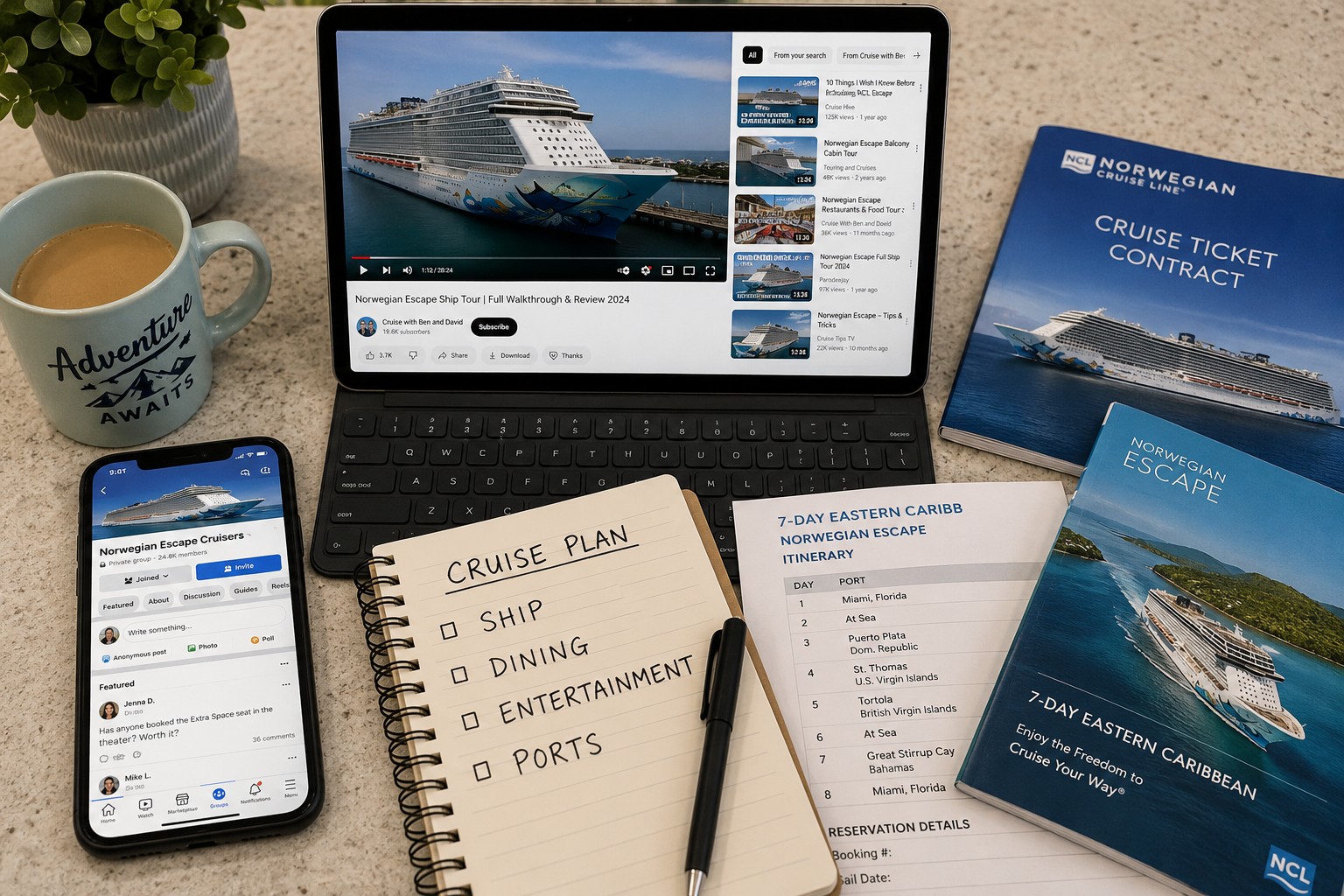
Before we sail, we like to watch ship-specific videos because they show the real layout, real walking distances, real cabins, and real public spaces. A full ship tour can tell you more in 30 minutes than a list of amenities on a booking page.
Search for videos like:
- Full ship tour
- Cabin tour for your exact room category
- Balcony cabin tour
- Inside cabin tour
- Recent sailing review
- Things to know before sailing on your ship
- Day in the life on your ship
- Embarkation day on your ship
Try to find videos from the last year or two when possible. Ships change. Entertainment changes. Dining options change. Venues get updated. A video from five or six years ago may still be useful, but it may not fully reflect what you will experience now.
This is also a good way to prepare yourself for the size of the ship. If you are sailing on a large ship, you may be doing a lot more walking than you expect. If you are sailing on a smaller ship, you may realize there are fewer venues than you imagined, which can be a positive or a negative depending on your travel style.
Join Facebook Groups for the Ship and Sailing
One of the most underrated cruise research tools is Facebook, especially when you can find both a ship-specific group and a sailing-specific group.
More detail: How the groups can help
Before a cruise, look for two types of groups:
- A ship-specific group
- A sailing-specific group for your exact sail date
The ship-specific group can help you understand the ship overall. People often post cabin questions, restaurant opinions, entertainment updates, bar menus, excursion ideas, embarkation tips, and photos from recent sailings.
The sailing-specific group is even more personal. That is where you can connect with people who will be on the same cruise as you. You may see questions about arrival times, hotel plans, meetups, theme nights, port plans, cabin upgrades, dining reservations, and excursions.
These groups can help you:
- Ask practical questions before you board
- See what other cruisers are wondering about
- Learn what people are booking early
- Find out what others are excited or nervous about
- Connect with people before the trip
- Get a feel for the personality of your sailing
You still need to use judgment. Facebook groups are helpful, but they are not official cruise line sources. Policies, pricing, schedules, and availability should be verified directly with the cruise line or in the cruise line app when it matters.
But for real-world expectations, they can be incredibly useful.
We have also used cruiser feedback as part of our own planning and writing, including when we looked at What NCL Cruisers Said Keeps Them Coming Back. Sometimes the best insight comes from people who have already sailed the ship, itinerary, or cruise line you are considering.
Understand the Size and Layout Before You Board
Cruise ships can be much bigger than people expect. That can be exciting, but it can also be tiring.
More detail: Big ship vs. smaller ship expectations
A large ship may give you more dining, entertainment, bars, lounges, pools, and activities. It may also mean longer walks, more people, more planning, and more decisions.
A smaller ship may be easier to navigate and feel more relaxed. It may also have fewer entertainment options, fewer restaurants, and less of the “wow” factor some people expect from cruising.
Before you sail, think about what matters most to you:
- Do you want a ship with a lot to do?
- Do you prefer a quieter, more relaxed pace?
- Do you mind walking long distances?
- Do you want lots of specialty dining choices?
- Do you care about big theater productions?
- Are you traveling with kids, older family members, or anyone with mobility concerns?
- Are you choosing the cruise for the ship or for the ports?
This is where expectations matter. A smaller or older ship may be perfect for a port-heavy itinerary. A newer mega ship may be better if you want the ship itself to be the destination.
Check the Entertainment Before You Assume
Not every cruise ship has the same entertainment. If shows, music, and nightlife matter to you, check before you sail.
More detail: What to look for
Some ships have large productions, comedy, live music, theme parties, game shows, outdoor movies, piano bars, dueling pianos, or late-night venues. Others have a simpler entertainment schedule.
If entertainment matters to you, research it before you sail.
Look for:
- Main theater shows
- Comedy options
- Live music venues
- Theme nights
- Game shows
- Deck parties
- Family activities
- Adult-only events
- Reservation requirements
This is especially important if you are choosing between ships. A cruise can still be great without big shows every night, but if you expected that and did not research it, it can feel like something is missing.
On the other hand, not everyone wants a busy entertainment schedule. Some people would rather have a quiet dinner, walk the promenade, listen to music, or sit outside with a drink. The right answer depends on the kind of trip you want.
Research Dining Before You Get Onboard
Dining can be one of the best parts of cruising, but it can also be one of the biggest expectation gaps.
More detail: Included dining, specialty dining, and reservations
Some people assume every restaurant is included. Others assume specialty dining is easy to book once onboard. Sometimes that works. Sometimes it does not.
Before sailing, look up:
- What dining is included
- What restaurants cost extra
- Which venues require reservations
- Which restaurants book quickly
- Whether casual dining is available
- What late-night food options exist
- Whether room service has fees
- Whether dining packages make sense for your trip
If you are sailing with a group, this matters even more. Getting two people into a specialty restaurant may be easier than getting six or eight people at a good time.
We have learned to think about dining as part of the trip strategy, not just something to figure out after boarding. That does not mean every meal needs to be planned. It just means the meals you care about should not be left entirely to chance.
For Norwegian-specific planning, our article Planning a Norwegian Cruise? We Can Help From Research to Booking and Beyond goes deeper into how ship choice, dining, itinerary, and planning all connect.
Know Whether the Cruise Is Ship-Focused or Port-Focused
Some cruises are about the ship. Some cruises are about the itinerary. That distinction matters.
More detail: Matching the ship to the itinerary
If you are taking a cruise with several sea days, the ship experience becomes a bigger part of the trip. You may care more about pools, entertainment, dining, lounges, and onboard activities.
If you are taking a port-heavy cruise, the ship may matter differently. You might spend most days off the ship and use the ship as your hotel, transportation, dinner spot, and evening entertainment.
Neither approach is wrong.
But you should know which one you booked.
This came up for us in Victoria, where skipping the standard excursion gave us one of our favorite cruise memories. We wrote about that in Victoria After Butchart Gardens: The Part Most Cruise Excursions Miss. Sometimes the itinerary experience depends less on doing what everyone else is doing and more on knowing what kind of day you want.
Prepare for the Age of the Ship
Older ships can still be great ships, but they may not feel new. That is not a problem as long as you know what you are choosing.
More detail: What may feel different on an older ship
Some people hear a cruise line name and assume every ship will feel like the newest commercial, the newest YouTube video, or the newest ship in the fleet. That is not always the case.
An older ship may have:
- Smaller cabins
- Fewer outlets
- Less modern bathrooms
- Fewer specialty restaurants
- Simpler entertainment spaces
- More traditional decor
- Fewer high-adrenaline activities
It may also have:
- Better prices
- Less overwhelming layouts
- More classic cruise feel
- Easier navigation
- Interesting itineraries
- A more relaxed pace
The goal is not to avoid older ships. The goal is to know what you are choosing.
If the itinerary is the star, an older ship may be a great fit. If the ship is the main reason you are booking, make sure the ship matches the experience you have in mind.
Set Expectations for Extra Costs
Cruising can feel more all-inclusive than many trips, but most cruises still have optional extras.
More detail: What may cost extra
Before you sail, make sure you understand what is included and what may cost more.
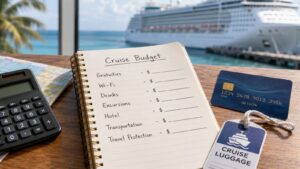
That can include:
- Specialty dining
- Drinks
- Wi-Fi
- Gratuities
- Shore excursions
- Spa treatments
- Photos
- Casino spending
- Some onboard activities
- Room service
- Transportation to and from the port
This is not meant to make cruising feel negative. It is meant to avoid surprise.
A cruise can still be a strong value, especially when you compare lodging, transportation between ports, meals, entertainment, and the overall experience. But the value is easier to appreciate when you know what is included and what is not.
Leave Room for the Trip to Be What It Is
Research is helpful, but it should not turn into a script. You do not need to know every detail before boarding.
More detail: Preparation without over-planning
Some of the best cruise moments happen because you wander into a lounge, meet someone fun, find a quiet deck, change your port plans, or decide not to do what everyone else is doing.
Preparation should make the trip easier, not more rigid.
The sweet spot is knowing enough to avoid preventable disappointment while still leaving room for the cruise to surprise you.
That is a big part of how we think about travel in general. It is not about making every trip perfect. It is about making better decisions before the trip so we can enjoy the experience more once we are there.
You can see more of that approach in Trip Planning in Real Life.
Final Thoughts
Cruise expectations can make or break the trip.
A ship can be older and still be great. A huge ship can be exciting and still feel overwhelming. A smaller ship can be relaxing and still feel limited. A port-heavy itinerary can be amazing even if the ship is not the newest one in the fleet.
The key is alignment.
Know what you booked. Understand the ship. Watch recent videos. Join the Facebook groups. Check the entertainment and dining. Think about whether the ship or itinerary is the focus.
When your expectations match the cruise you actually booked, it is much easier to enjoy the trip for what it is.
And if you want help sorting through the options before you book, start with our Cruise Planning page. We can help you compare ships, itineraries, cabins, and booking paths so the cruise fits the experience you are hoping for.
Latest Posts from Cruise Research & Planning
- Setting Cruise Expectations Before You Sail
- Booking Airfare Through the Cruise Line: When It Makes Sense and When We’d Book Our Own
- Planning a Norwegian Cruise? We Can Help From Research to Booking and Beyond
- Would You Sail Alaska in an Inside Cabin? What Real NCL Cruisers Said
- Repositioning Cruises: An Underrated Way to Travel for Less
- Cruise Budgeting in Real Life: What You’ll Actually Spend Beyond the Fare