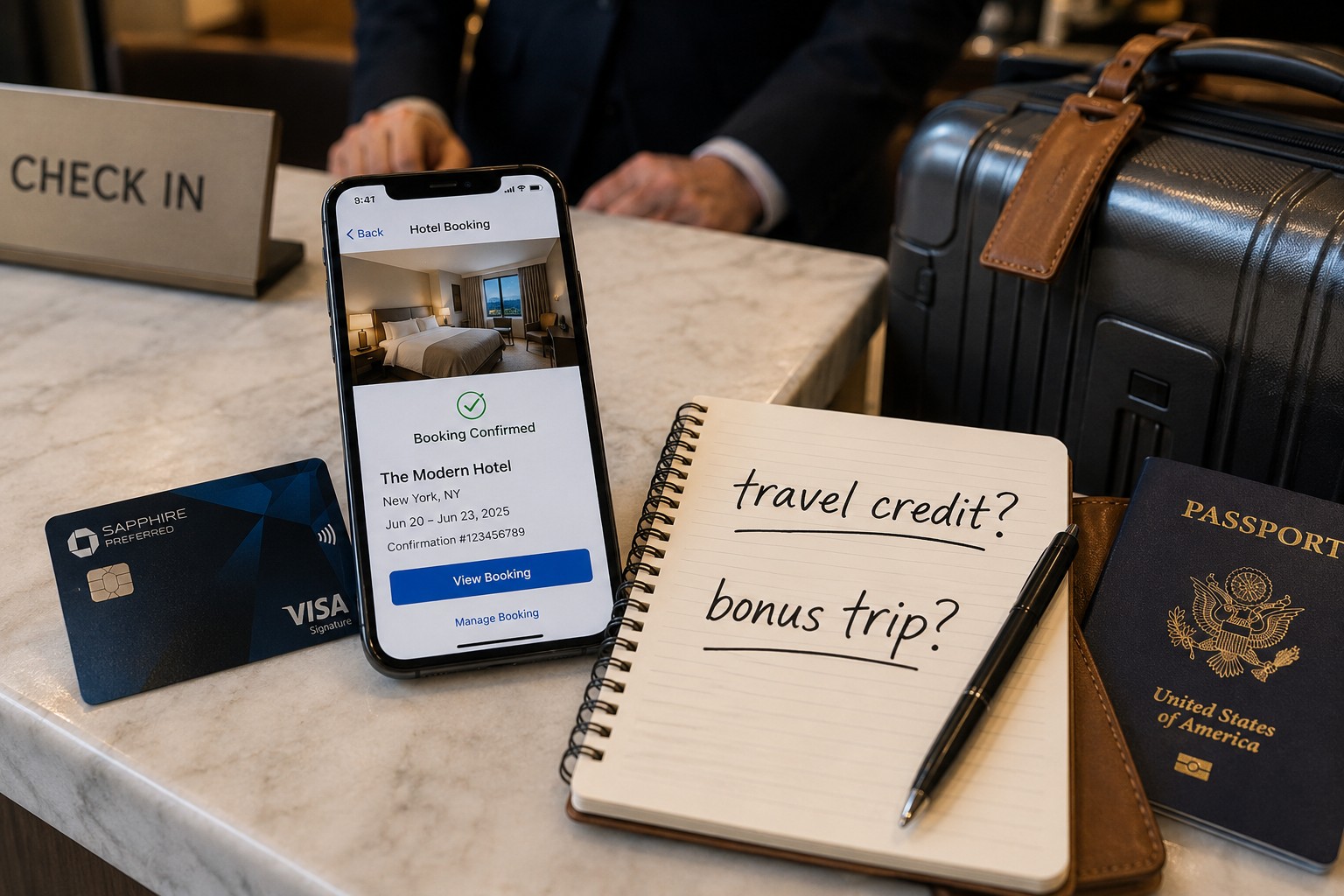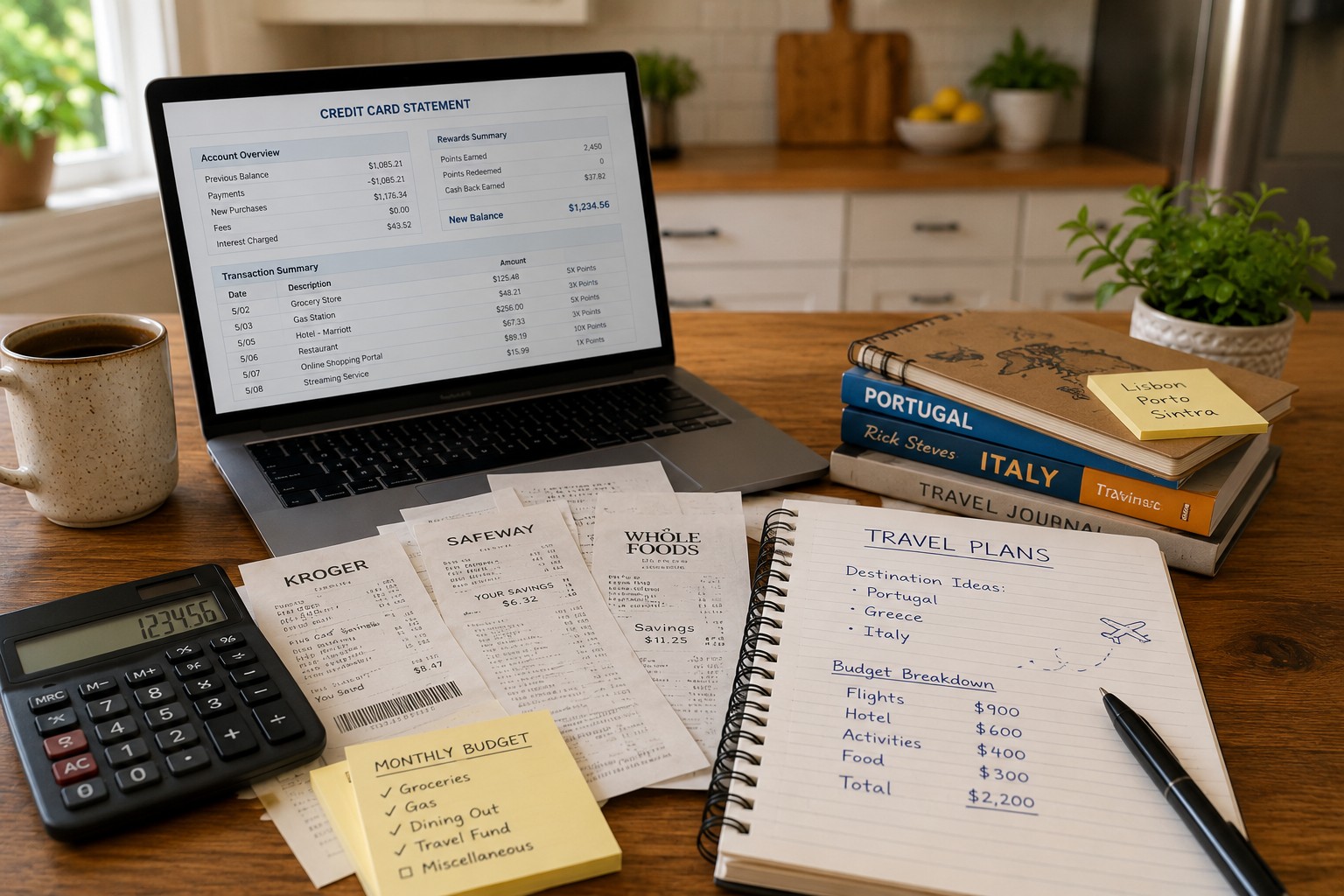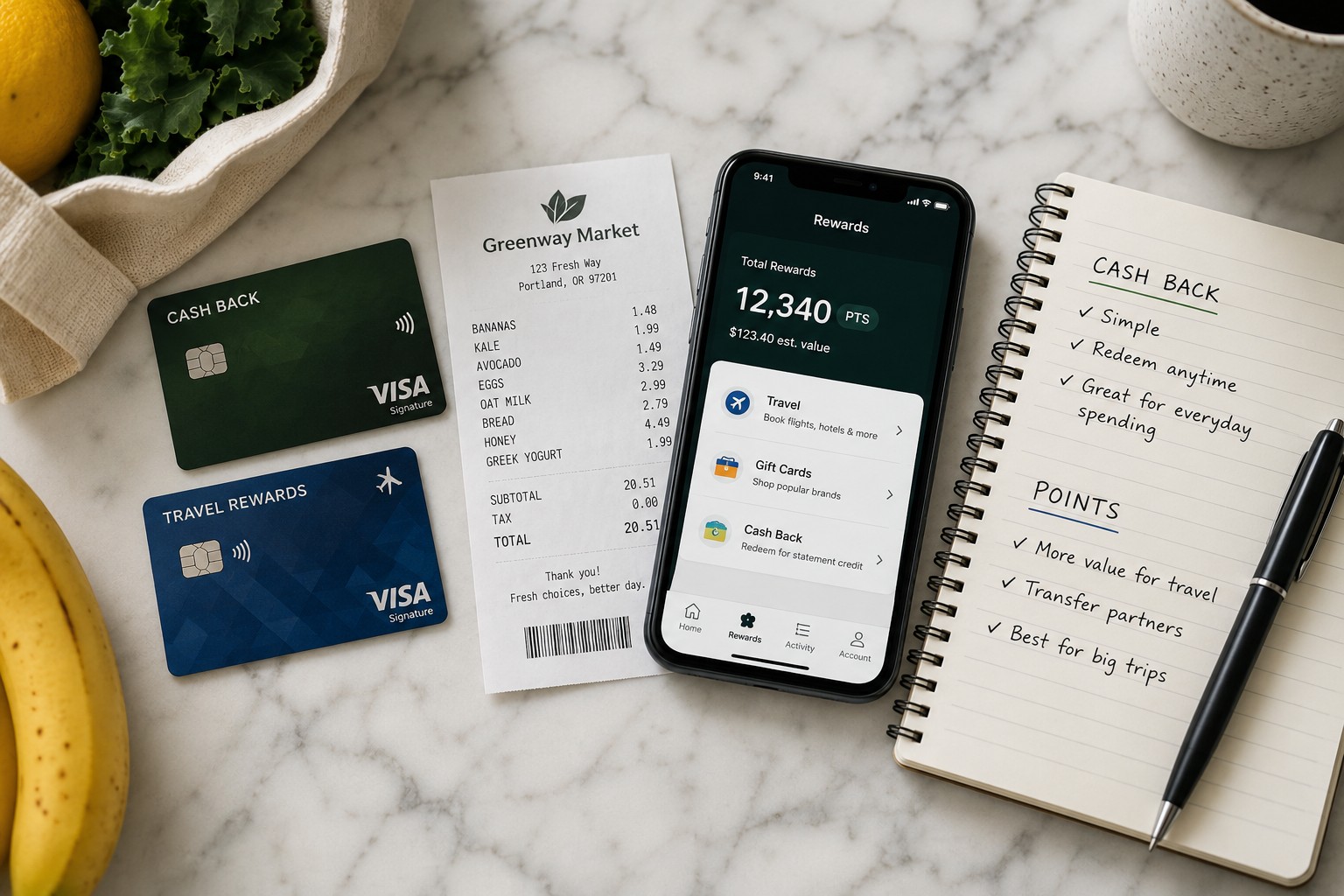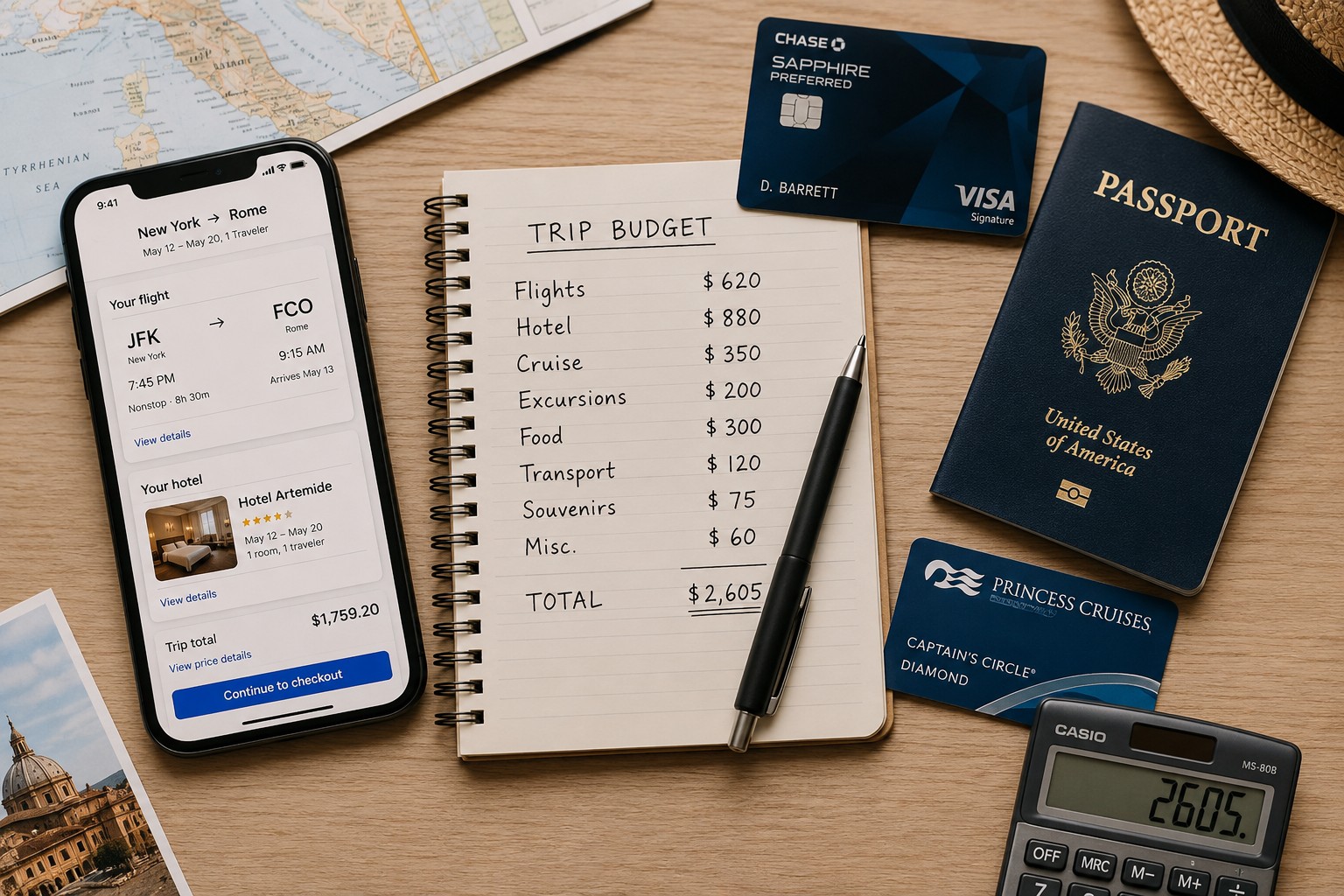
Points and rewards can make travel feel a lot more affordable.
We love using points, miles, statement credits, hotel perks, and travel rewards to reduce the cost of trips we were already excited about. A flight booked with miles can feel like a win. A hotel night covered with points can make a quick getaway possible. A travel credit can take the sting out of a trip expense.
But “free travel” is rarely completely free.
The part that is covered by points, miles, credits, or rewards may be free to us in that moment, but the rest of the trip still has a way of showing up.
Taxes, fees, parking, food, excursions, tips, transportation, pet care, baggage, airport spending, pre-cruise hotels, and random travel-day costs can turn a “free” trip into a much more expensive decision than it looked like at first.
That does not mean points and rewards are bad. We obviously use them and love them.
It just means we need to look at the whole trip, not just the part that feels free.
Want Help Thinking Through the Real Cost of a Trip?
Points, rewards, and travel deals are most useful when they fit into a real plan. If you are trying to decide whether a trip, cruise offer, rewards redemption, or travel strategy is worth it for your real life, our Points & Rewards Strategy page is a good place to start.
If you have a question, feel free to text us at 480-331-1263.
The Flight May Be Free, but the Airport Is Not
Using airline miles can be a great way to lower the cost of a trip, but the ticket is only one piece of flying.
More detail: What can still cost money when the flight is covered
Even when the base fare is covered with miles, there may still be taxes and fees. Depending on the airline, route, and booking type, those fees may be small or they may be enough to make us pause.
Then there are the expenses around the flight itself:
- Checked bag fees
- Seat selection fees
- Airport parking
- Rideshare or shuttle costs
- Food and drinks at the airport
- Overnight hotel stays before or after the flight
- Extra transportation if the cheapest airport is farther away
This is where a “free flight” can get a little fuzzy.
If we use miles to fly somewhere but then spend heavily on parking, bags, meals, and transfers, the trip may still be a good value. But it is not free. It is a discounted trip with real out-of-pocket costs.
The better question is not, “Can we fly for free?”
The better question is, “What will this trip still cost us after the points are used?”
That is also why we like to compare cash prices and points options before we book. Sometimes miles are the better move. Sometimes paying cash and saving the points for a different trip makes more sense.
We have written more about that decision in When It Makes Sense to Pay Cash vs. Use Points for Flights.
Hotel Points Can Still Leave a Bill
Hotel points can be one of the most satisfying rewards to use because they often cover the biggest nightly expense.
More detail: Why a points hotel still needs a full cost check
But hotel stays can still come with costs that do not always show up in the excitement of booking with points.
Depending on the property and destination, we may still need to think about:
- Resort fees
- Parking fees
- Destination fees
- Taxes on certain charges
- Breakfast if it is not included
- Tips for housekeeping, valet, bell services, or shuttle drivers
- Transportation between the hotel and the places we actually want to visit
Sometimes the points booking is still a great deal. Other times, the “free” hotel is in a location that creates extra transportation costs, or it comes with a daily fee that makes another option more reasonable.
This is why we try not to look at hotel points in isolation.
A hotel that costs fewer points is not always the better deal if it creates more cash costs around the stay. Location, walkability, parking, transportation, and how we actually plan to spend our time all matter.
Our Weekly Budget Still Matters When We Travel
At home, we use a set weekly discretionary spending budget. Travel changes that a little, but it does not make spending disappear.
More detail: How we think about normal spending versus travel spending
That weekly budget covers the normal flexible spending that happens in real life. Food, small purchases, random things that come up, and the spending that is not fixed like the mortgage, utilities, insurance, or other regular bills.
There are extra costs associated with travel, but we generally try to fit those into our regular weekly budget when we can. If we are away for a weekend, we are not also spending the same way at home.
Some travel spending replaces spending we would have done anyway.
If we are traveling for the weekend, we may not be buying groceries for those days, filling up the car the same way, or going out locally. If we are eating out while traveling, some of that replaces what we might have spent on meals at home or locally.
But travel also adds things we would not normally buy.
Airport food, rideshares, tips, parking, snacks, extra drinks, convenience purchases, and small “we are already here” expenses can add up quickly.
We are realistic about that.
Sometimes we spend more when we travel. Sometimes the airport meal, the extra drink, the rideshare, the excursion, or the souvenir pushes us beyond the normal weekly rhythm.
That is not automatically a failure.
The key is accounting for it.
Travel does not need to blow up the budget, but it also should not be treated like a separate fantasy world where spending does not count.
This connects closely with the bigger habits we wrote about in The Money Habits That Make Travel Rewards Work Better.
Cruises Are a Perfect Example of the “Not Free” Problem
Cruises are one of the easiest places to see how a trip can look inexpensive at first and still come with plenty of real costs.
More detail: What can show up beyond the cruise fare
The cruise fare may look affordable. Sometimes it may even feel like an incredible deal. You might find a low fare, a promotion, onboard credit, included drinks, specialty dining, Wi-Fi, or a package that makes the booking look very attractive.
But the cruise fare is not the whole vacation.
Cruise costs can include:
- Taxes, fees, and port expenses
- Daily gratuities
- Travel to and from the port
- Pre-cruise hotel stays
- Parking at the port
- Drinks, specialty dining, or upgrade packages
- Shore excursions
- Internet
- Photos
- Casino spending
- Souvenirs
- Travel insurance
- Pet care or childcare at home
That does not mean cruises are a bad value. We love cruising, and we often think it can be one of the easier ways to package a vacation.
But a cheap cruise fare is not the same thing as a cheap trip.
When we are deciding whether a cruise is a good value, we want to look at the full cost of getting there, enjoying it, and getting home. That is especially true when we are using points for flights or hotels around the cruise, because those points may reduce the cash cost without eliminating the full travel budget.
It is also why cruise deals, packages, onboard credit, gift cards, and points redemptions all need to be considered in the same basic way: what does the full trip cost when everything is included?
For a more cruise-specific look at this, we also have Cruise Budgeting in Real Life: What You’ll Actually Spend Beyond the Fare.
Why We Like Paying Cruise Costs Up Front
With cruises, we like cost certainty. We try to research and plan as much as possible up front so we can eliminate, or at least limit, onboard spending.
More detail: Why we do not want the final cruise folio to be a surprise
That does not mean we never spend money onboard. We do. But we prefer to know the big pieces before we sail.
For cruises, we usually want the major decisions made before we board:
- Gratuities
- Shore excursions
- Drink packages
- Specialty dining
- Wi-Fi
- Pre-cruise hotel
- Parking
- Flights
- Transportation to and from the port
We may still spend a little onboard, but we do not want the final folio to be a surprise.
There is a personal finance reason for that.
When the major trip costs are paid before we leave, the vacation feels more relaxed. We are not constantly wondering what the final bill will look like. We are not making every decision with a running mental calculator. We can enjoy the trip because we already made most of the spending decisions at home.
That is one of the reasons we spend so much time researching cruises before we go.
We want to know what is included, what is not included, what we are likely to care about, and where we are comfortable skipping extras.
That kind of planning may not sound exciting, but it can make the trip feel better once we are actually on it.
This is also why we care about setting expectations before we sail. Researching the ship, dining, entertainment, ports, and potential add-ons can make the trip feel calmer and more intentional.
Sometimes Spending More Is the Right Choice
The point of all this is not that spending more is always bad. Sometimes the better-value choice is not the cheapest one.
More detail: When paying more can still be good value
There are times we knowingly spend more because the experience matters to us.
We may choose the better hotel location, the easier flight time, the pre-cruise hotel, the airport transfer, the drink package, or the excursion that makes the port day better.
Sometimes the cheapest option creates stress, wastes time, or makes the trip less enjoyable.
That is not good value either.
The difference is that we want to choose those costs on purpose, not discover them after we already convinced ourselves the trip was free.
There is a big difference between saying, “This trip is free, so the extras do not matter,” and saying, “The points lowered the cost enough that we are comfortable spending more in the areas that matter most to us.”
That is where the personal finance side and the travel side have to work together.
The goal is not always to spend the least.
The goal is to understand what we are spending, why we are spending it, and whether the total trip still makes sense.
This is the same bigger idea behind The Difference Between Saving Money and Justifying Spending. A discount, credit, deal, or redemption can help, but it does not automatically make every extra purchase a good decision.
“Free” Travel Can Still Cost Time
Money is not the only hidden cost. Sometimes rewards travel requires extra time, extra planning, or extra inconvenience.
More detail: The tradeoffs that do not show up in the dollar amount
That might mean:
- Taking a less convenient flight
- Adding a connection
- Flying at a weird time
- Staying farther from the destination
- Moving hotels mid-trip
- Booking around award availability instead of the trip we actually wanted
Sometimes these tradeoffs are worth it.
We might gladly take a connection to save a meaningful amount of money. We might stay a little farther away if the points value is strong. We might use points for a hotel that is not perfect but still makes the trip possible.
But we do not want to pretend those tradeoffs do not exist.
A redemption that looks amazing on paper may feel less amazing if it makes the trip harder, more stressful, or less enjoyable.
That is part of why we care so much about choosing the right type of trip, not just finding the lowest price or the most dramatic redemption.
Opportunity Cost Matters Too
Using points for one thing means we are not using them for something else. That does not mean every redemption has to be perfect, but it does mean the choice matters.
More detail: Why points are still a limited resource
If we use hotel points for a quick overnight stay, that may be a great choice. But those points are no longer available for a longer trip later.
If we use airline miles for a short flight, that may make sense. But we should still ask whether cash would have been cheap enough to save the miles for something better.
This does not mean every redemption has to be perfect.
We are not interested in turning every trip into a math contest. Sometimes the best use of points is the one that gets you where you want to go, lowers your cash cost, and makes real life easier.
But it is still worth remembering that points are a limited resource.
Using them well means thinking about both today’s trip and the trips we may want to take next.
The Trap: Spending More Because the First Piece Was Free
When one part of the trip feels free, it can become easier to spend more on the rest. That is where rewards can quietly shift from helping the budget to stretching the budget.
More detail: How rewards can make extra spending feel easier
A free flight can make a more expensive hotel feel easier to justify.
A free hotel night can make dining, activities, or upgrades feel less painful.
A cruise booked at a great fare can make add-ons feel like “extras” instead of real vacation costs.
That is where rewards can quietly shift from helping the budget to stretching the budget.
We try to watch for that.
If points make a trip more affordable, that is a win. If points make us spend more than we would have otherwise, we need to be honest about that too.
This is also where credit card credits and travel benefits can get tricky. Sometimes they reduce the cost of a trip we already wanted to take. Other times, they create bonus travel or more luxury-style travel we would not have booked otherwise.
That is not always bad, but it is different.
We are covering that more directly in a related article: When Credit Card Credits Create Bonus Travel.
The Questions We Try to Ask Before We Book
Before calling a trip “free,” it helps to list the actual out-of-pocket costs. A quick estimate is often enough.
More detail: Our quick pre-booking cost check
Before we book, we try to ask:
- What is already covered?
- What still has to be paid?
- What are we likely to spend anyway?
- What taxes, fees, or deposits still apply?
- How are we getting there?
- How are we getting home?
- Do we need a hotel before or after?
- What will food cost?
- What activities, excursions, or tickets are we likely to buy?
- What tips, parking, transportation, or pet care costs apply?
- Does this fit into our normal weekly discretionary budget, or do we need to plan for extra spending?
- Are we using points that could be more valuable somewhere else?
- Is this a trip we wanted anyway, or is it being created by the idea that one part is “free”?
- What would make us regret this later?
That last question matters.
Sometimes the answer will still be yes.
Sometimes it will be, “Yes, but we need to budget for the extras.”
Sometimes it will be, “This is still a good value, but it is not free.”
And sometimes it will be, “This looked free, but it is not the right trip right now.”
Points and Rewards Should Support the Plan, Not Replace It
A good rewards strategy is not just about earning more points. It is about using them in a way that supports the life, budget, and trips we actually want.
More detail: What that means in real life
This is why personal finance belongs in the same conversation as points and travel rewards.
That means:
- Not carrying a balance to earn rewards
- Not overspending to trigger a bonus
- Not booking a trip just because one part is “free”
- Not ignoring the rest of the travel costs
- Not letting travel spending become invisible because points covered one piece
If you are newer to this mindset, Points Are Not Free If You Carry a Balance is still one of the most important reminders.
The best rewards setup for us is not the one that makes us feel rich for a weekend and then annoyed when the bill comes due.
It is the one that fits the way we already live and helps us travel better within that reality.
The goal is not to make travel look free.
The goal is to travel better, spend smarter, and avoid turning a good deal into an expensive mistake.
Final Thoughts
Points and rewards can absolutely make travel more affordable. They can open doors, reduce cash costs, and help make trips happen sooner than they otherwise might.
But “free travel” still needs a budget.
Before we get too excited about a free flight, free hotel, cruise deal, or redemption opportunity, we want to look at the full trip. What still costs money? What tradeoffs are we making? What are we giving up by using those points now? And would we still want the trip if the first piece did not feel free?
That does not take the fun out of rewards.
It makes the rewards more useful.
Because the best points and rewards strategy is not the one that looks the flashiest online. It is the one that helps real people take better trips without creating bigger money problems at home.
Latest Posts from Personal Finance
- The Hidden Costs That Can Make “Free” Travel Expensive
- The Difference Between Saving Money and Justifying Spending

- The Money Habits That Make Travel Rewards Work Better

- Points Are Not Free If You Carry a Balance

- Why We Don’t Follow One Credit Card Strategy — And Why You Shouldn’t Either

- Why Personal Finance Matters for Points & Rewards