Some cruises are built around the obvious destinations.
Alaska. The Caribbean. Europe. Mexico. The Mediterranean.
And then there are repositioning cruises — the sailings that quietly move a ship from one part of the world to another when the cruise line is shifting seasons.
They may not always get the same attention, but repositioning cruises can be one of the most underrated ways to travel for less, especially if you are flexible, willing to deal with a one-way itinerary, and open to a cruise that feels a little different from the usual round-trip vacation.
We recently did a repositioning cruise on Norwegian Bliss from Los Angeles to Vancouver, and it reminded us why these sailings can be such a good value — but also why they are not automatically the right fit for everyone.
One thing we especially noticed was that the ship did not feel overly crowded. That can happen on some repositioning cruises because they do not always sail completely full. And because of the timing, length, and one-way nature of many repositioning cruises, there may also be fewer kids onboard compared with peak holiday, summer, or school-break sailings.
That combination can make the whole cruise feel more relaxed.
Want Help Figuring Out if a Repositioning Cruise Makes Sense?
Repositioning cruises can be a great deal, but the cheapest fare is not always the best overall trip. You still have to think through flights, hotels, transportation, ports, onboard costs, timing, and whether the itinerary actually fits the way you like to travel.
That is exactly the kind of thing we help with through our Cruise Planning support.
If you are looking at a repositioning cruise and want help comparing the real cost, the itinerary, the ship, the ports, and the overall value, we would be happy to help you think through the options.
If you have a question, feel free to text us at 480-331-1263.
Related Reading
- Our Recap of the Norwegian Bliss April 2026 Repositioning Cruise
- How to Choose a Cruise Based on Your Travel Style
- We Skipped the Excursion in Victoria… and It Ended Up Being the Best Part of Our Cruise
- Victoria After Butchart Gardens: The Part Most Cruise Excursions Miss
What Is a Repositioning Cruise?
A repositioning cruise happens when a cruise ship moves from one region to another for a new season. Instead of sailing the same loop over and over, the ship needs to get somewhere else — and cruise lines often sell that journey as a regular cruise.
More detail: Why these cruises exist
Cruise ships do not stay in the same place year-round.
A ship might spend the winter doing Caribbean cruises, then move to Europe for the summer. Another ship might finish a season in Mexico or the Pacific Coast, then head north for Alaska.
That movement creates repositioning cruises.
Instead of sailing empty, the cruise line sells cabins for the transition sailing. These cruises often have a different rhythm than typical round-trip itineraries. They may include more sea days, unusual port combinations, one-way routes, or ports that are not always part of the ship’s regular seasonal schedule.
For travelers who like flexibility and value, that can be a good thing.
For travelers who want the most traditional cruise experience, it may feel a little less straightforward.
Why Repositioning Cruises Can Be Such a Good Value
The biggest reason people notice repositioning cruises is price. In many cases, they can cost less per night than more popular round-trip sailings on the same ship.
More detail: Where the savings can come from
Repositioning cruises can be priced attractively because they are not always as easy to sell as standard itineraries.
They may start in one city and end in another. They may happen during shoulder seasons. They may include fewer headline ports. They may require more planning before and after the cruise.
That can make them less appealing to someone looking for a simple vacation.
But for travelers who are flexible, those same “downsides” can create opportunity.
You may be able to get:
- A lower cruise fare
- More nights for the money
- A ship or route you would not normally try
- A mix of sea days and ports
- A chance to visit two different regions in one trip
- A more relaxed onboard experience, depending on the sailing
Our Norwegian Bliss repositioning cruise from Los Angeles to Vancouver was a good example. It was not a typical round-trip vacation, but that was part of what made it interesting.
We started in Southern California, sailed north, spent time in Victoria, and ended in Vancouver. It felt different from a standard cruise loop, and that was part of the appeal.
They Can Feel Less Crowded
One underrated benefit of some repositioning cruises is that they may not sail completely full.
That can change the feel of the entire ship.
More detail: Why this can make the cruise feel more relaxed
This will not be true on every repositioning cruise, but it is something we noticed on our Norwegian Bliss sailing.
The ship did not feel packed.
There were still plenty of people onboard, but the overall experience felt more relaxed than some full-capacity sailings. Public spaces were easier to enjoy, venues did not always feel overloaded, and the ship had a little more breathing room.
That can be one of the quiet advantages of a repositioning cruise.
Because these sailings are often one-way, happen during shoulder seasons, and may not line up with school breaks or traditional vacation windows, they may not attract the same family-heavy crowd as peak summer, spring break, or holiday sailings.
That can also mean fewer kids onboard.
There is nothing wrong with kids on cruises. Families are a huge part of cruising, and many ships are built with families in mind.
But if you are looking for a slightly quieter or more adult-feeling cruise experience, a repositioning cruise may be worth considering.
For us, the combination of a ship that did not feel full, fewer children, and a more relaxed pace made the sailing feel different from a typical peak-season cruise.
The Catch: Cheap Fare Does Not Always Mean Cheap Trip
This is where repositioning cruises can get tricky. The cruise fare may look great, but the full trip can cost more than expected if you do not account for everything around it.
More detail: The extra costs to watch closely
The biggest thing to remember is that many repositioning cruises are one-way.
That means you may need:
- A flight to the embarkation city
- A flight home from the debarkation city
- A hotel before the cruise
- A hotel after the cruise
- Transportation to and from both ports
- More time off work
- More planning around luggage and timing
Sometimes the cruise fare is low enough that the total trip still works beautifully.
Other times, the airfare or hotel logistics can wipe out a lot of the savings.
That does not mean repositioning cruises are bad. It just means you have to compare the real trip cost, not just the cruise fare.
For us, this is one of the biggest planning lessons with cruising in general. The fare gets your attention, but the real decision usually comes after you add in flights, hotels, transfers, onboard spending, excursions, Wi-Fi, drinks, gratuities, and everything else that makes the trip work.
Repositioning Cruises Often Have a Different Pace
A repositioning cruise may not feel like a normal port-heavy vacation. Some have more sea days, odd port times, or fewer stops than people expect.
That can be a positive or a negative, depending on what you want from the trip.
More detail: Why the pace matters
Some travelers love sea days.
They want time to enjoy the ship, sit in the lounge, try different restaurants, watch shows, read, nap, walk around the deck, and not feel rushed.
For those travelers, a repositioning cruise can be perfect.
Other travelers cruise mainly for the ports. They want to wake up somewhere new almost every day, get off the ship early, and pack the itinerary with sightseeing.
For those travelers, a repositioning cruise may or may not be the best fit.
Our Norwegian Bliss repositioning cruise gave us a nice mix. We had time onboard, a long Victoria stop, and a unique arrival into Vancouver. It did not feel like a standard port-every-day vacation, but we were not looking for that.
That is the key.
A repositioning cruise works best when you know what kind of trip you are actually booking.
Our Norwegian Bliss Repositioning Cruise Was a Good Reminder
We have sailed Norwegian Bliss several times now, but our April 2026 repositioning cruise felt different from our other sailings.
It was still the same ship, but the itinerary changed the entire feel of the trip.
More detail: What stood out from our experience
This cruise sailed from Los Angeles to Vancouver, which already made it different from a standard round-trip itinerary.
The ship did not feel overly crowded, the route was interesting, and we had time to enjoy the onboard experience without feeling like every day was packed.
That less-crowded feeling mattered more than we expected. The ship still felt active and fun, but it did not feel like we were constantly fighting for space.
We also noticed that the overall crowd felt a little different than a typical school-break or peak-season sailing. There seemed to be fewer children onboard, which makes sense given the timing and nature of the itinerary.
One of the highlights was Victoria.
Because we had a longer stop there, we were able to do The Butchart Gardens on our own instead of booking a cruise line excursion. That gave us more flexibility and saved money compared with the ship tour option.
We also had time to visit local spots in Victoria before walking back to the ship.
The Vancouver arrival was also memorable. Sailing under the Lions Gate Bridge with what felt like very little clearance was one of those moments that made the repositioning route feel special.
That is one thing we like about these sailings. They can create moments you might not get on a more predictable round-trip cruise.
Who Repositioning Cruises Are Best For
Repositioning cruises are not for everyone, but they can be a great fit for the right traveler.
More detail: When this type of cruise makes sense
A repositioning cruise may be a good fit if you:
- Have some flexibility with dates
- Are comfortable with one-way travel
- Like sea days
- Want to try a different itinerary
- Are willing to compare airfare and hotel costs
- Enjoy the ship as part of the vacation
- Care more about total value than checking off the most famous ports
- Can build a trip around the cruise instead of needing the cruise to fit a rigid schedule
- Prefer sailings that may feel a little less crowded
- Like the idea of cruising when there may be fewer families and children onboard
These cruises can work especially well for people who like the idea of combining a cruise with a larger trip.
For example, you might sail into Vancouver and spend a night or two there. Or you might start in Europe and use the cruise as part of a longer vacation. Or you might treat the repositioning cruise as a more relaxing way to travel between two regions.
The best repositioning cruises are not just cheap.
They are cheap and useful.
Who Might Want to Skip a Repositioning Cruise
There are also plenty of reasons a repositioning cruise may not be the right choice.
The deal only works if the overall trip fits your schedule, budget, and travel style.
More detail: When the savings may not be worth it
You may want to skip a repositioning cruise if:
- You need a simple round-trip vacation
- You have limited vacation days
- You do not want to deal with one-way flights
- You dislike sea days
- You want a port-intensive itinerary
- You are traveling with people who need an easier schedule
- The airfare makes the total trip too expensive
- The start or end port is inconvenient
- The itinerary does not excite you
- You are specifically looking for a family-heavy sailing with lots of kids onboard
This is where it is easy to get distracted by the cruise fare.
A low fare can make something look like a deal, but if the logistics are annoying, the flights are expensive, or the itinerary is not something you actually want to do, it may not be worth it.
There is nothing wrong with paying more for a cruise that fits better.
Sometimes the better value is the trip you will enjoy more, even if it costs a little more upfront.
Flights Can Make or Break the Deal
One-way cruises usually mean one-way flights, and that can change the math quickly.
This is one of the biggest areas where points and miles can help.
More detail: Why flight flexibility matters
When you are pricing a repositioning cruise, the cruise fare is only the starting point.
You also need to check flights.
Sometimes one-way flights are easy and affordable. Other times, the timing or cost can be frustrating.
This is where airline miles, transferable points, companion passes, low-cost carriers, or flexible booking strategies can make a big difference.
Even if you are not getting some perfect “maximum value” redemption, using points to reduce the cash cost of a repositioning cruise trip can make the whole thing work.
This is also why we do not look at cruise planning and points planning as two separate things. They often work together.
The cruise may be the deal, but the flights may determine whether the deal actually makes sense.
Watch the Hotel and Transportation Costs Too
Repositioning cruises can involve extra hotel nights, especially when the ship starts or ends somewhere that is not your home airport.
Those extra nights can be worth it, but they need to be part of the budget.
More detail: The hidden planning pieces
A lot of people look at the cruise fare and forget about the pieces around the cruise.
For repositioning cruises, those pieces matter even more.
You may need a hotel near the embarkation port the night before. You may need a hotel after the cruise if the ship arrives late, flights are expensive, or you want to explore the ending city.
You may also need to think through transportation.
Some ports are easy. Others are a long ride from the airport. Some cities have great public transportation. Others may require Uber, Lyft, taxis, shuttles, trains, or rental cars.
None of that means you should avoid repositioning cruises.
It just means you should budget the whole trip before deciding it is a deal.
The Ports Can Be the Fun Part
One thing we like about repositioning cruises is that the ports can feel a little less cookie-cutter.
Sometimes you get a route that is not available all season long.
More detail: Why unusual itineraries can be a plus
Not every repositioning cruise has exciting ports, but some of them offer really interesting combinations.
You might get coastal stops, overnight calls, shoulder-season cities, or a route that connects two regions in a way you would not normally plan on your own.
Our Victoria stop was a great example.
Because we had a longer port window, we were able to do The Butchart Gardens independently, stop at local pubs, and enjoy the city without feeling like we were racing back to the ship after a short evening call.
That kind of flexibility can make a repositioning cruise feel more like a mini-adventure than a standard itinerary.
But again, it depends on the specific sailing.
Some repositioning cruises have ports that are genuinely interesting. Others are mostly about the ship and sea days.
Neither is wrong. You just need to know which one you are booking.
Repositioning Cruises Can Be Great for People Who Like the Ship
If you see the ship as part of the destination, repositioning cruises can be especially appealing.
More sea days can mean more time to actually use what the ship offers.
More detail: Why ship-focused travelers may love these sailings
On a port-heavy itinerary, it can be hard to fully enjoy the ship.
You get up early, leave for the day, come back tired, eat dinner, maybe see a show, and repeat.
That can be a great trip, but it does not always leave much time to enjoy the ship itself.
A repositioning cruise may give you more breathing room.
You may have time for:
- Specialty dining
- Shows
- Live music
- Lounges
- Observation areas
- Trivia or activities
- Relaxed breakfasts
- Longer walks around the ship
- Actually using the drink package or onboard credits
- Doing very little, which is sometimes the whole point
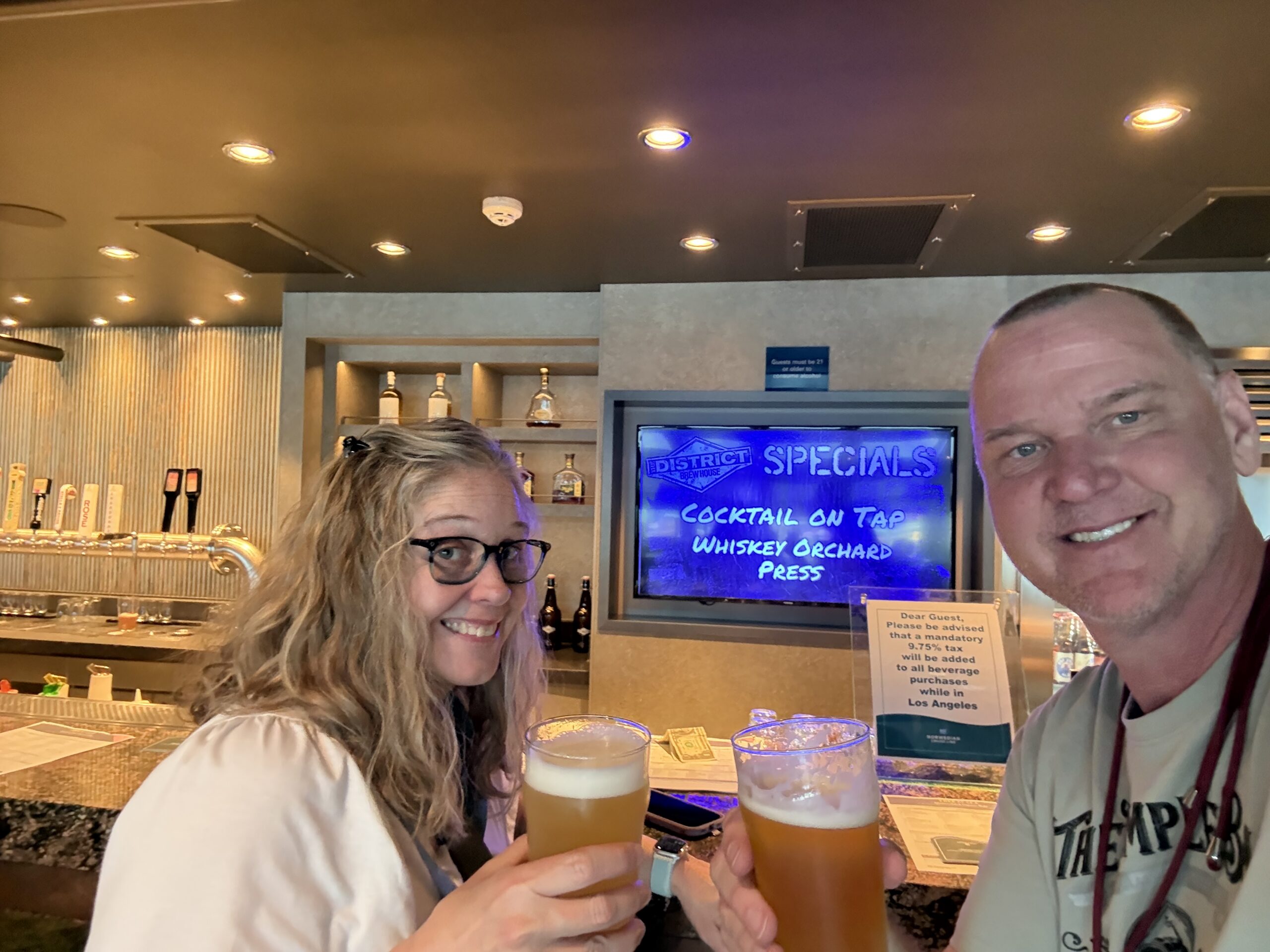
On Norwegian Bliss, we enjoyed having time to settle into the ship again. We already knew we liked venues like The District Brew House and the Observation Lounge, so having more time onboard was not a downside for us.
And because the ship did not feel packed, it made those onboard spaces even easier to enjoy.
For someone who only cares about ports, that may feel different.
They Are Not Always “Luxury for Less” — Sometimes They Are Just Different
It is easy to oversell repositioning cruises as some kind of secret travel hack.
We do think they can be underrated, but they are not magic.
More detail: Keeping the expectations realistic
A repositioning cruise can save money, but it can also add complexity.
A repositioning cruise can offer a unique itinerary, but it may also include ports that are less convenient or less exciting.
A repositioning cruise can be relaxing, but it may not be ideal for someone who gets bored on sea days.
A repositioning cruise may feel less crowded, but that is not guaranteed on every sailing.
A repositioning cruise may have fewer kids onboard, but that depends on the cruise line, ship, dates, length, and itinerary.
A repositioning cruise can be a great value, but only if the total cost makes sense.
That is why we like looking at these cruises through a real-life value lens.
Not “Is this the cheapest?”
More like:
- Is the fare good for the number of nights?
- Are the flights reasonable?
- Do we need extra hotel nights?
- Do the ports interest us?
- Will we enjoy the sea days?
- Does the ship itself appeal to us?
- Does the timing create a more relaxed onboard experience?
- Is this a trip we actually want to take?
That last question matters most.
A deal is only a deal if it turns into a trip you are glad you booked.
How to Decide if a Repositioning Cruise Is Worth It
Before booking a repositioning cruise, we would run through the whole trip like a mini-budget.
Not just the cruise fare. The whole thing.
More detail: A simple decision checklist
Before booking, we would look at:
- Cruise fare
- Taxes and port fees
- Required gratuities
- Drink package costs or gratuities
- Wi-Fi costs
- Specialty dining costs
- Excursions
- Flights to the starting port
- Flights home from the ending port
- Pre-cruise hotel
- Post-cruise hotel
- Transportation to and from ports
- Extra vacation days needed
- Whether points can reduce the cost
- Whether the itinerary is actually appealing
- Whether the ship is one we want to spend time on
- Whether the timing makes the cruise feel more relaxed
- Whether a one-way itinerary is worth the added planning
Then we would compare that against a more traditional cruise.
Sometimes the repositioning cruise will be the clear winner.
Sometimes the “regular” cruise will make more sense.
And sometimes the repositioning cruise may still cost more in total, but feel worth it because the route is more interesting or the trip feels more special.
That is why we do not think every travel decision should be based only on the lowest possible price.
The goal is to spend smarter, not just spend less.
Final Thought
Repositioning cruises are not perfect, and they are not for every traveler.
But if you have flexibility, enjoy sea days, and are willing to think through the logistics, they can be one of the most underrated ways to cruise for less.
They may also offer something that is harder to measure in the fare: a ship that feels a little less crowded, fewer kids onboard, a slower pace, and a route that feels different from the usual cruise loop.
Our Norwegian Bliss repositioning cruise from Los Angeles to Vancouver reminded us that value is not always about booking the most obvious itinerary.
Sometimes the better deal is the sailing that happens between seasons, between regions, and slightly outside the normal cruise routine.
Those are the cruises a lot of people overlook.
And sometimes, that is exactly where the better value is hiding.
Latest Posts from Cruise Research & Planning | All Cruise Research & Planning Posts
- Cruise Budgeting in Real Life: What You’ll Actually Spend Beyond the Fare

- Norwegian Encore Alaska Cruise Preview: We’re Taking You With Us

- Glacier Bay National Park Cruise Guide: Scenic Cruising, Wildlife, and What to Expect

- Alaska Cruise Planning Guide: Packing, Budget, Weather, Wildlife, and the Best Time to Go

- Balcony vs. Inside Cabin for an Alaska Cruise: Which Is Worth It?

- Alaska Cruise Destination Guides: Ports, Scenic Cruising, and Embarkation Cities