Most people think about rewards when they swipe a credit card.
But sometimes the extra value comes before you ever get to checkout.
That is where shopping portals come in.
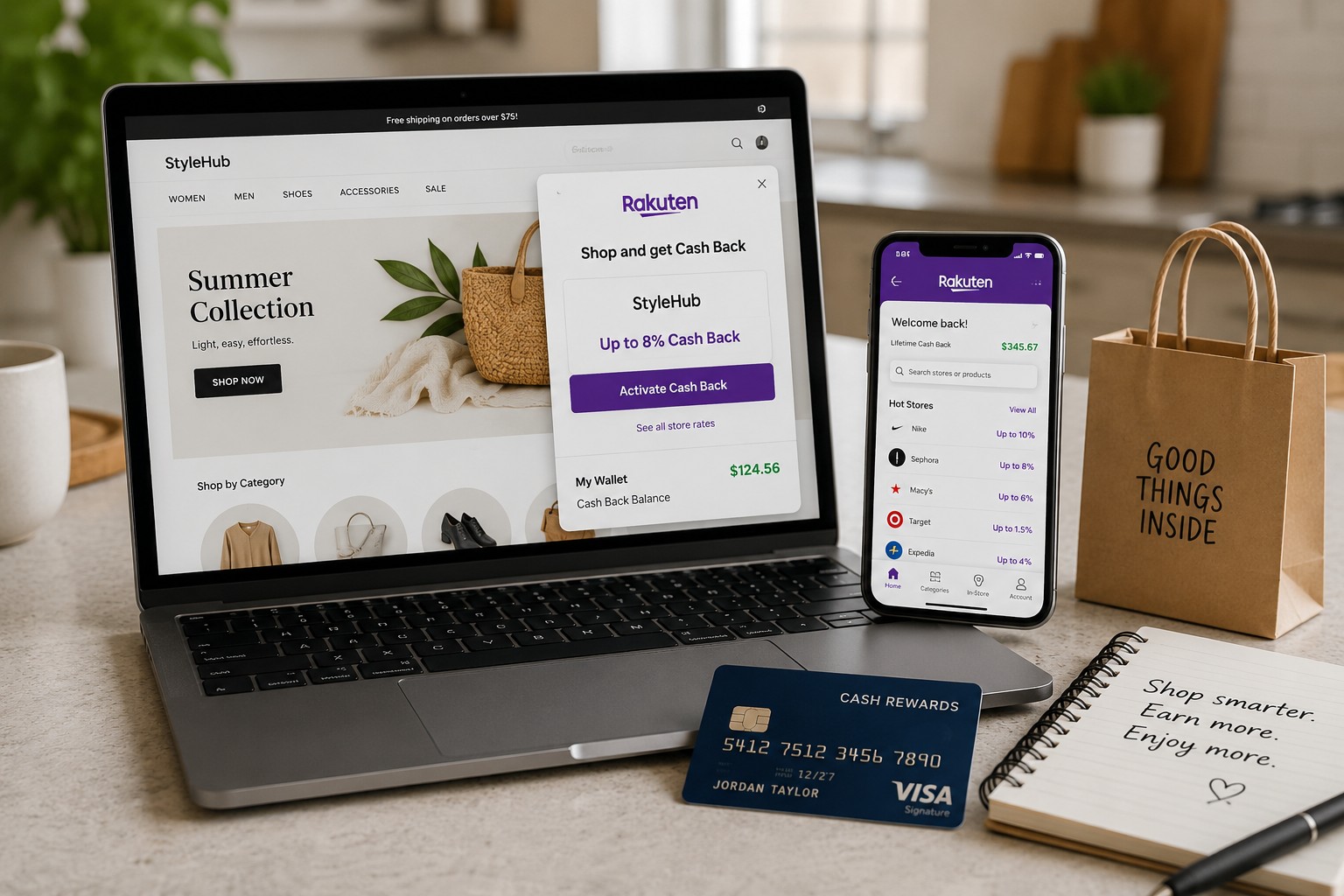
A shopping portal is a simple website or app that gives you cash back, points, miles, or other rewards when you click through the portal before making an online purchase. You still shop with the same store. You still pay with your normal card. You still buy directly from the retailer.
The only real difference is that you started from the portal first.
It is a small habit, but over time, small habits can add up.
And for us, that is really the point.
We are not trying to turn every online purchase into a research project. We are not checking ten different portals every time we need to order something. We are mostly trying to build one simple habit that works in the background when we are already going to buy something anyway.
Want Help Making Everyday Rewards Simpler?
If you are trying to figure out whether shopping portals, cash back apps, credit card rewards, or everyday spending bonuses make sense for your normal purchases, we can help you think through the options.
The goal is not to chase every deal or turn every purchase into a project. It is to build a simple rewards strategy that fits how you already spend.
If you have a question, feel free to text us at 480-331-1263.
What a Shopping Portal Is
A shopping portal is basically a rewards gateway. Instead of going straight to a retailer’s website, you start at a portal, search for the store, click through, and then shop like normal.
More detail: How shopping portals work
Depending on the portal, you may earn:
- Cash back
- Airline miles
- Hotel points
- Flexible points
- Bank points
- Bonus rewards during special promotions
The portal usually does not replace the store.
It just acts as the path you take to get there.
So instead of typing in the store’s website directly, you pause for a minute and ask:
Can I earn something extra if I start somewhere else first?
That is the whole habit.
The Simple Version
You are not usually buying from the portal. You are just adding one extra step before checkout.
More detail: The basic process
- Decide what you are already going to buy.
- Check a shopping portal before going to the store’s website.
- Click through the portal to the retailer.
- Complete your purchase like normal.
- Wait for the rewards to track and post.
That is it.
You are not usually changing where the item ships from. You are not usually changing the return policy, though it is always worth checking the retailer’s terms.
That is why we like shopping portals as part of an Everyday Spending strategy. They fit the bigger idea we talk about often: earning rewards from things you were already going to buy, not changing your spending just to earn points.
How We Actually Use Shopping Portals
We mostly use Rakuten. Not because it is always the highest possible return on every single purchase, but because it is simple, familiar, and consistent.
More detail: Why Rakuten is our default
That matters.
If a rewards habit is too complicated, we probably will not keep doing it. For us, Rakuten is easy enough to remember, easy enough to use, and flexible enough to be worth keeping as our main shopping portal.
We also like that Rakuten can connect to rewards we actually care about.
Instead of only thinking about cash back, we like the ability to earn rewards as American Express Membership Rewards points or Bilt points, which is what we currently use.
That gives the portal more travel value for us because those are points we already think about and already have ways to use.
We do monitor a couple of other shopping portals too.
The main one is United, because we like having some United miles available. We do not necessarily need a huge United balance at all times, but having some miles there can be useful. It gives us another option when we are looking at flights.
We also watch Rove Miles a little, although we really have not gotten into that one much yet.
And that is probably the most honest version of how we use portals.
We have a main portal we actually use. We keep an eye on a couple others when it makes sense. But we are not trying to optimize every purchase down to the last possible point.
Why Consistency Beats Perfection
There is a version of shopping portal strategy that tries to maximize every single transaction. That can work for people who enjoy it, but that is not the way we usually approach everyday rewards.
More detail: Why simple habits usually win
If you spend 20 minutes comparing portals for a small purchase, that may not be worth your time. If checking a portal becomes annoying, you may stop doing it altogether.
We would rather earn something extra on most eligible purchases than burn out trying to make every purchase perfect.
That is the same way we think about a lot of Everyday Spending rewards.
We use apps and programs when they fit naturally. We like grocery rewards, gas rewards, restaurant apps, warehouse club value, and credit card bonus categories. But we do not want the rewards to take over the decision.
The purchase comes first.
The reward is the bonus.
Why Shopping Portals Can Be Worth Using
Shopping portals can be useful because they may stack with other rewards. One online purchase may create more than one layer of value.
More detail: How the rewards can stack
For example, one online purchase could potentially earn:
- Portal rewards from clicking through first
- Credit card rewards from the card you use to pay
- Store loyalty points
- Sale pricing or coupon savings
- Bonus rewards during a limited-time promotion
Not every purchase will stack perfectly.
Not every portal offer will track correctly.
Not every coupon will be allowed.
But when it works, it can be a simple way to earn more from spending you were already going to do.
This is why shopping portals fit so well with the way we think about everyday rewards. They are not dramatic. They are not usually life-changing on one purchase. But they can become meaningful when the habit repeats over time.
Where Shopping Portals Fit Into Everyday Spending
Shopping portals belong in Everyday Spending because they work best when they connect to normal purchases, not extra purchases.
More detail: Purchases where portals may help
They can be useful for:
- Clothing
- Shoes
- Household items
- Office supplies
- Travel gear
- Pet supplies
- Gifts
- Electronics
- Beauty and personal care
- Subscription boxes
- Some online grocery or warehouse club orders, when eligible
They are not a reason to buy more.
They are a way to maybe earn more from purchases already on your list.
That distinction matters.
We have talked about this in other everyday rewards articles too. The best rewards habits are usually the ones that do not require you to change your life around them.
Gas rewards work because people already buy gas.
Dining rewards work because people already eat out.
Warehouse club math works when you are already spending enough there to justify the membership.
Shopping portals work the same way.
They are useful when they attach to real spending, not when they create extra spending.
Cash Back vs. Points and Miles
One of the first choices with shopping portals is whether you want cash back or travel rewards. Neither option is automatically better.
More detail: How we think about the choice
Cash back is usually simpler. You know what you are getting, and it can help offset everyday expenses.
Points and miles may be more useful if you are trying to build toward a specific trip, flight, or hotel stay.
For us, the points option is often more interesting because we already use transferable points. If Rakuten earnings can become Amex Membership Rewards or Bilt points, that fits into a larger travel strategy we already care about.
But that does not mean everyone should choose points.
If you are not sure how you will use points, cash back may be the better starting point.
If you are trying to reduce everyday costs, cash back may be the better fit.
If you are building toward a trip and already understand the points you are earning, points may be more useful.
The right answer depends on your goal.
When We Would Check More Than One Portal
Most of the time, we keep this simple. Rakuten is our default, but there are times when we may check more than one portal.
More detail: When comparison may be worth it
We are more likely to compare options when:
- The purchase is larger
- A portal is offering a temporary elevated bonus
- We are trying to build a specific points or miles balance
- The retailer is one where portal rates often vary
- We have a reason to want a specific currency, like United miles
That last one matters.
Sometimes the best reward is not the highest number on paper. Sometimes the better reward is the one you are more likely to use.
A portal offering airline miles may be more useful than a slightly higher cash back rate if those miles help with a real trip. A flexible points option may be more useful if it connects to a program you already use. A cash back payout may be best if you just want simple savings.
This is where personal strategy matters.
What Can Go Wrong
Shopping portals are useful, but they are not perfect. Rewards may not track, certain purchases may be excluded, and some coupon codes can interfere with a portal offer.
More detail: Things to watch for
Before making a purchase only because of a portal bonus, check the terms.
Things to watch for:
- Excluded categories
- Coupon restrictions
- Gift card exclusions
- Subscription or membership limitations
- Marketplace seller restrictions
- Delayed tracking
- Minimum payout rules
- Return or cancellation rules
This is another reason not to let the portal drive the purchase.
Buy what you were already planning to buy. Treat the portal rewards as a bonus.
If they track and post correctly, great.
If they do not, it should not ruin the value of the purchase.
When a Shopping Portal Is Worth Checking
A shopping portal is usually worth checking when the purchase is large enough or repeated enough that one extra step could be worthwhile.
More detail: Good times to pause and check
A portal may be worth checking when:
- You are making a larger online purchase
- You are ordering from a store you use often
- You are buying travel gear, gifts, clothing, or household items
- A portal is offering an elevated bonus
- You are trying to build points in a specific airline, hotel, or flexible-points program
- You can still use the best price, coupon, or credit card for the purchase
For a small purchase, it may not be worth thinking too hard.
For a larger purchase, it can be worth taking a minute to check.
That does not mean you need to turn every purchase into a spreadsheet. It just means some purchases are worth a quick pause.
When It Is Not Worth Chasing
Shopping portals are not worth chasing if they cause you to spend more than planned or distract you from a better price somewhere else.
More detail: When the reward is not really a win
A 5% portal bonus is not helpful if the item costs 20% more than another retailer.
A few hundred bonus points are not worth buying something you do not need.
A special promotion is not really a win if it causes you to rush into a purchase.
Shopping portals should support smart spending.
They should not replace it.
That is the same filter we use for a lot of rewards decisions.
Does this help us travel better, spend smarter, or experience more?
Or is it just making the purchase feel more exciting than it really is?
How This Works With Credit Cards
Shopping portals and credit card rewards are separate pieces of the same purchase. That means you can often use both.
More detail: The portal, the card, and the purchase all matter
The portal rewards usually come from clicking through before checkout. The credit card rewards come from the card you use to pay.
For example, if a store earns extra rewards through a portal and your card earns extra rewards for that purchase, you may be able to earn from both sides.
But the credit card still matters.
If you carry a balance, interest can quickly wipe out the value of any rewards. If you are using a card only for points but paying more in fees or interest, that is not a good trade.
Rewards should fit your financial life first.
This is why we do not look at shopping portals in isolation. They are one small part of the bigger picture.
The portal matters.
The card matters.
The price matters.
The purchase itself matters most.
For more on the card side of that decision, visit Credit Card Strategy.
A Few Practical Tips
Shopping portals work best when the process is simple. The best portal strategy is the one you remember to use.
More detail: What makes the habit easier
- Start with one main portal instead of trying to use every option
- Compare cash back vs. points only when the purchase is large enough to matter
- Read the terms before relying on a big bonus
- Avoid random coupon codes if the portal says they may void rewards
- Take a screenshot of large offers before buying
- Give rewards time to track before assuming something went wrong
- Do not buy something just because the portal rate is high
For us, that is why Rakuten is the default.
It keeps the habit easy.
How This Connects to the Bigger Points Strategy
Shopping portals are not the whole strategy. They are one layer, and that is why they fit naturally inside Everyday Spending.
More detail: Why this is a good beginner habit
Shopping portals work alongside everyday rewards, credit card bonus categories, store loyalty programs, dining rewards, gas rewards, hotel points, airline miles, and cash back.
They are not flashy. They are not always huge. They are not always perfect.
But they are practical.
And practical is often where the best rewards habits start.
If you are brand new to points and rewards, a shopping portal may be easier to understand than transfer partners, award availability, or hotel status.
You buy something you were already going to buy.
You click through first.
You earn something extra.
That is a simple win.
If you want to build from here, these guides connect naturally: Everyday Rewards 101: How We Earn Points Without Changing How We Spend, Fetch vs. Ibotta vs. Rakuten: Which Is Actually Worth Your Time?, and You Don’t Need Credit Cards to Earn Travel Value (Here’s What Works).
You can also continue through the broader Points & Rewards sections: Everyday Spending, Credit Card Strategy, and Personal Finance.
Final Thoughts
Shopping portals are one of the simplest rewards habits to build.
You do not need to change what you buy. You do not need to learn complicated transfer partners. You do not need to plan a major trip first.
You just need to pause before buying online and ask one question:
Could I earn something extra by starting somewhere else first?
Sometimes the answer will not matter.
Sometimes the reward will be small.
Sometimes it will be worth choosing Rakuten because it is simple and connects to points we already value.
Sometimes it may be worth checking United because having some United miles available gives us another option.
Sometimes we may look at something newer, like Rove Miles, even if we have not fully worked it into our routine yet.
But we do not need every purchase to be perfect.
We just need the habit to be useful.
Start simple.
Pick one portal.
Use it when it makes sense.
Then let the habit work quietly in the background.
Latest Posts from Everyday Spending
- Cash Back vs. Points for Everyday Spending: Which One Fits Your Life Better?

- How Much Are You Actually Earning on Dining? (Quick Self-Check)

- Shopping Portals 101: The Simple Habit That Can Add Up Over Time
- Fetch vs. Ibotta vs. Rakuten: Which Is Actually Worth Your Time?
- Grocery Rewards 101: How to Earn More From Spending You Already Do
- Dining vs. Groceries: Where Should You Focus First?