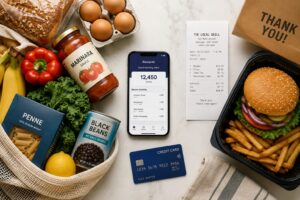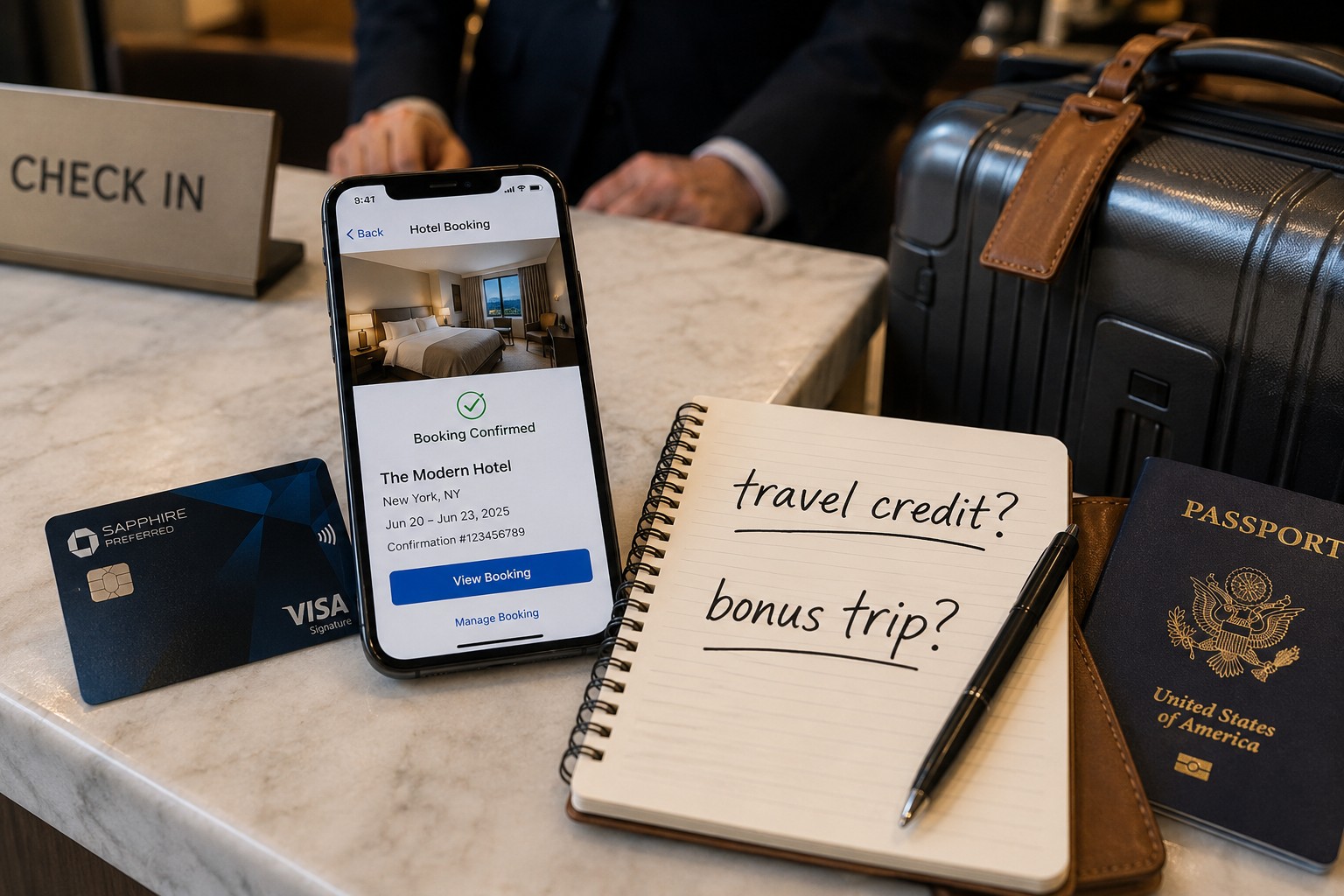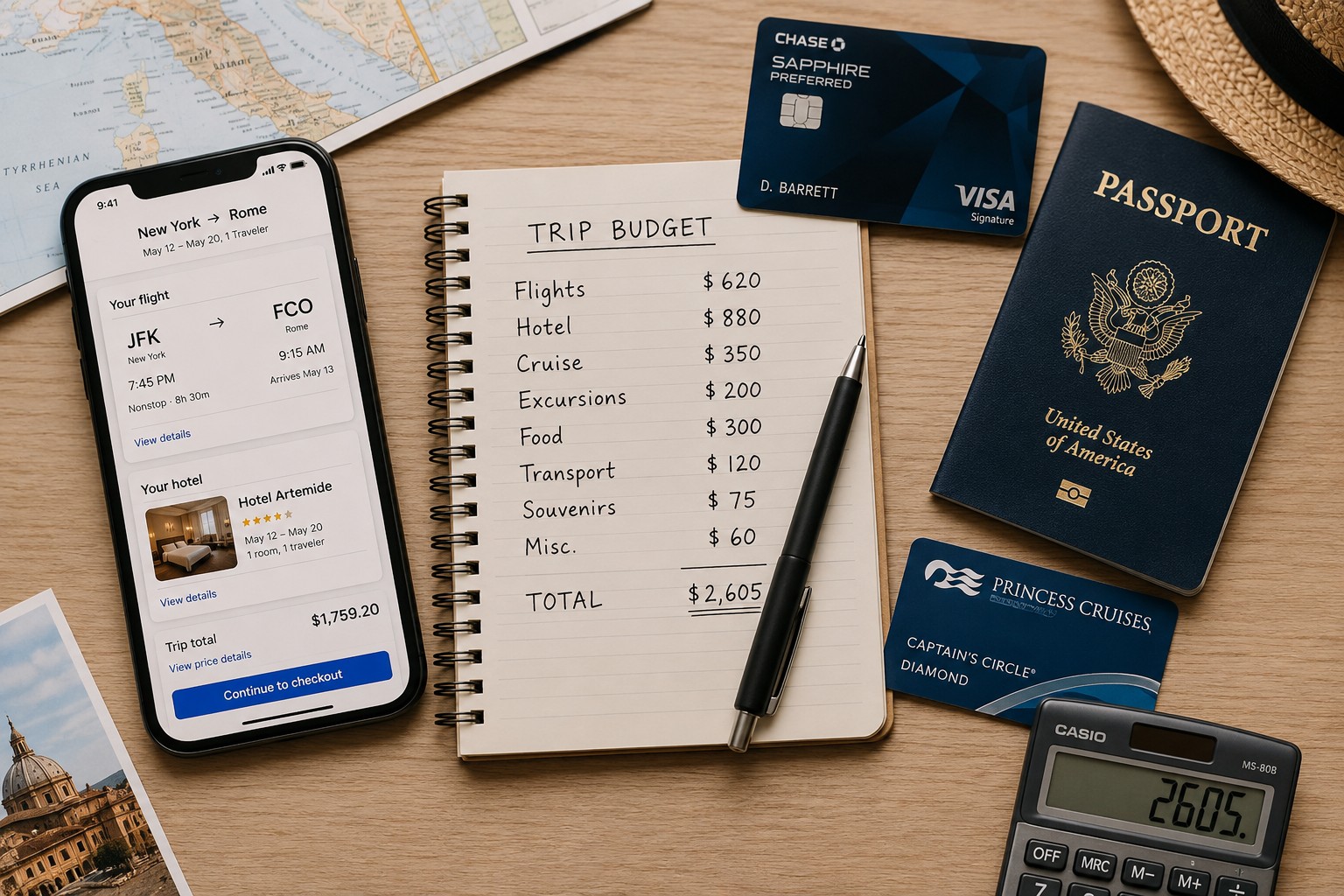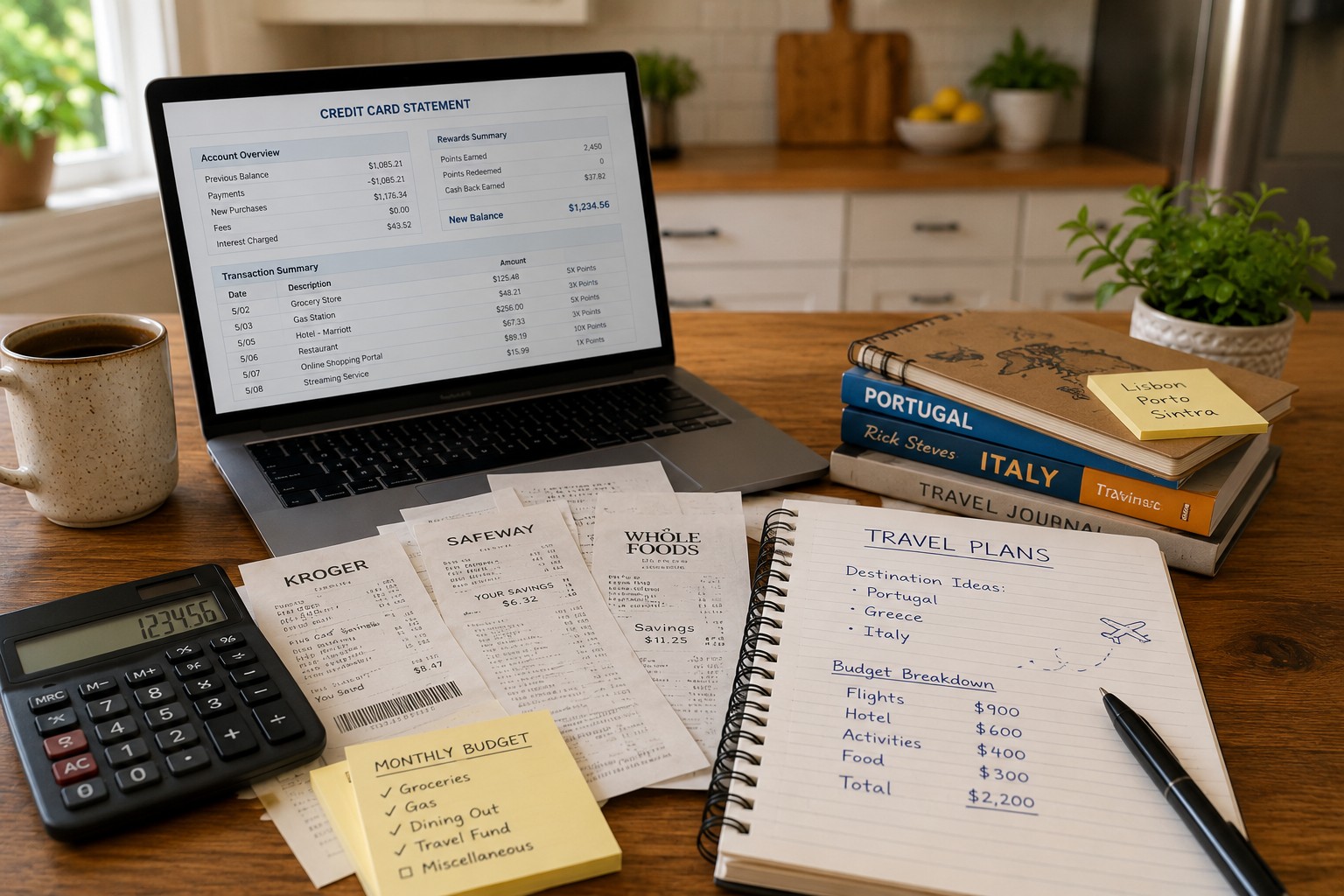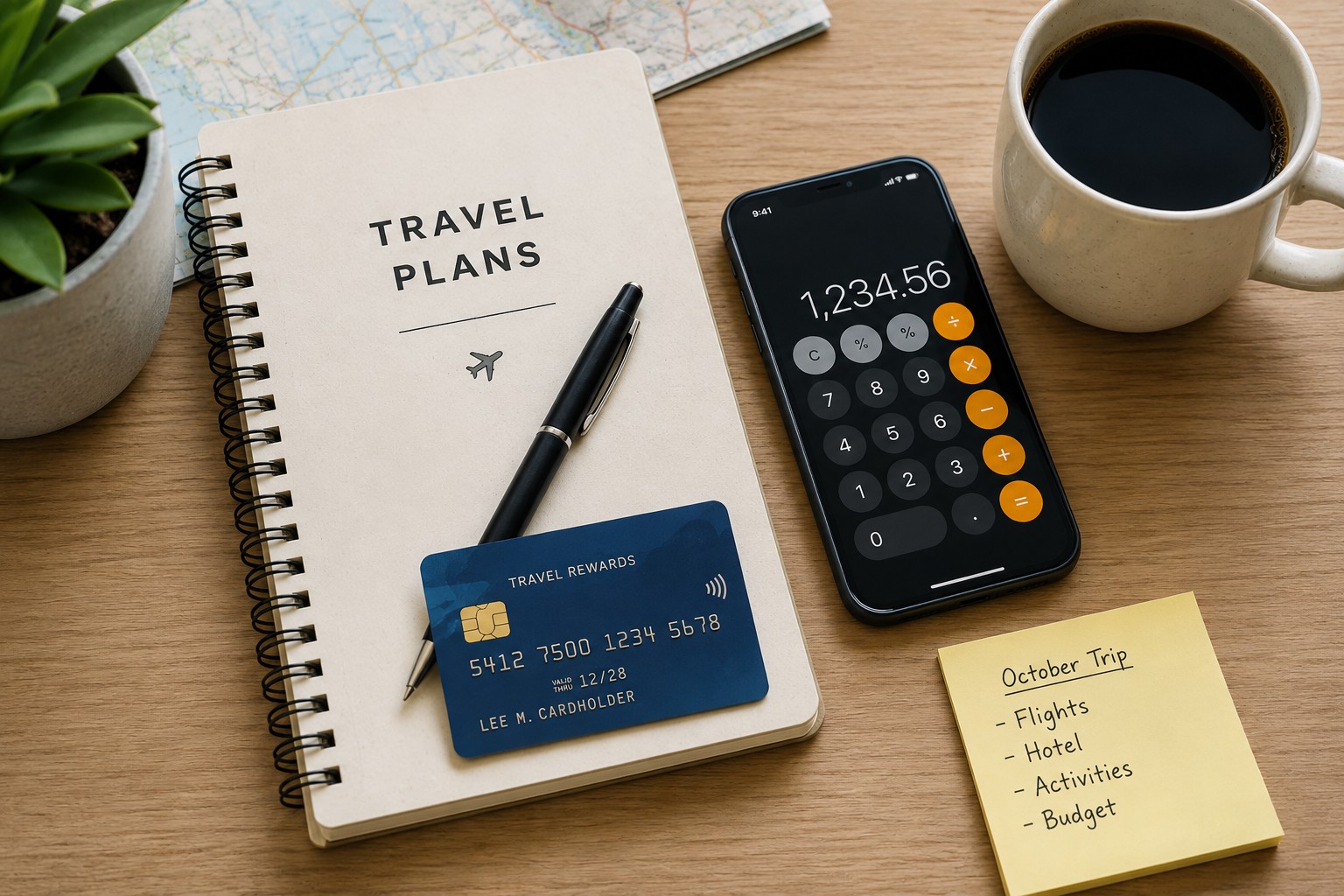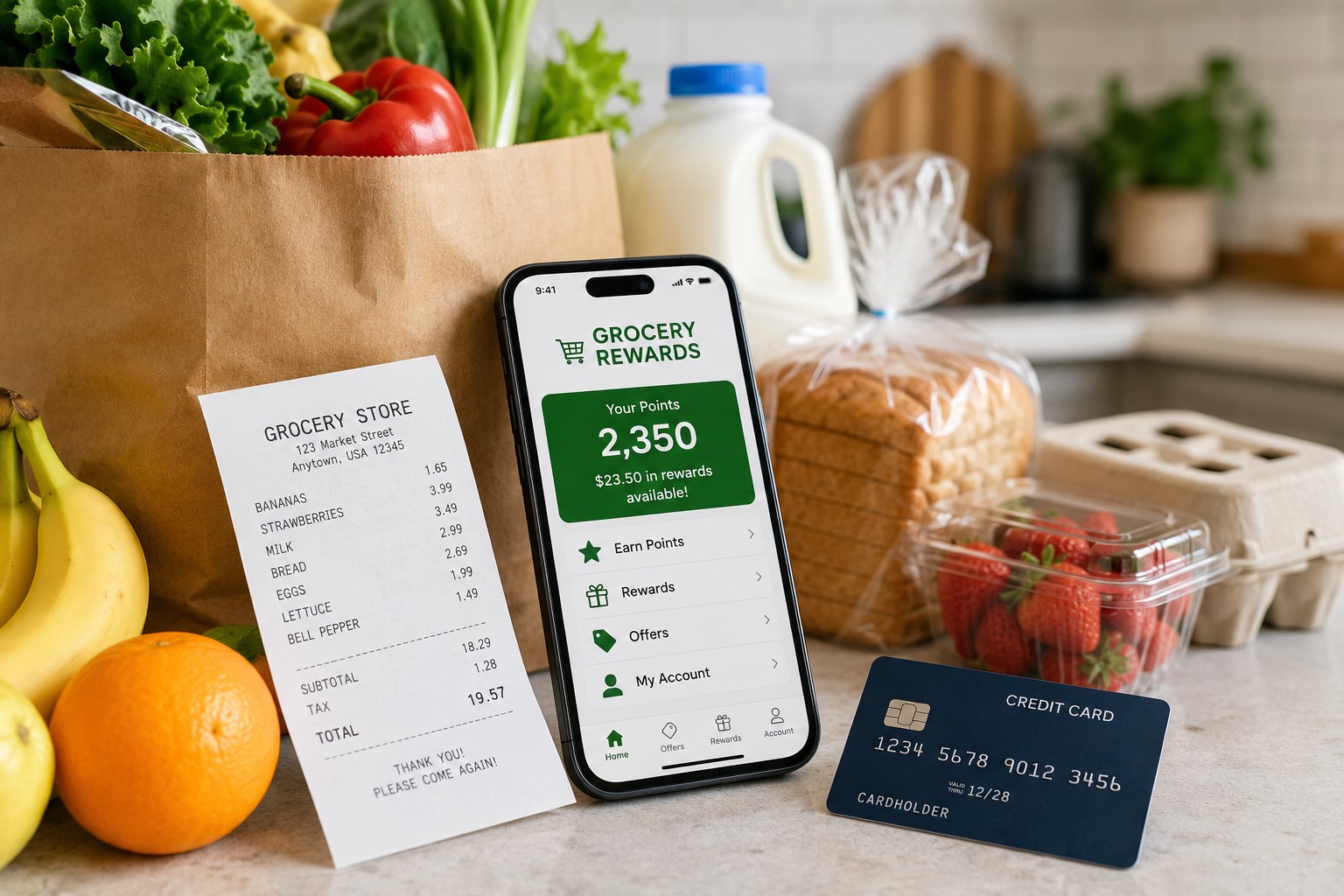
Groceries are one of the best places to start with everyday rewards because most of us are already spending money there every week.
You do not need to become an extreme couponer. You do not need to chase every offer. You do not need to buy things you would not normally buy just because an app says you can earn points.
The goal is much simpler.
If groceries are already part of your budget, it makes sense to ask whether that spending could be working a little harder.
For us, groceries and dining are two of the biggest everyday spending categories. That is part of why we think about them together. We are not trying to build a complicated wallet full of category-specific cards for every possible purchase, but we do want our normal spending to help support future travel when it can.
Sometimes that means using a card because we are working on a sign-up bonus. Other times, it means using a card that earns reasonably well across the categories where we spend the most.
Grocery rewards are not usually flashy.
But they are practical.
Want Help Building a Simple Points & Rewards Strategy?
If you are trying to figure out how grocery rewards, cash back apps, credit card categories, shopping portals, or everyday spending fit into your bigger rewards strategy, we can help you think through the options.
A good strategy should make your normal spending more useful without encouraging you to overspend or make life more complicated.
If you have a question, feel free to text us at 480-331-1263.
Start With the Grocery Store Account
The easiest first step is making sure you are signed up for the rewards program at the grocery stores you already use.
More detail: Why the store account matters
This is not exciting, but it is often where the savings start.
Most grocery store programs are built around member pricing, digital coupons, personalized offers, fuel rewards, or points that can be used later. The value depends on the store, but the habit is simple: use the account every time.
The important part is consistency.
If you already shop at a store, there is usually no downside to using the rewards account tied to that store. You are not changing your spending. You are just making sure the purchases count.
A simple grocery rewards setup might start with:
- Your main grocery store loyalty account
- Digital coupons for things you already buy
- Fuel rewards if your store offers them
- A payment card that earns well on groceries
- One receipt or cash back app if it is easy enough to use
That is enough for most people to start seeing value without turning grocery shopping into a project.
Use Digital Coupons, but Do Not Let Them Run the Trip
Digital coupons can be useful, but they can also create a trap if they push you to buy things you would not normally buy.
More detail: A better digital coupon habit
It is easy to see a discount and feel like you are saving money. But if the coupon makes you buy something you would not have purchased otherwise, it may not really be a win.
The better approach is to build your shopping list first, then check for coupons on those items.
That keeps the reward program in the right role. It supports your normal grocery trip instead of steering it.
A good digital coupon habit looks like this:
- Make your grocery list first
- Open the store app
- Clip coupons for items already on your list
- Ignore offers that do not fit your needs
- Check whether the store brand is still cheaper
- Avoid buying extra just to unlock a reward
Savings are helpful.
Spending more to feel like you saved money is not.
Pay Attention to Store Brand vs. Reward Value
One of the easiest ways grocery rewards can get misleading is when the reward makes a more expensive item look better than it is.
More detail: Compare the real cost
For example, a name-brand item with a digital coupon may still cost more than the store-brand version. A reward offer may sound nice, but the cheaper option may still be the better value.
This is where grocery rewards need a little common sense.
The question is not, “How much did I save?”
The better question is, “What would I have spent without this offer?”
If the reward helps you save on something you already wanted, great. If it nudges you into buying a more expensive item just to earn something small back, it may not be worth it.
Grocery rewards work best when they lower the cost of your normal basket.
They work less well when they change the basket entirely.
Choose a Card Based on Real Life, Not Just the Highest Grocery Multiplier
Once your store account is set up, the next layer is how you pay — but the “best” grocery card is not always the one with the highest grocery earning rate on paper.
More detail: How we think about cards for groceries
Groceries are a major bonus category on some rewards cards, but not every card earns the same way. Some cards are better for groceries. Some are better for dining. Some are better for gas. Some are better for general spending.
In real life, though, the “best” card is not always the one with the highest grocery earning rate on paper.
We are often working on sign-up bonuses, so when that is the case, most of our spending usually goes on the card we are trying to meet the bonus on. That does not always maximize the grocery category by itself, but the sign-up bonus can be worth more than squeezing out the highest return on one grocery trip.
When we are not working on a sign-up bonus, we try to keep things simple. Since groceries and dining are two of our highest spending categories, we like having a card that earns reasonably well on both. That limits the number of cards we need to carry and keeps the strategy easier to actually use.
Right now, because of the transferable points and potential value from the Bilt Palladium card, plus the points we can earn from our mortgage payment when we put enough spend on the card, we often use that card for most categories when we are not working on a sign-up bonus.
That does not mean it is the perfect grocery card for everyone.
It means it fits the way we are currently thinking about our total rewards picture.
For us, the value is not only about the grocery purchase by itself. It is also about the overall points ecosystem, the ability to transfer points, and whether the points we earn can help with travel we actually want to take.
That is the part that gets missed when people only compare grocery multipliers.
The right grocery card depends on:
- Whether you are working on a sign-up bonus
- Whether your card earns bonus rewards at grocery stores
- Whether your grocery store codes as a grocery store
- Whether warehouse clubs count differently
- Whether grocery delivery services code the same way
- Whether your card has a monthly, quarterly, or annual cap
- Whether cash back is more useful to you than travel points
- Whether the card’s annual fee still makes sense
- Whether the rewards fit how you actually travel
The best grocery card is not always the card that earns the most points on groceries.
It is the card that fits your spending, your stores, your travel goals, and your real-life habits.
Cash Back Apps Can Help, but Keep Them Simple
Cash back and receipt apps can add another small layer of value to grocery spending, but only if they are simple enough to keep using.
More detail: When grocery apps are worth it
Apps like receipt scanners, store-linked rewards, or offer-based cash back platforms can be useful, but they are only worth it if you will use them consistently without getting frustrated.
This is where people often overcomplicate things.
They download too many apps, try to match every offer, and spend more time chasing rewards than the rewards are worth.
We have learned that simplicity matters. If the app is easy enough to use after a normal shopping trip, great. If it turns the grocery trip into homework, it is probably not going to last.
A simpler approach is better.
Pick one or two tools that fit how you shop. Use them when it is easy. Skip them when it is not.
Cash back apps are best when they work in the background or take only a few seconds after shopping. They are less useful when they require you to completely rebuild your shopping trip around offers.
A good rule of thumb:
If an app helps you get something back from purchases you already made, it may be worth using.
If it pushes you to buy things you do not need, it probably is not.
For a broader comparison, we also wrote about Fetch vs. Ibotta vs. Rakuten: Which Is Actually Worth Your Time?.
Grocery Delivery Can Change the Math
Grocery delivery and pickup can be convenient, but they may change the value of your rewards.
More detail: Convenience still has a cost
Prices, fees, tips, service charges, card coding, and store promotions may all work differently depending on how you shop.
That does not mean grocery delivery is bad. For some families, the time savings are absolutely worth it. For others, pickup or in-store shopping may be better.
The point is to look at the full cost, not just the rewards.
If grocery delivery helps you avoid impulse purchases, save time, and stick to a plan, it may be worth more than the small difference in rewards. If delivery fees and markups quietly eat up the value, it may be better to use it only when convenience matters most.
Rewards are only one part of the decision.
Your time, budget, and stress level matter too.
Warehouse Clubs Are Their Own Category
Warehouse clubs can be great for some households, but they do not automatically save money for everyone.
More detail: Why warehouse club math is different
The value depends on what you buy, how much you use, how much storage you have, and whether the membership fee makes sense.
Buying in bulk can lower the price per unit, but only if you actually use what you buy. A larger package is not a deal if part of it gets wasted.
Warehouse clubs can also code differently for credit card rewards. Some cards treat them differently than traditional grocery stores, so the card that works best at your regular grocery store may not be the best option at a warehouse club.
This is also why we like looking at the whole picture instead of only one earning category. A warehouse club membership might be worth it for groceries, gas, travel, prescriptions, household items, or some combination of those things. Or it might not be worth it at all if you do not shop there enough.
Before assuming a warehouse club is saving money, ask:
- Do we buy enough here to justify the membership?
- Are we comparing unit prices, not just package prices?
- Are we using what we buy before it expires?
- Are we buying extra because the store makes it easy?
- Are we using the right payment card for this type of store?
- Are the gas, travel, optical, pharmacy, or other benefits part of the value?
Warehouse clubs can be a strong part of an everyday rewards strategy.
But they work best when the math fits your real life.
We broke this down separately in When the Costco Executive Membership Is Worth It (A Simple Math-Based Breakdown).
Think About Groceries and Dining Together
Groceries and dining are different categories, but they both connect to the same basic question: where is your everyday spending already going?
More detail: Why these two categories matter to us
For us, groceries and dining are two of the categories we pay the most attention to because they are such regular parts of our spending. We are not trying to optimize every single transaction perfectly, but we do want the spending that happens over and over again to earn something useful.
That is why a card that works reasonably well across both categories can sometimes be better in real life than carrying one card for groceries, another card for dining, another for gas, and another for everything else.
There is nothing wrong with a more complicated setup if you enjoy managing it.
But we know ourselves.
We are more likely to stick with a simple system that gets most of the value than a perfect system we forget to use.
That is especially true when we are already juggling sign-up bonuses, travel plans, annual fees, credits, and the bigger question of whether our points are helping us take trips we actually want.
The goal is not to win the grocery category.
The goal is to make our everyday spending support the bigger travel picture.
For more on that side of everyday spending, see Dining & Restaurants: The Easiest Way to Earn Rewards on Spending You Already Do.
Do Not Let Rewards Change the Budget
This is the most important part of grocery rewards: rewards should support your grocery budget, not stretch it.
More detail: The question that keeps rewards in check
It is easy to justify extra purchases when there is a coupon, bonus, or cash back offer attached. But the best everyday rewards strategies are built around spending you were already going to do.
A simple way to stay grounded is to keep asking:
Would I buy this without the reward?
If the answer is yes, the reward is a bonus.
If the answer is no, the reward may be creating extra spending.
That does not mean you can never try something new or stock up when there is a good deal. It just means the reward should not be the only reason you buy.
The goal is to earn more from your grocery spending, not turn grocery rewards into an excuse to spend more.
A Simple Grocery Rewards Setup
If you are starting from scratch, do not try to build the perfect system. Start with a simple setup you can repeat.
More detail: A simple setup to start with
- Sign up for your main grocery store loyalty account.
- Clip digital coupons only for things you already buy.
- Use the card that makes the most sense for your current strategy.
- If you are working on a sign-up bonus, understand that the bonus may matter more than the grocery multiplier.
- If you are not working on a bonus, consider a card that earns well on groceries and dining if those are major spending categories for you.
- Use one cash back or receipt app if it is easy enough to keep up with.
- Check fuel rewards if your grocery store offers them.
- Compare store brand, sale price, and coupon price before assuming something is a deal.
- Review your setup every few months to see whether it is still worth the effort.
That is enough.
You can always add more later, but simple is usually easier to keep using.
Where Grocery Rewards Fit Into Everyday Spending
Grocery rewards are just one part of a bigger everyday rewards strategy, but they connect naturally to many of the habits that make everyday rewards useful.
More detail: How this connects to the bigger strategy
Grocery rewards connect naturally to gas rewards, dining rewards, shopping portals, cash back apps, warehouse clubs, and credit card bonus categories.
The bigger idea is the same across all of them:
You are not trying to create extra spending.
You are trying to earn more value from the spending already happening in your life.
If groceries are one of your biggest recurring expenses, they are a logical place to begin. If dining is another big category for you, it makes sense to look at them together.
Once those habits feel easy, you can decide whether to add another layer.
Not everything needs a strategy.
But the spending you repeat every week is usually worth a closer look.
The full Everyday Spending section is built around that same idea.
Final Thoughts
Grocery rewards are not about getting rich from points or turning every shopping trip into a complicated math problem.
They are about small, repeatable wins.
Use the store account. Clip the coupons that fit. Pay with the card that makes sense for your current rewards strategy. Use an app if it is easy. Watch the real price. Avoid spending more just because there is a reward attached.
And do not worry if the best answer changes from month to month.
For us, sometimes the right answer is the card tied to the sign-up bonus we are working on. Sometimes it is the card that keeps our grocery and dining spending simple. Sometimes it is the card that helps us build transferable points we know we can use.
That is real life.
The best grocery rewards strategy is not the one that looks perfect in a spreadsheet.
It is the one you will actually use without changing your budget, overcomplicating your wallet, or losing sight of the bigger goal.
More value from spending you were already doing.
That is the win.
Latest Posts from Everyday Spending
- Cash Back vs. Points for Everyday Spending: Which One Fits Your Life Better?
- How Much Are You Actually Earning on Dining? (Quick Self-Check)
- Shopping Portals 101: The Simple Habit That Can Add Up Over Time
- Fetch vs. Ibotta vs. Rakuten: Which Is Actually Worth Your Time?
- Grocery Rewards 101: How to Earn More From Spending You Already Do
- Dining vs. Groceries: Where Should You Focus First?