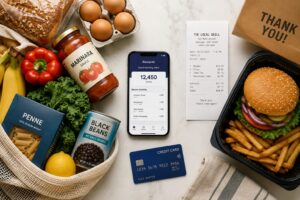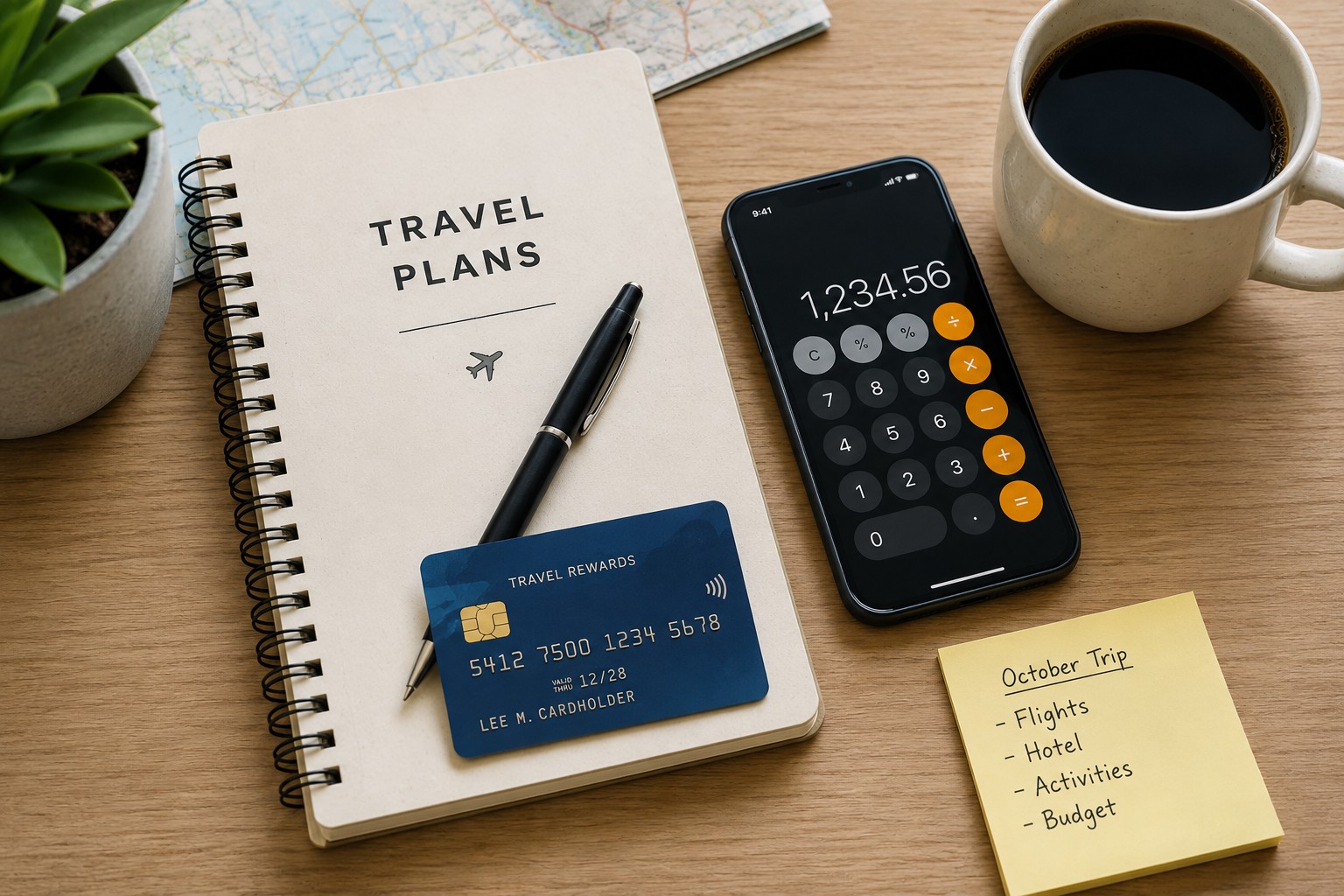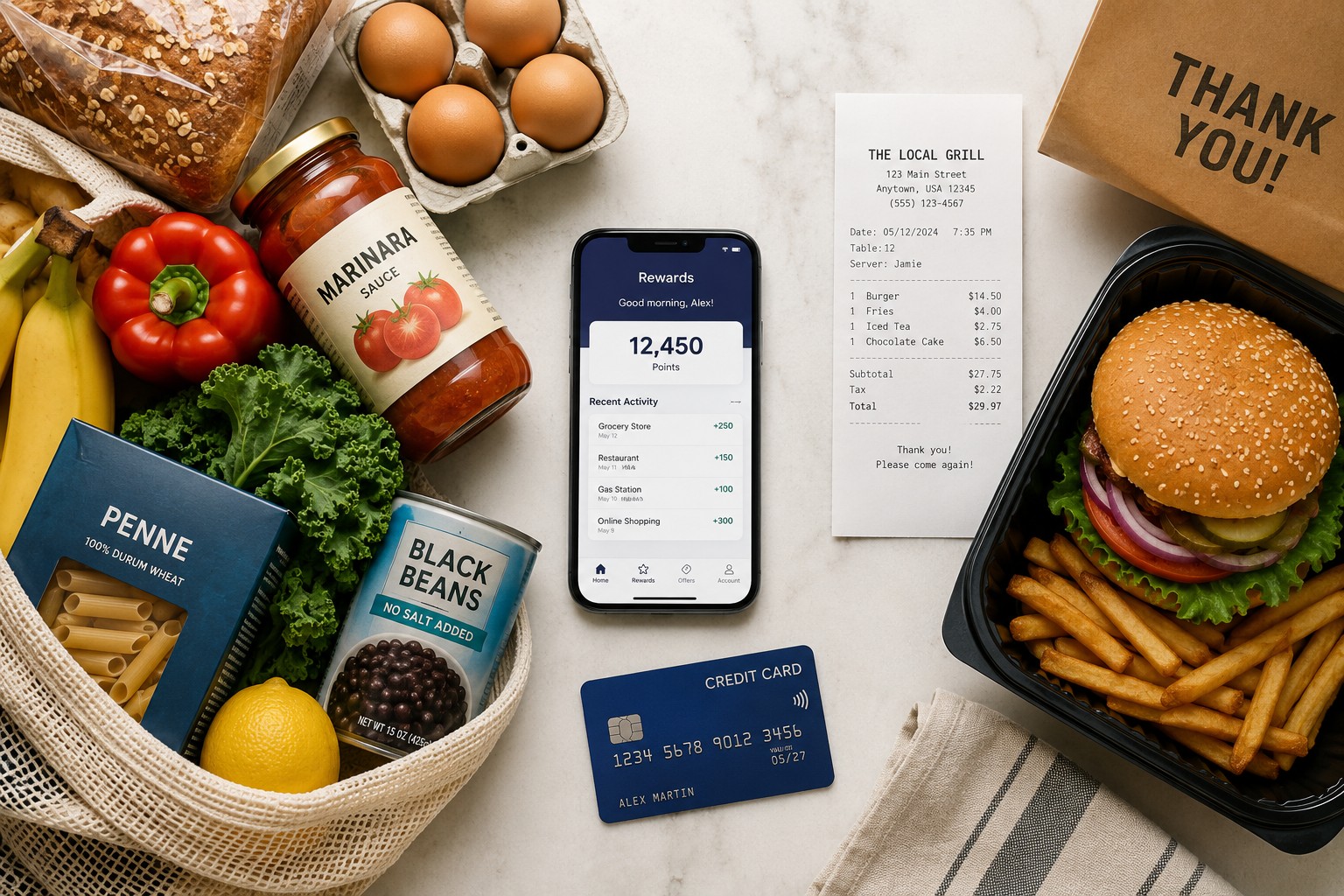
Dining and groceries are two of the easiest everyday spending categories to use for rewards.
They are also two of the places where a lot of real household spending happens.
That is why this decision matters. If you are trying to earn more points, cash back, or travel value without making your life more complicated, dining and groceries are usually near the top of the list.
But should you focus on dining first?
Or groceries?
For us, the answer is not always the same. It depends on what we are working on, what card we are using, and where our spending is going at that moment.
We are often working on sign-up bonuses, so a lot of our regular spend goes on whichever card we are trying to finish. But when we are not working on a bonus, we try to keep things simple. Since dining and groceries are two of our highest everyday spending categories, we like having a card that earns well in both so we do not have to carry or think about too many cards.
And because of the nature of transferable points, the potential value we see from the Bilt Palladium card, and the fact that we can earn points for our mortgage payment, we often use that card for most categories when we are not working on a sign-up bonus.
That may not be the perfect strategy for everyone.
But it fits how we actually spend.
Want Help With Your Points & Rewards Strategy?
If you are trying to figure out whether dining, groceries, cash back, points, or credit card bonus categories make the most sense for your everyday spending, we can help you think through the options.
A good points and rewards strategy should fit your real life. It should not push you to spend more, chase every offer, or turn every purchase into a complicated decision.
If you have a question, feel free to text us at 480-331-1263.
Start With Where Your Money Already Goes
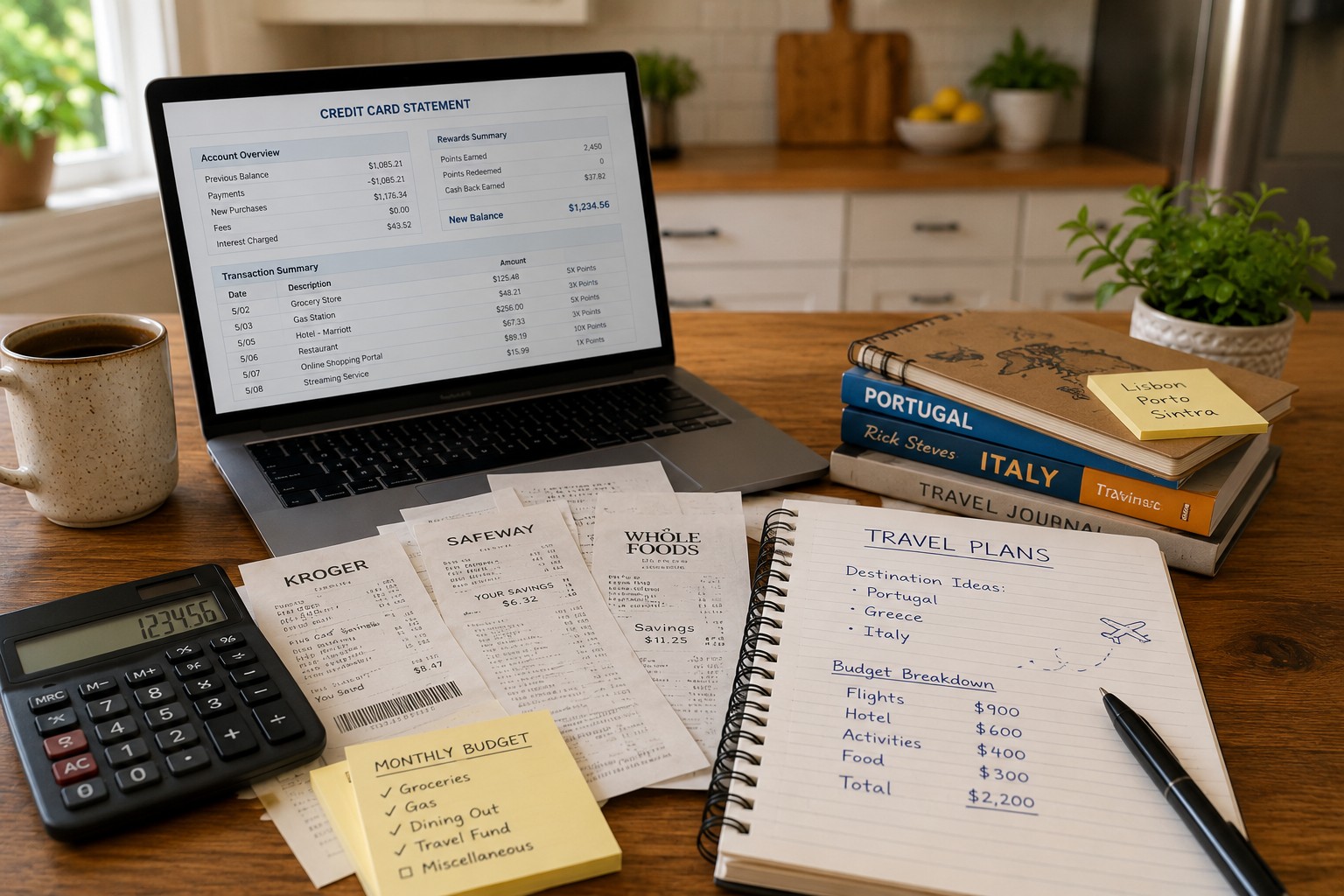
Before comparing rewards rates, look at your actual spending.
If groceries are one of your biggest monthly expenses, that may be the better place to focus first. If you eat out often, use takeout, travel frequently, or regularly meet friends and family at restaurants, dining may be the easier win.
The best category is not always the one with the flashiest earning rate.
It is the one where your normal spending is consistent enough to matter.
More detail: Why your spending pattern matters more than the headline earning rate
A lot of rewards advice starts with something like, “Use this card for dining,” or “Use this card for groceries.”
That can be helpful, but it skips the first question:
Where does your money actually go?
For some households, groceries are a major recurring expense. That can make grocery rewards predictable and easy. If you spend a meaningful amount at supermarkets, warehouse clubs, grocery delivery services, or regular food purchases, the rewards can add up without much extra effort.
For others, dining is the category that quietly grows. A few restaurant meals, takeout orders, coffee stops, work lunches, date nights, family dinners, or travel meals can add up quickly.
Neither category is automatically better.
The right starting point is the one you will use naturally.
Our Real-Life Approach: Bonuses First, Then Simplicity
In real life, we are not always optimizing dining and groceries separately.
A lot of the time, we are working on a sign-up bonus. When that is the case, most of our regular spending goes on the card tied to that bonus because the bonus is usually where the bigger value is.
Once we are not working on a bonus, we prefer a simpler setup.
More detail: Why we do not always chase the perfect category setup
This is one of those places where the “perfect” answer on paper may not be the answer we actually use.
Could we earn slightly more by carrying one card for groceries, another card for dining, another card for gas, another card for travel, and another card for everything else?
Maybe.
But that is not always the system we want to live with.
Dining and groceries are two of our highest spending categories, so we like having a card that does well in both. That limits the number of cards we carry and reduces the number of small decisions we have to make every time we pay.
That is also why we often use our Bilt Palladium card across many categories when we are not working on a sign-up bonus. For us, the combination of transferable points, the potential value we see in the program, and earning points for our mortgage payment makes it a card we are comfortable leaning on.
The point is not that everyone should do the same thing.
The point is that your card strategy should fit how you actually spend and how much effort you are willing to put into it.
Groceries Usually Win for Consistency
Groceries are often the better first focus if you want predictable rewards from spending that already happens every week.
Most people buy groceries regularly. That makes it easier to choose one simple card, app, store loyalty program, or rewards habit and stick with it.
If your goal is to build a low-effort everyday rewards routine, groceries may be the simpler place to start.
More detail: Why grocery rewards can be a strong foundation
Groceries can be a strong foundation because they are part of the regular budget. You may not know exactly what you will spend every month, but you probably know groceries are going to happen.
That consistency matters.
A grocery strategy could be as simple as:
- Using a card that earns well at supermarkets
- Using store loyalty programs where you already shop
- Checking for grocery app offers when they are easy
- Saving receipts for rewards apps
- Using warehouse club rewards when the membership makes sense
- Choosing cash back if travel points feel too complicated
This is also where the “math-based” side of everyday spending matters.
That is why something like When the Costco Executive Membership Is Worth It can be worth reviewing. It is not exciting in the way a big travel redemption is exciting, but if the numbers work for your household, it can be a practical everyday win.
Groceries may be the best first focus if:
- You cook at home often
- You have a family or larger household
- You spend consistently at supermarkets
- You want a simple monthly rewards habit
- You prefer cash back or easy-to-track rewards
- You want less temptation to overspend
The caution is that not every grocery purchase codes the same way. Some warehouse clubs, superstores, delivery services, and specialty stores may not count as “grocery” or “supermarket” purchases for every card.
That does not mean the strategy is bad.
It just means you should check how your real purchases earn instead of assuming.
Dining Usually Wins for Flexibility
Dining can be the better first focus if restaurants, takeout, coffee, and travel meals are already a regular part of your life.
Dining rewards can also be easier to stack because restaurants often overlap with credit card bonus categories, dining programs, restaurant apps, gift card deals, and limited-time offers.
If you already spend money on restaurants, dining can be one of the easiest categories to improve.
More detail: Why dining rewards can be easier to stack
Dining is one of those categories where rewards can come from several places at once.
You may be able to earn from:
- A credit card dining bonus category
- A restaurant loyalty program
- A dining rewards program
- A restaurant app
- A statement credit or dining credit
- A gift card promotion
- A limited-time offer
This is where our own experience with restaurant apps and dining rewards comes in.
We have used the InKind app in real life, and when it fits naturally, it can create real value. But it only works if it lines up with restaurants we actually want to visit. We do not want rewards to decide every meal for us.
The same idea applies to dining credits from credit cards.
A dining credit is useful if it replaces spending you were already going to do. It is a lot less useful if it convinces you to spend money just to “use” the credit.
Dining may be the best first focus if:
- You eat out regularly
- You travel often
- You use takeout or delivery
- You have dining credits you want to stop wasting
- You already use restaurant apps
- You want rewards that connect easily to travel cards
- You are comfortable tracking a few recurring offers
Dining can be powerful, but it can also tempt people into spending more than they planned.
That is the part to watch.
The Best First Choice Is the One You Will Not Overthink
A simple strategy you use every week is better than a perfect strategy you forget about.
That is why the best first choice is usually the category where the habit feels easiest.
If groceries are routine, start there. If dining is where you already use apps, credits, or rewards, start there.
More detail: Why realistic usually beats perfect
Rewards systems fail when they create too much friction.
If you have to remember four apps, three cards, two portals, and a rotating bonus calendar just to buy dinner or groceries, you may eventually stop using the system altogether.
A better approach is to pick one category and make one or two improvements.
For groceries, that might mean using the right card and joining the store loyalty program.
For dining, that might mean using the right card and making sure you are not wasting dining credits you already have.
For us, this is also why we like simplicity.
When we are working on a sign-up bonus, the answer is easy: most spending goes on that card until we finish the bonus. When we are not working on a bonus, we want a setup that covers our biggest categories without requiring too much thought.
That may not squeeze every possible point out of every transaction.
But it is more realistic.
And realistic is usually better than perfect.
When Groceries Should Come First
Groceries should probably come first if you want a low-effort way to improve rewards on spending that already happens.
This is especially true if grocery spending is one of your biggest recurring categories.
More detail: Signs a grocery-first strategy fits you
Focus on groceries first if:
- You spend more at grocery stores than restaurants
- You want rewards tied to a predictable budget category
- You are trying to avoid extra restaurant spending
- You prefer cash back or simple points
- You shop at the same stores regularly
- You want an easier routine to maintain
A grocery-first strategy is often best for people who want rewards without changing their behavior.
You do not need to dine out more. You do not need to chase offers. You do not need to justify extra spending.
You are just improving the return on spending that was already part of your life.
That makes groceries a strong starting point for beginners.
It also makes groceries a good place to use simple rewards apps or receipt-based tools, as long as they do not become annoying. Apps like Fetch, Ibotta, and Rakuten can be useful, but they are only worth it if the effort feels reasonable for the return.
If the app takes more energy than the reward is worth, it may not be the right tool for you.
When Dining Should Come First
Dining should probably come first if restaurants, takeout, coffee, and travel meals are already a meaningful part of your spending.
It can also be a smart first focus if you already have dining credits, restaurant apps, or a card that earns well on dining.
More detail: Signs a dining-first strategy fits you
Focus on dining first if:
- You eat out regularly
- You travel often and dining is part of your trip spending
- You already use restaurant apps or loyalty programs
- You have dining credits you want to stop wasting
- You earn strong rewards on dining with a card you already have
- You are comfortable choosing restaurants without letting rewards drive the whole decision
Dining can be a great category because it connects everyday spending with real-life experiences.
A family dinner, date night, airport meal, local restaurant, or vacation meal can all become part of the rewards picture.
But dining should still fit your budget.
Rewards should make the spending you already do more valuable. They should not convince you to spend more than you planned.
What About Cards That Cover Both?
This is where the decision gets easier.
If you can use a card that earns well on both dining and groceries, that may be the best first step — especially if those are two of your highest spending categories.
You may not need a separate dining card and grocery card right away.
More detail: Why one strong everyday card may be enough
This is how we tend to think about it.
We like the idea of having a strong card for both dining and groceries because those categories show up so often in normal life. It keeps things simpler, limits card juggling, and still lets us earn meaningful rewards from spending we were already doing.
That does not mean one-card simplicity is always the highest possible return.
It usually is not.
But it may be the better real-life strategy.
There is a difference between:
- The best earning setup on paper
- The best setup you will actually use
- The best setup while working on a sign-up bonus
- The best setup when trying to keep your wallet simple
Those are not always the same answer.
For us, sign-up bonuses often take priority first. After that, we look for simple, flexible earning that does not require a lot of mental energy.
That is why a card like Bilt Palladium can become a “default” card for us when we are not chasing a bonus. We value transferable points, we like having points tied to a major required expense like our mortgage, and we prefer not to overthink every single purchase.
Again, that is our situation.
The bigger takeaway is to find your own version of that.
The Simple Test: Which Category Would You Miss If Rewards Disappeared?
One way to decide is to ignore the rewards for a moment.
Ask yourself which category is already part of your life without any bonus points, credits, or apps.
That is usually where you should start.
More detail: A quick self-check for dining and groceries
If you would buy groceries every week no matter what, groceries are a strong focus.
If you would still eat out, grab coffee, use takeout, or dine while traveling no matter what, dining may be a strong focus.
The best rewards category is rarely the one that sounds the most exciting.
It is the one where rewards can attach to spending you were already comfortable making.
A simple self-check:
- Which category do I spend more on each month?
- Which one happens more consistently?
- Which one am I less likely to overspend on?
- Which one do I already have rewards tools for?
- Which one feels easier to track?
- Which one supports my bigger travel or savings goals?
- Am I currently working on a sign-up bonus?
- Do I want the best return possible or a simpler system I will actually use?
Your answers will usually point you in the right direction.
What We Would Do First
If we were starting from scratch, we would probably begin by looking at our biggest required spending first, then decide whether groceries or dining deserved more attention.
For many people, groceries will be the easier first win. For others, dining will be more natural.
For us, the answer often depends on whether we are working on a sign-up bonus.
More detail: A simple order for building the habit
A simple order could look like this:
- Look at what you spend on groceries and dining in a normal month.
- Check whether you are working on a sign-up bonus.
- If you are, decide whether most spending should go there first.
- If you are not, choose one card or rewards method that works well for your biggest categories.
- Add one easy loyalty program, app, or credit if it fits naturally.
- Review after a month or two.
- Add more only if the system still feels easy.
That approach keeps things manageable.
You are not trying to optimize every dollar on day one.
You are trying to build a rewards habit that survives real life.
For a broader starting point, Everyday Rewards 101: How We Earn Points Without Changing How We Spend is a good next read. If dining is your focus, Dining & Restaurants: The Easiest Way to Earn Rewards on Spending You Already Do is the more specific next step.
Final Thoughts
Dining and groceries can both be great everyday rewards categories.
Groceries usually win for consistency.
Dining usually wins for flexibility and stacking opportunities.
But the best place to start is the one that already fits your life.
If you buy groceries every week, start there. If dining is a regular part of your routine, start there. If you are working on a sign-up bonus, that may matter more than either category for a while.
And if you can simplify things with a card that works well across both categories, that may be worth more than chasing a tiny improvement with a more complicated setup.
Everyday rewards work best when they feel natural.
Start with the spending you already do.
Make one small improvement.
Then build from there.
Latest Posts from Everyday Spending
- Cash Back vs. Points for Everyday Spending: Which One Fits Your Life Better?
- How Much Are You Actually Earning on Dining? (Quick Self-Check)
- Shopping Portals 101: The Simple Habit That Can Add Up Over Time

- Fetch vs. Ibotta vs. Rakuten: Which Is Actually Worth Your Time?

- Grocery Rewards 101: How to Earn More From Spending You Already Do
- Dining vs. Groceries: Where Should You Focus First?