Some trips are better when you keep them simple.
Others are worth the extra moving parts.
The tricky part is knowing which kind of trip you’re actually planning.
A multi-stop trip can be incredible. You can see more places, compare different cities, build in bucket-list experiences, and make the most of expensive flights or limited vacation time.
But it can also turn into a trip where you spend more time packing, moving, checking in, checking out, and figuring out logistics than actually enjoying where you are.
We’ve done both. We’ve taken simple, one-destination trips that felt easy and refreshing. We’ve also taken fast-paced, multi-stop trips that gave us some of our favorite travel memories — while also leaving us completely exhausted.
Neither approach is always right or wrong. The better question is: what kind of trip are you actually trying to have?
Need Help Planning a Trip That Actually Fits the Way You Travel?
Multi-stop trips can be amazing, but they can also get complicated fast. Flights, hotels, trains, timing, luggage, points, credits, and realistic pacing all matter.
That’s where our Planning & Consulting services can help. We can help you think through whether a trip should be simple, multi-stop, cruise-based, points-focused, or a mix of everything.
If you have a question, feel free to text us at 480-331-1263.
Related Reading
- The Trip That Looks Good vs. The Trip That Feels Good: How to Plan for the Right Experience
- How to Choose the Right Type of Trip (Based on Your Budget, Time, and Energy)
- Jon Booked Hawaii 5 Days Before — Melanie Didn’t Know Where or Why
- Travel Doesn’t Have to Be Fancy to Be Worth It
The Appeal of a Simple One-Stop Trip
Sometimes the better trip is the one where you unpack once and stop adding decisions.
Our last-minute Hawaii trip is a great example of a simple trip that worked because it stayed focused.
More detail: Why simple trips can feel better
A simple trip often gives you more room to enjoy the destination instead of managing the trip.
You are not constantly thinking about the next checkout time, the next transfer, the next train, or whether your luggage will fit into another hotel room for one night. You can settle in, figure out the area, find a favorite coffee spot, go back to a restaurant you liked, or decide to slow down without feeling like you are wasting the itinerary.
That does not mean simple trips are boring.
Sometimes a simple trip gives you more freedom because you are not locked into a complicated schedule. You can leave space for surprises, weather changes, rest, or last-minute ideas.
For a trip like Hawaii, that matters. The point is not necessarily to see every possible thing. The point might be to enjoy the weather, the beach, the food, the hotel, the scenery, and the feeling of being somewhere completely different.
That kind of trip works especially well when:
- You want rest more than constant movement
- The destination itself has enough to keep you interested
- You are using hotel credits, points, or resort benefits
- You do not want to repack every couple of days
- You are traveling with limited time and want the trip to feel easier
A one-stop trip may not sound as impressive on paper, but sometimes it is exactly what makes a trip feel good.
When Multi-Stop Trips Are Worth It
Multi-stop trips make the most sense when the extra effort gives you something meaningful in return.
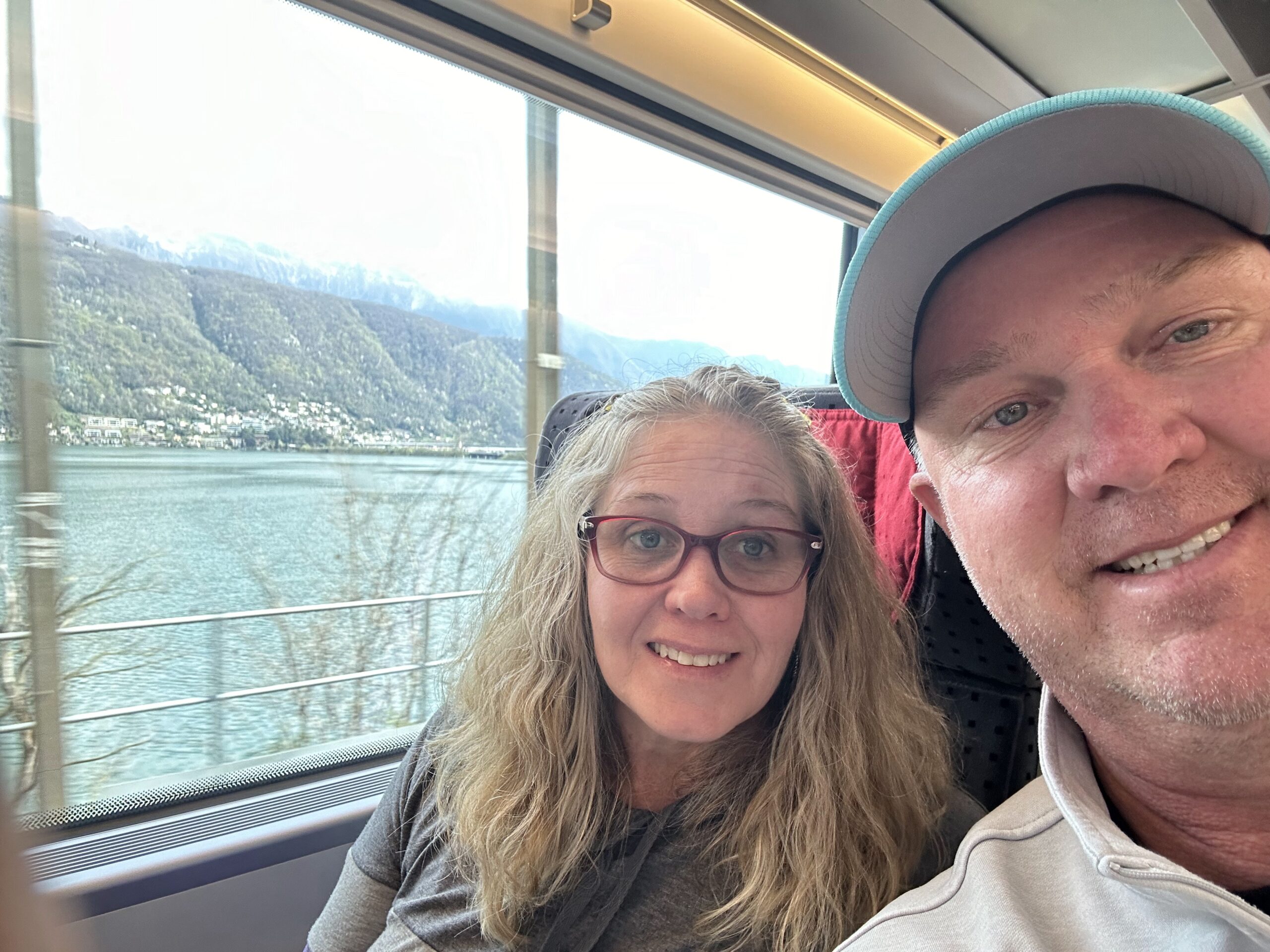
Our April 2024 Europe trip was fast, exhausting, memorable, and absolutely worth doing.
More detail: Our Europe 2024 itinerary
Our trip took place in April 2024, which ended up being a good fit for what we wanted.
We were hoping to avoid the busiest summer travel season while still having decent weather and a better chance of finding strong points availability for flights and hotels.
The final itinerary looked like this:
- Rome: 3 nights
- Zurich, Switzerland: 1 night
- Paris: 3 nights
- London: 3 nights
- Dublin, Ireland: 2 nights
This was definitely a fast-paced itinerary. Five cities across two weeks meant we were not settling into one place for very long, especially with only one night in Zurich.
But for our first major Europe trip, we wanted a mix of places we had dreamed about visiting and cities that worked well together from a transportation standpoint.
That is one of the biggest reasons multi-stop trips can make sense: sometimes the route itself works.
If you are already flying across the ocean, it can feel easier to justify adding another city or two. If trains, short flights, or positioning flights line up well, you can experience more without turning the entire trip into chaos.
This trip also gave us a better sense of what kind of European travel we enjoy. We learned that we would happily return to any of these cities, but we also realized how much more there is to see.
In some ways, this trip did exactly what a first big Europe trip should do: it gave us amazing memories and made us want to plan the next one.
The Exhausting Part Nobody Should Ignore
The hard part about multi-stop trips is that every stop has a cost.
Not just money — time, energy, packing, transportation, check-ins, and figuring out the next place all add up.
More detail: Why multi-stop trips feel more tiring than they look
On paper, a multi-stop itinerary can look very clean.
Three nights here. One night there. Three nights somewhere else.
But in real life, every travel day cuts into the trip.
Even if everything goes right, a travel day usually includes:
- Packing everything back up
- Checking out of the hotel
- Getting to the airport, train station, or rental car location
- Waiting around
- Moving luggage
- Getting to the next hotel
- Checking in or storing bags
- Reorienting yourself in a new city
That does not mean the trip is bad. It just means the trip has a different rhythm.
Our Europe trip was great, but it was not relaxing in the same way a one-stop trip can be relaxing. It was more of a see-the-places-we-have-always-wanted-to-see kind of trip.
That worked because we knew what we were signing up for.
Where people get frustrated is when they plan a fast-paced multi-stop trip but expect it to feel like a slow vacation. Those are two different goals.
A multi-stop trip can be worth it, but it is usually not the best option if your main goal is rest.
Cruises Are the Built-In Multi-Stop Compromise
Cruises are one of the easiest ways to experience multiple places without constantly changing hotels.
You unpack once, your room moves with you, and the destinations come to you.
More detail: Why cruises solve part of the multi-stop problem
A cruise is not the same as spending several days in each destination, and it is not always the best way to deeply explore a place.
But for many travelers, cruising offers a smart middle ground.
You can visit multiple ports, get a taste of different places, and decide where you might want to return later. At the same time, you avoid the constant hotel changes that come with a traditional multi-city land trip.
That does not mean cruises are effortless. You still have to think about:
- Embarkation day
- Port timing
- Excursions
- Transportation to and from the ship
- Onboard spending
- Dining and entertainment planning
- Whether the itinerary actually fits your travel style
But compared with a land-based multi-stop trip, the logistics can feel much easier.
This is one reason cruises can be especially appealing for first-time international travelers, families, multi-generational trips, or people who want to see several destinations without managing every single transfer themselves.
Not Every Cruise Has to Be Packed With Ports
A cruise does not have to stop somewhere new every day to be worth it.
Our Norwegian Dawn Bahamas cruise from Tampa was a short 4-night cruise with one relaxing stop at Great Stirrup Cay — and that worked.
More detail: Why our Norwegian Dawn cruise was relaxing
The Norwegian Dawn cruise was not about checking off a long list of destinations.
It was about getting away, enjoying the ship, having a relaxing beach day at Great Stirrup Cay, and keeping the trip simple.
That kind of cruise can be a great option when you do not want a complicated vacation. You still get the cruise experience, the dining, the entertainment, the ocean views, and the feeling of being away — without feeling like every morning starts with a port plan.
A one-port cruise can also be a good reminder that value is not always about how many stops you get.
Sometimes value is about how the trip feels.
If the goal is to relax, a short cruise with one great port day may be better than a port-heavy itinerary where you come home needing another vacation.
This is also why we do not think every trip needs to be maximized in the same way. Sometimes the best trip is the one that leaves you with room to breathe.
How to Decide If a Multi-Stop Trip Makes Sense
Before adding another destination, ask what that extra stop is really adding.
Is it improving the trip, or are you just squeezing in more because it feels like you should?
More detail: Questions we would ask before building a multi-stop trip
Here are the questions we would think through before adding more stops to a trip:
- Are we adding this destination because we really want to go there?
- Does the transportation make sense?
- Are we losing too much time to travel days?
- Will we have enough time to enjoy each place?
- Are we okay with a faster pace?
- Does this trip need to be relaxing, adventurous, efficient, or a mix?
- Are we using points or credits in a way that makes the extra stop worthwhile?
- Would this destination be better saved for a future trip?
- Are we building a trip that looks impressive, or one that will actually feel good?
That last question is the big one.
It is easy to build a trip that looks amazing on paper. Multiple cities. Great photos. Bucket-list places. Big itinerary energy.
But if the trip is too rushed, too complicated, or too tiring for the way you actually like to travel, it may not feel as good as it looks.
That does not mean you should avoid multi-stop trips. It just means you should be realistic about what they require.
When We Would Choose a Simple Trip Instead
A simple trip is usually better when the goal is rest, reconnection, convenience, or one specific destination experience.
Sometimes the best version of a trip is the version with fewer moving parts.
More detail: Why less can be the smarter choice
We would lean toward a simple one-stop trip when:
- We are short on vacation time
- We want to actually rest
- We are using hotel credits or resort benefits
- We have a specific destination in mind
- Flights are already expensive or complicated
- The destination has enough to fill the trip
- We do not want the stress of constant moving
- We are traveling with people who may not enjoy a fast pace
There is also something underrated about getting familiar with one place.
You learn the area. You find favorite spots. You know how long it takes to get around. You stop feeling like every decision is new.
For some trips, that is exactly the point.
When We Would Choose a Multi-Stop Trip Again
We would absolutely do another multi-stop trip.
But we would go into it knowing it is more active, more scheduled, and more tiring than a relaxing vacation.
More detail: Why Europe made sense as a multi-stop trip
For our first big Europe trip, seeing multiple cities made sense.
Rome, Zurich, Paris, London, and Dublin all gave us something different. The trip helped us understand what we liked, what we would do differently, and where we would want to spend more time in the future.
That is one of the best reasons to take a multi-stop trip: it can help you learn how you like to travel.
You might realize you love big cities.
You might realize you want more countryside next time.
You might realize two nights is too short, three nights is workable, and four or five nights would feel better.
You might realize one-night stops are only worth it when there is a very specific reason.
That kind of information is valuable.
A fast-paced first trip can help shape better future trips, as long as you do not expect it to be effortless.
The Real Goal: Build the Trip Around the Experience You Want
The best itinerary is not always the one with the most stops, the lowest price, or the most theoretical points value.
The best itinerary is the one that fits what you actually want from the trip.
More detail: How we think about the trade-off
A simple trip can be the better choice when you want rest, ease, and fewer decisions.
A multi-stop trip can be the better choice when you want variety, discovery, and a bigger adventure.
A cruise can be the compromise when you want multiple destinations without constantly packing and moving.
None of those are automatically better than the others.
What matters is matching the itinerary to the goal.
That is where travel planning gets personal. The same trip that feels exciting to one person might feel exhausting to someone else. The same cruise that feels relaxing to one traveler might feel too structured to another. The same multi-city Europe itinerary that feels like a dream to one couple might feel like too much movement for another.
That is why we try not to plan trips around what sounds impressive.
We try to plan trips around what will actually work.
Final Thoughts: More Stops Can Mean More Memories — But Also More Fatigue
Multi-stop trips can be incredible.
Our Europe trip was full of moments we would not trade. Rome, Zurich, Paris, London, and Dublin all gave us memories we are grateful for. It was a great trip, and it also reminded us that great trips can still be exhausting.
On the other hand, simple trips can be just as valuable in a completely different way. Hawaii worked because it was focused. The Norwegian Dawn cruise worked because it was easy, relaxing, and not overcomplicated.
That is the real lesson.
More is not automatically better. Simple is not automatically boring.
The best trip depends on what you want it to do.
Sometimes that means one destination.
Sometimes that means five cities.
And sometimes it means unpacking once on a cruise ship and letting the destinations come to you.
Latest Posts from Trip Types & Experiences | All Posts in Category